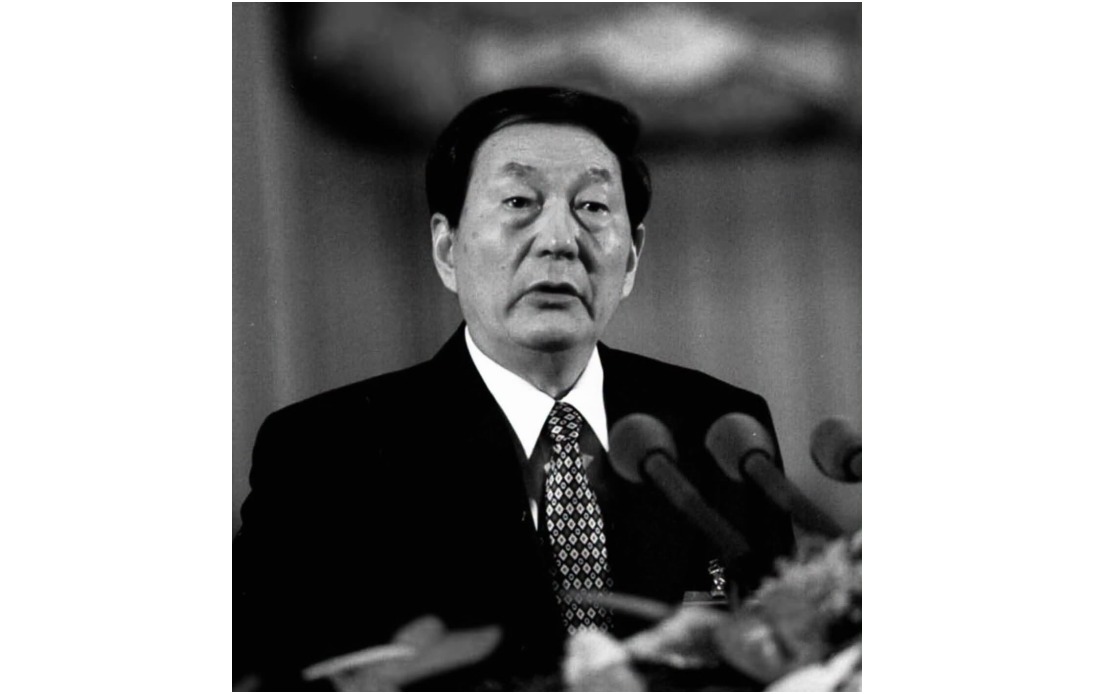
Prime Minister Datuk Seri Anwar Ibrahim has mourned the passing of Zhu Rongji, the former Premier of the People's Republic of China who died at age 97, describing him as both a transformative figure in modern Chinese history and a cherished personal acquaintance. In a statement shared on social media, Anwar highlighted Zhu's monumental contributions to reshaping China's economic landscape and his instrumental role in establishing the country's emergence as a dominant force in global commerce.
Zhu's tenure as China's Premier from 1998 to 2003 marked a pivotal chapter in the nation's development. His administration spearheaded sweeping market-oriented reforms that fundamentally restructured China's economy, dismantled inefficiencies within the state-owned enterprise sector, and orchestrated the country's integration into the World Trade Organisation—a milestone that opened unprecedented opportunities for Chinese businesses and workers on the international stage. These initiatives, though sometimes controversial domestically, proved essential in laying the groundwork for China's subsequent decades of rapid expansion and wealth creation.
Anwar's personal reflection underscores the depth of his relationship with the late statesman, extending beyond formal diplomatic channels to genuine friendship forged through shared vision. During the 1990s, when Malaysia was charting its own economic transformation under various developmental frameworks, Anwar worked directly with Zhu to forge deeper commercial and financial linkages between the two nations. These collaborative efforts created institutional and business networks that have endured through subsequent decades, continuing to shape the contours of Malaysia-China relations even as both countries have evolved economically and politically.
The Prime Minister recalled intimate moments that transcended standard state visits, including journeys to culturally significant locations. Visits to Confucius' ancestral village and the sacred mountain Tai Shan offered occasions for substantive dialogue about philosophy, governance, and national identity. Equally memorable were excursions tracing the legendary voyages of Admiral Zheng He, the Ming Dynasty explorer whose maritime expeditions connected China with the Indian Ocean rim and beyond—a history particularly resonant for Malaysia given its own position along these historic trading routes and its ethnically diverse population with deep Chinese cultural roots.
Anwar also treasured a visit to Zhu's private library, where the former Premier curated a selection of classical Chinese texts as personal gifts. This gesture revealed a mentor's desire to transmit intellectual and cultural wisdom beyond economic statistics and policy frameworks. The exchange represented a bridge between civilizations and a recognition that sustainable bilateral relations rest not merely on commerce but on mutual understanding of each nation's philosophical and historical foundations.
In his tribute, Anwar characterised Zhu as more than a technocrat or policy innovator. Rather, he emphasised the statesman's unwavering dedication to national service, describing him as a figure of exceptional moral fibre who allowed duty to his country to guide his decisions and priorities. This portrayal suggests that despite Zhu's reputation as a hard-nosed reformer who sometimes implemented unpopular measures, Anwar chose to remember him principally for his integrity and patriotic commitment—qualities that transcend ideological differences and generational change.
The timing of Zhu's death carries implications for Malaysia's strategic positioning in the region. As China continues to navigate complex domestic economic challenges and evolving geopolitical circumstances, the passing of a leader associated with pragmatic, market-friendly reforms invites reflection on the durability of those foundations. For Malaysia, which depends significantly on trade with China and Chinese investment, the loss of figures who bridged different national interests and ideological frameworks underscores the importance of maintaining robust people-to-people connections and institutional memory of previous collaborative successes.
Anwar's public mourning also reflects Malaysia's diplomatic approach of maintaining warm bilateral relations with major powers while preserving strategic autonomy. By honouring Zhu not as an adversary or distant foreign official but as a personal friend and respected colleague, Anwar reinforces a narrative of Malaysia as a nation that values substantive engagement and mutual respect across cultural and political divides. This stance carries particular weight in Southeast Asia, where smaller nations navigate relationships with larger powers by emphasising personal relationships, historical bonds, and shared economic interests.
The late Premier's economic legacy remains contested among scholars and analysts. Critics point to social dislocation caused by state enterprise restructuring and concerns about environmental degradation during China's rapid industrialisation under his watch. Supporters credit his administration with executing complex reforms that required both intellectual clarity and political will. Anwar's tribute sidesteps these debates, choosing instead to commemorate Zhu's historical significance and personal qualities, a diplomatic choice that acknowledges complexity while affirming respect.
For Malaysian policymakers and business leaders, Zhu's death marks the end of an era in which personal relationships between leaders directly facilitated economic cooperation. The networks and institutional frameworks established during Anwar and Zhu's collaboration in the 1990s have matured into formal trade agreements, investment protocols, and cultural exchanges. Yet the passing of key figures who embodied that earlier phase suggests the ongoing importance of cultivating new generations of leaders and diplomats capable of understanding and advancing bilateral interests with equivalent dedication and insight.

