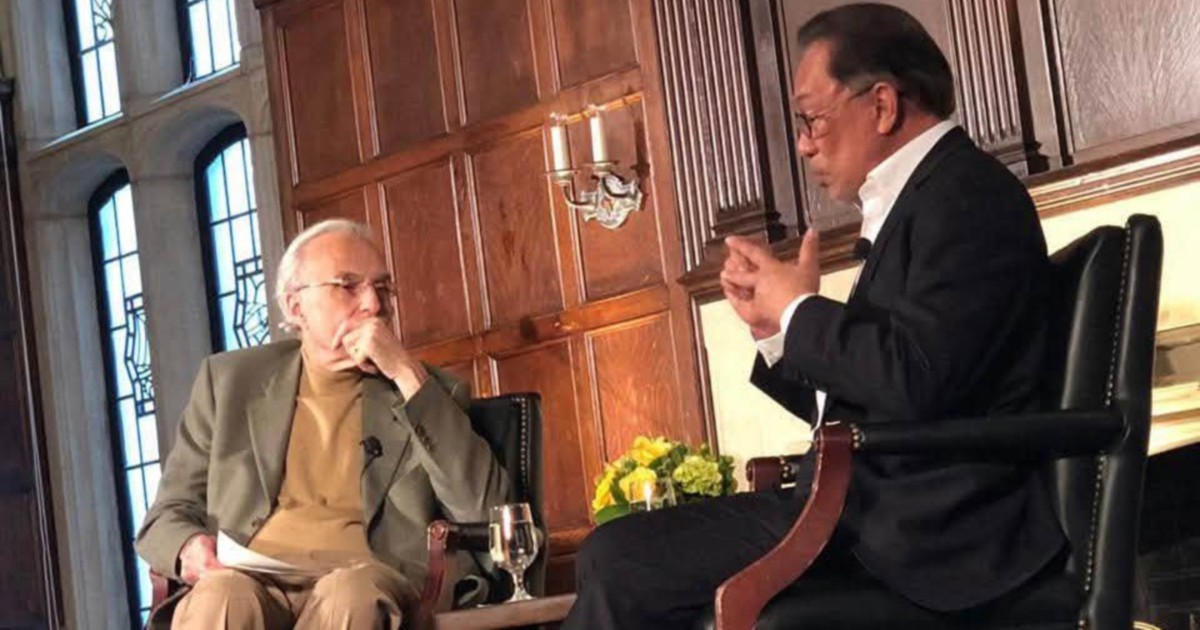
Prime Minister Datuk Seri Anwar Ibrahim has expressed his deepest condolences following the death of Professor John L. Esposito, one of the world's most influential scholars specializing in Islamic studies and contemporary Muslim societies. The passing of the eminent academic marks a significant loss to the global academic community and represents a meaningful moment for reflection on the contributions made by Western scholars who have worked to deepen understanding of Islam and bridge cultural divides across continents.
Professor Esposito's legacy extends far beyond conventional academic boundaries, encompassing decades of work in advancing nuanced discourse about Islam in the modern world. His scholarly contributions have profoundly shaped how millions of students, policymakers, and intellectuals across the globe understand Muslim civilization, its rich history, and its contemporary challenges. Through his research, publications, and teaching, Esposito established himself as a trusted voice capable of engaging both Muslim and non-Muslim audiences with intellectual rigor and genuine respect for his subject matter.
The timing of this tribute from Malaysia's Prime Minister underscores the particular relevance of Esposito's work to Southeast Asian contexts. Malaysia, as the world's second-largest Muslim-majority democracy, has long benefited from the kind of interfaith understanding and scholarly bridge-building that characterized Esposito's career. His frameworks for examining Islamic modernism, religious pluralism, and democratic development have provided valuable analytical tools for understanding how diverse societies can coexist harmoniously while maintaining religious identity and conviction.
Esposito's academic influence proved especially significant in challenging Western stereotypes and misconceptions about Islam that gained prominence in recent decades. At a time when polarized narratives often dominated popular discourse, his evidence-based approach to studying Islamic movements, institutions, and intellectual traditions offered readers and students a more textured and historically grounded understanding. His willingness to engage seriously with Muslim perspectives and scholarship, rather than imposing external analytical frameworks, earned him respect within academic institutions worldwide and among Muslim intellectuals who appreciated his scholarly integrity.
The professor's institutional affiliations and research centers became focal points for serious Muslim studies in the Western academy. His work in establishing and directing centers dedicated to Islamic studies and interfaith relations ensured that younger generations of scholars could continue advancing knowledge in these critical areas. The infrastructure he helped create enabled sustained dialogue and collaborative research that transcended geographical and cultural boundaries, exemplifying how academia can serve as a vehicle for genuine mutual understanding.
For Malaysia particularly, Esposito's scholarly attention to Southeast Asian Islamic contexts has held practical value. His analyses of how Islamic governance, religious education, and faith-based social movements function within democratic frameworks provided comparative perspectives useful for Malaysian policymakers, civil society actors, and religious leaders navigating questions about Islam's role in modern plural societies. His work demonstrated that Islam and democracy need not be in fundamental tension, a conclusion that resonates with Malaysia's own experience of balancing Islamic institutions with parliamentary democracy.
The scholar's contributions extended beyond traditional academic channels into public intellectual discourse. His appearances in media, his accessible writing for general audiences, and his willingness to engage in difficult conversations with policymakers and opinion leaders made him a crucial bridge between university research and broader societal understanding. In an era when misinformation about Islam circulates rapidly, having established voices like Esposito's speaking to mainstream audiences proved invaluable for promoting more accurate, historically informed perspectives.
Esposito's passing occurs during a period when such scholarship remains vital to regional and global stability. The proliferation of misinformation, the persistence of prejudice, and the ongoing tensions arising from misunderstandings between different faith communities make his life's work seem almost prescient in its urgency. His demonstrated commitment to rigorous scholarship as a tool for combating ignorance and promoting peaceful coexistence leaves a model that future scholars will likely continue following and building upon.
The Prime Minister's expression of condolences reflects Malaysia's official recognition of the value international scholarship brings to advancing mutual comprehension across civilizational boundaries. It also acknowledges that the work of Western scholars who approach Islamic civilization with genuine intellectual humility and respect contributes meaningfully to the broader global project of fostering interfaith dialogue and multicultural understanding. Esposito's example demonstrates how academic excellence and humanitarian commitment to cross-cultural understanding can reinforce one another, ultimately enriching societies far beyond academic institutions themselves.
As the Islamic world and broader academic communities mourn the loss of this distinguished scholar, his extensive body of work will continue influencing how future generations study, teach, and understand Islam's place in world history and contemporary global affairs, ensuring that his intellectual contributions endure long beyond his lifetime.

