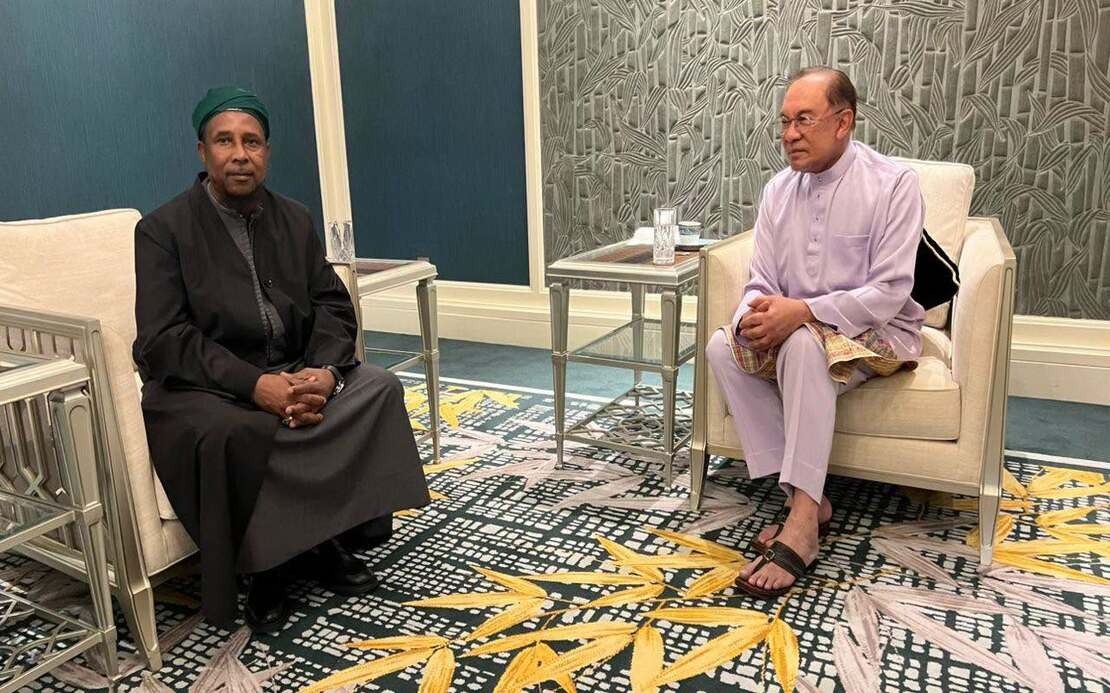
Prime Minister Datuk Seri Anwar Ibrahim hosted a farewell meeting on June 26 with Gambian Islamic scholar Sheikh Muhammad Haydara Al-Jilani, concluding an extended visit that saw the distinguished religious figure undertake a comprehensive dakwah initiative spanning multiple locations throughout Malaysia. The encounter, documented via Anwar's official Facebook statement, represented a culmination of the scholar's month-long engagement with Malaysian Muslim communities through organised knowledge-sharing sessions and spiritual gatherings held at various venues nationwide.
The timing of the meeting held particular significance, coinciding with the Day of Ashura, which fell on that Friday. This convergence of dates provided what Anwar characterised as an opportune moment for spiritual reflection and collective supplication. The Prime Minister seized the occasion to request that Sheikh Muhammad Haydara offer prayers specifically intended for the well-being and prosperity of all Malaysians, underscoring the government's emphasis on interfaith harmony and shared aspirations for national stability.
Anwar's public acknowledgment of the visiting scholar reflected Malaysia's ongoing commitment to fostering Islamic scholarly exchange and advancing religious education within the nation. The Prime Minister's statement highlighted his appreciation for the comprehensive nature of the dakwah programme, which transcended a single location or audience, instead reaching believers across different regions through multiple carefully organised sessions. This distributed approach to religious education and spiritual enlightenment aligns with Malaysia's vision of promoting informed Islamic practice grounded in scholarly understanding rather than superficial interpretation.
Sheikh Muhammad Haydara Al-Jilani's background as a Gambian religious authority brought West African Islamic traditions into dialogue with Malaysian Muslim thought and practice. Such exchange programmes serve broader strategic purposes within the Organisation of Islamic Cooperation context, strengthening intellectual bonds between Muslim-majority nations and enhancing the quality of religious discourse across borders. The scholar's extended residency and touring schedule suggested meticulous coordination between Malaysian Islamic organisations and their Gambian counterparts, indicating systematic effort to elevate the calibre of dakwah activities.
The dhikr programmes referenced in Anwar's statement represent a particular strand of Islamic spiritual practice emphasising remembrance of Allah through rhythmic recitation and collective devotion. These gatherings have experienced renewed prominence within contemporary Malaysian Islam, attracting adherents seeking deeper engagement with faith beyond conventional mosque-based instruction. The visiting scholar's expertise in conducting such sessions likely contributed significantly to the programme's appeal and effectiveness across diverse Malaysian demographics and geographic communities.
The Prime Minister's explicit prayer request for Malaysia's continued blessing with divine mercy, protection, and favour carries implications for national governance and social cohesion. By channelling the scholar's spiritual authority toward petitionary prayer for the nation, Anwar positioned Islamic scholarship and spiritual practice as resources serving collective national interests. This rhetorical framing demonstrates how contemporary Malaysian leadership integrates religious symbolism and authority into broader narratives of national development and citizen welfare.
Such diplomatic religious engagement reflects Malaysia's strategic positioning within global Islamic networks. Hosting visiting scholars from across the Muslim world creates soft power opportunities, enhances Malaysia's reputation as a centre for Islamic learning and dialogue, and strengthens bilateral relationships through faith-based cultural exchange. For Gambia, the visit represented an opportunity to project its Islamic scholars and traditions onto a larger Southeast Asian stage, enhancing the nation's religious and intellectual standing within international Muslim circles.
The nationwide scope of Sheikh Muhammad Haydara's programme indicates deliberate efforts to ensure equitable access to high-quality Islamic education across Malaysia's varied communities. Rather than concentrating activities in major urban centres, the itinerant approach reached believers in smaller towns and regional areas, democratising access to scholarly expertise that might otherwise remain concentrated in Kuala Lumpur or other major metropolitan zones. This geographical distribution reflects contemporary Islamic education policy priorities emphasising inclusive knowledge dissemination.
Anwar's public communication about the meeting through social media channels exemplifies modern political practice, whereby significant diplomatic and cultural engagements receive immediate public documentation and narrative framing. The Facebook post transformed a bilateral farewell meeting into a broader public statement about Malaysia's religious values, international relationships, and governance priorities. This visibility reinforces public awareness of the Prime Minister's engagement with Islamic intellectual traditions and scholarly networks, potentially resonating with constituents who value such religious and cultural connectivity.
The conclusion of Sheikh Muhammad Haydara's visit marks a transition point in Malaysia's ongoing religious exchange programming. Evaluating the impact of such initiatives requires assessing measurable outcomes including attendance figures, participant feedback, and lasting modifications to religious practice among programme attendees. The month-long duration suggests sufficient time for meaningful engagement and substantive knowledge transfer, though rigorous assessment of the programme's longer-term influence on Malaysian Islamic discourse and practice remains an open question for researchers and religious authorities.
Looking forward, such exchanges establish precedents for future collaborations between Malaysian Islamic institutions and international scholarly networks. The successful completion of this programme may encourage additional visits from respected scholars across the global Muslim world, gradually positioning Malaysia as an increasingly attractive hub for Islamic intellectual activity and spiritual tourism. For Malaysian Muslims seeking authoritative guidance and scholarly insight into Islamic theology and practice, such programmes offer valuable enrichment opportunities that complement domestic religious education infrastructure.
The farewell meeting ultimately represents more than ceremonial diplomatic courtesy. It symbolises Malaysia's integration into transnational Islamic knowledge networks, demonstrates government support for high-quality religious education, and illustrates how contemporary Islamic scholarship continues crossing geographical and political boundaries. As Muslim-majority nations worldwide navigate questions about authentic Islamic practice and modern governance, such scholarly exchanges contribute to informed, intellectually rigorous religious discourse that elevates public understanding and supports responsible faith-based leadership.

