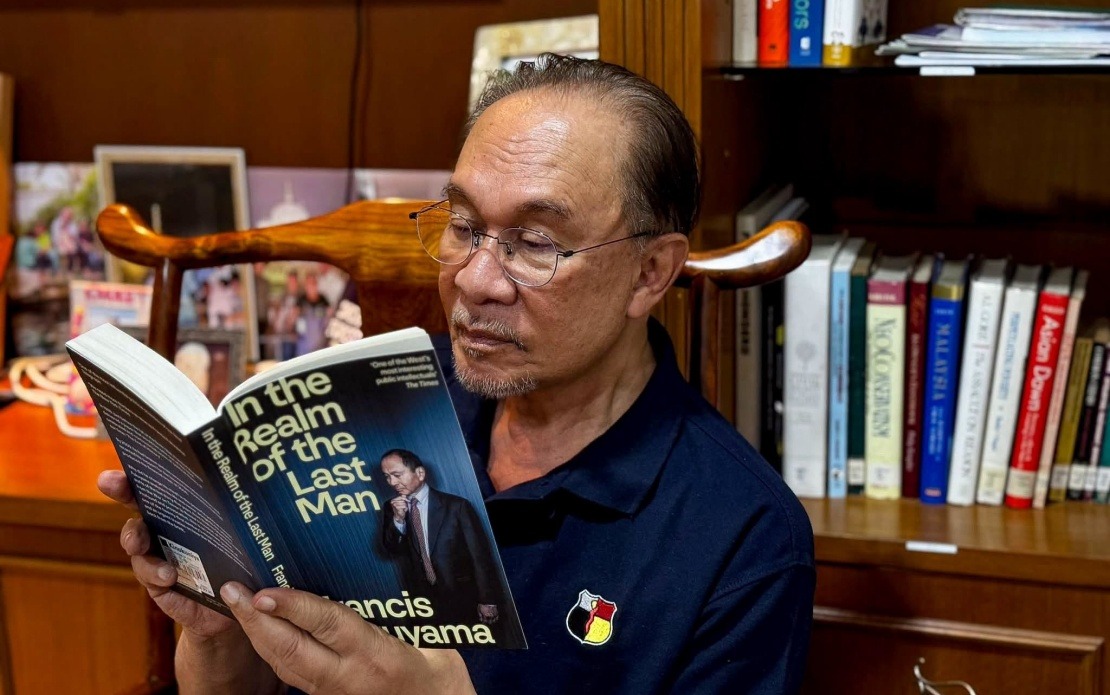
Prime Minister Datuk Seri Anwar Ibrahim has returned to his residence following his discharge from hospital, signalling the successful completion of his recent surgical treatment. The premier's homecoming came on Monday evening, marking the end of his inpatient stay at a medical facility where he underwent the procedure to address his health condition. Anwar marked the occasion with a social media update, sharing a photograph of himself at home while engaged in reading, accompanied by a caption expressing gratitude in the form of "Alhamdulillah, back home".
The discharge followed an elective surgical intervention performed earlier in the week, during which Anwar underwent a laparoscopic procedure aimed at correcting a para-umbilical hernia. This minimally invasive surgical approach represents a standard treatment method for this type of abdominal wall condition, which involves a protrusion of tissue through a weakened area in the muscle layer near the navel. The procedure itself was carried out without complications, according to available reports, with the surgical team successfully addressing the hernial defect through the keyhole surgical technique.
Datuk Seri Dr Wan Azizah Wan Ismail, the Prime Minister's wife, had previously indicated that her husband's release from medical care was anticipated for the discharge date, having maintained close communication with the attending medical team regarding his recovery timeline. Her statement provided reassurance to the public that Anwar's recuperation was progressing as expected and that the medical specialists overseeing his treatment were satisfied with his postoperative condition. This advance communication helped manage public expectations and reduced speculation surrounding the timing of his return to normal activities.
Throughout his hospital stay, Anwar remained under the careful supervision of a multidisciplinary team of medical specialists who monitored his vital signs and postoperative recovery metrics. The presence of such a comprehensive medical team reflects both the standard protocols followed for any surgical patient and the particular attention given to the nation's chief executive. This level of specialist care ensures that any potential complications are identified and managed promptly, facilitating a smoother recovery process.
The news of Anwar's surgical procedure and subsequent recovery carries implications for Malaysia's governmental operations, particularly regarding the continuity of leadership and administrative functions. While the Prime Minister has now returned home, the recovery phase from elective surgery typically involves a period of restricted activity to allow for proper wound healing and the restoration of normal bodily function. The laparoscopic approach used in Anwar's case generally permits faster recovery compared to open surgical techniques, though individual recovery timelines can vary based on factors such as overall health status and adherence to postoperative instructions.
The public disclosure of Anwar's medical treatment demonstrates the transparency increasingly expected of Malaysian political leadership regarding personal health matters affecting their capacity to discharge official duties. By making his recovery process visible through social media engagement, the Prime Minister has maintained public confidence in his ability to continue leading the nation while also demonstrating that elected officials are subject to the same medical realities as ordinary citizens. This openness stands in contrast to historical practices where leaders' health conditions were often kept confidential.
For Malaysians and the international community observing Malaysian politics, the incident underscores the importance of succession planning and institutional resilience within government structures. While Anwar's condition was neither life-threatening nor expected to permanently compromise his capacity to govern, the situation nevertheless highlighted the need for robust contingency arrangements that ensure the continuity of governmental functions even when the Prime Minister requires medical intervention. This consideration becomes particularly relevant given Malaysia's complex political landscape and the need for stable, uninterrupted leadership.
The timing of Anwar's elective procedure reflects a deliberate choice to address his health needs during a period when he could arrange his schedule to accommodate recovery time. Such planned medical interventions, as opposed to emergency procedures, provide greater control over timing and allow both the Prime Minister and his administration to minimize disruption to government business. The fact that the surgery was classified as elective rather than urgent suggests that while the hernia required treatment, it was not a matter of immediate medical emergency.
Moving forward, Anwar's recovery from this surgical intervention will likely proceed on an outpatient basis, with periodic medical follow-up appointments to ensure proper healing and rule out any postoperative complications. The transition from hospital-based to home-based recovery, now underway, represents a positive trajectory in his medical journey. His return to full operational capacity as Prime Minister will be gradual, with a phased resumption of duties that allows his body adequate time to heal while maintaining governmental continuity.

