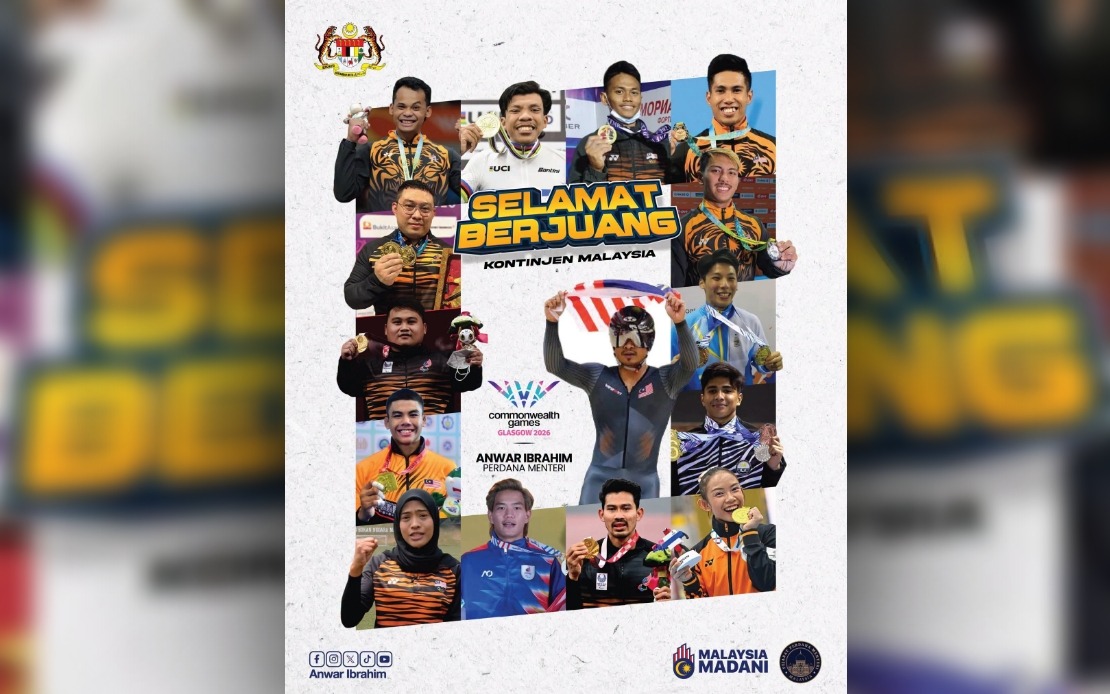
Prime Minister Datuk Seri Anwar Ibrahim has thrown his support behind Malaysia's delegation as they prepare for competition at the 2026 Commonwealth Games in Glasgow, with the opening ceremony set to commence today at The Hydro venue. In remarks shared through social media, the Prime Minister extended his best wishes to the national contingent, underscoring the importance of channelling competitive spirit while remaining true to the foundational principles that define international sporting contests. His message sought to frame athletic achievement not merely through medal counts, but through the manner in which Malaysian representatives conduct themselves on the world stage.
The Prime Minister's endorsement carries particular resonance given Malaysia's participation in the biennial multi-sport event, which has long served as a crucial platform for developing nations to showcase their athletic capabilities and young talent. Anwar's emphasis on dignity and honesty in competition reflects a broader philosophy that national sporting achievement gains its true value when pursued through ethical means and genuine effort. This messaging is especially significant in a regional context where sporting prowess frequently intersects with national pride and soft power considerations, positioning Malaysia as a nation that values character alongside competitive success.
In his statement, Anwar articulated a vision wherein Malaysian athletes would represent their country with the "highest spirit" whilst maintaining unwavering commitment to discipline and integrity. The framing suggests that the Prime Minister views the Commonwealth Games not merely as a venue for accumulating athletic accolades, but as an opportunity to demonstrate the values that define Malaysian society on an international platform. The reference to sportsmanship indicates an awareness that how athletes conduct themselves—in victory and defeat alike—shapes perceptions of their nation far beyond the immediate competition.
The Prime Minister further expressed his prayers for the national contingent, hoping that their endeavours would be blessed with success that would generate justified national pride and establish Malaysia's presence in international sporting circles. This spiritual dimension to his message reflects the cultural and religious context within which Malaysian political leadership typically operates, whilst simultaneously addressing the practical aspirations of athletes seeking to achieve medal success. The dual framing—combining prayers for success with emphasis on values—suggests a nuanced understanding that sporting achievement and moral conduct need not be presented as competing priorities.
Glasgow's hosting of the 2026 Commonwealth Games marks only the second occasion the Scottish city has been entrusted with organising this major international event, having previously staged the Games in 2014. The decision to return Glasgow demonstrates the International Commonwealth Games Federation's confidence in Scotland's capacity to deliver a world-class sporting spectacle. The geographic concentration of venues, with four main locations—Scotstoun Stadium, Tollcross International Swimming Centre, Glasgow Arena and the Scottish Event Campus—positioned within a 12.8-kilometre radius of the city centre, is designed to maximise accessibility and create an integrated Games experience for athletes, officials and spectators alike.
For Malaysia, participation in the Commonwealth Games has historically provided vital international exposure and competitive opportunities that help identify and develop emerging athletic talent. The Games serve as a testing ground where Malaysian athletes can measure themselves against competitors from across the Commonwealth while competing in an environment that, whilst rigorous, typically carries less geopolitical tension than certain other international sporting forums. The 2026 Games in Glasgow represent a significant opportunity for Malaysia to advance its sporting ambitions whilst contributing to the broader Commonwealth community.
The Prime Minister's message reflects the Malaysian government's commitment to supporting national athletes through both practical investment and rhetorical backing from the highest levels of leadership. Such public endorsements from political leadership can enhance athletes' motivation whilst signalling to international observers that Malaysia takes its sporting participation seriously. In the context of Southeast Asian regional sports diplomacy, strong governmental backing of Commonwealth participation distinguishes Malaysia as an engaged participant in Commonwealth institutions and values.
The timing of Anwar's message, delivered as Malaysian athletes prepare for competition, underscores the political importance attached to national sporting representation. In many Commonwealth nations, the Games function as both a sporting competition and a cultural event through which national identity is asserted and celebrated. Malaysian participation therefore carries implications beyond athletics, touching on questions of regional identity within the Commonwealth framework and Malaysia's role within broader international sporting structures.
As Malaysian athletes travel to Scotland, they do so with explicit encouragement from their nation's leader to pursue excellence whilst maintaining the ethical standards that should characterise international sport. This dual message—ambition tempered by principle—represents the core of Malaysia's anticipated approach to the 2026 Games, positioning the contingent as representatives of a nation that values both achievement and integrity in equal measure.

