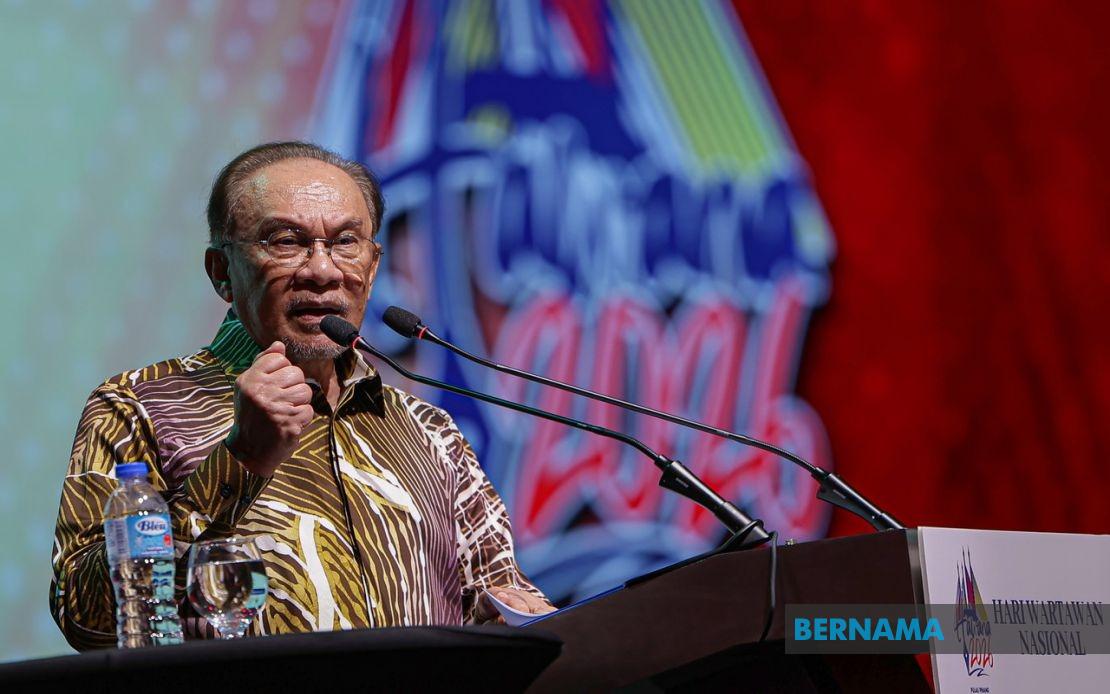
Prime Minister Datuk Seri Anwar Ibrahim has thrown his weight behind the appointment of retired Federal Court judge Tan Sri Nallini Pathmanathan as the new chairman of the Malaysian Media Council, signalling the government's commitment to elevating the institution's credibility and public standing. Speaking at the National Journalists' Day celebration in Butterworth on June 20, Anwar emphasised that Nallini's distinguished judicial pedigree and unblemished record would inject fresh confidence into an organisation tasked with safeguarding media standards and freedom in Malaysia.
The Prime Minister's endorsement carries particular weight given the MMC's relatively recent establishment under the Malaysian Media Council Act 2025. As a self-regulatory body, the council operates within a complex landscape where media freedom, ethical journalism and democratic accountability must be carefully balanced. Anwar's remarks reflect an awareness that such institutions require not merely formal authority but public legitimacy rooted in the integrity of those who lead them. The choice of a former Federal Court judge to head the council signals an attempt to position media oversight as independent, principled and above political or commercial influence.
Nallini's appointment was unanimously ratified by MMC board members during a meeting held on May 26, suggesting broad consensus within the institution itself about her suitability for the role. Her judicial background spanning years on Malaysia's highest court provides her with experience navigating complex constitutional and legal questions, skills directly relevant to a body that must interpret media conduct against principles of free expression and responsible journalism. The deliberative process preceding her appointment, as described by the Prime Minister, indicates that the selection was not rushed but grounded in careful assessment of her credentials and track record.
The event where Anwar made these remarks drew attendance from significant figures in Malaysia's media and communications landscape, including Penang Chief Minister Chow Kon Yeow, Communications Minister Datuk Fahmi Fadzil, Bernama chairman Datuk Seri Wong Chun Wai and other senior government and media officials. This gathering underscored the importance placed on the occasion by Malaysia's political leadership. The presence of multiple ministers and state-level officials conveyed an implicit message about the council's elevated status within the broader governance framework and the government's desire to demonstrate commitment to institutional independence.
Nallini's appointment arrives at a pivotal moment for media regulation across Southeast Asia. The region faces ongoing tensions between protecting journalistic freedom and managing misinformation, protecting national security and safeguarding democratic discourse. The MMC's mandate specifically addresses this challenge by emphasising strengthened journalistic standards, ethical practices and transparent management of public complaints. As Malaysia navigates these pressures alongside rapid digital transformation and evolving media consumption patterns, the council's effectiveness will depend heavily on the credibility and judgment of its leadership.
The council's responsibilities extend beyond reactive complaint management to proactive promotion of ethical practices and safeguarding media freedom as a democratic cornerstone. This requires a leader capable of building consensus among disparate stakeholders including journalists, media organisations, civil society and government. Nallini's judicial experience suggests familiarity with rendering balanced judgments in contentious disputes and articulating principled reasoning that can withstand public scrutiny. Her appointment may therefore represent an attempt to reposition media oversight as a genuinely independent function rather than an arm of state apparatus.
For Malaysian journalists and media practitioners, Nallini's elevation to the MMC chairmanship carries implications for how press freedom will be interpreted and defended. Judicial figures often emphasise procedural fairness, due process and transparent reasoning, qualities that could help the council earn credibility within the journalism community. However, challenges remain regarding how the council will balance its regulatory role with protection of editorial independence and the public interest in robust reporting. Nallini's tenure will likely be closely monitored by media freedom advocates, both domestically and internationally.
The government's framing of this appointment around credibility and public confidence reflects recognition that self-regulatory institutions succeed only when they command trust from both regulated industries and the wider public. A media council led by someone perceived as politically aligned or lacking independent judgment would struggle to mediate disputes effectively or establish its authority. By selecting a jurist known for judicial independence, Anwar's administration appears to be signalling that the MMC should operate according to established legal and constitutional principles rather than contemporary political convenience.
The broader context includes Malaysia's commitment to democratic governance and rule of law amid regional and global pressures on media freedom. Southeast Asian democracies increasingly face criticism over press freedom rankings and space for critical journalism. The MMC, as a formally established regulatory body, sits at the intersection of these concerns. Its effectiveness in managing complaints fairly, promoting ethical standards without censorship, and safeguarding media independence will influence perceptions of Malaysia's democratic health. Nallini's appointment can therefore be understood as part of a strategic effort to demonstrate institutional maturity and respect for press freedom principles.
Prime Minister Anwar's public backing for Nallini extends beyond ceremonial endorsement to substantive validation of her suitability for navigating the complex terrain of media regulation. His articulation of her credentials and his expression of confidence in her ability to strengthen the council's standing suggest that the government views her appointment not as a political accommodation but as a genuine investment in institutional credibility. Whether this confidence translates into operational success will depend on how Nallini and the council handle its first significant disputes and decisions, particularly those involving sensitive political or national security dimensions.
%22%2F%3E%3C%2Fpattern%3E%3C%2Fdefs%3E%3Crect%20width%3D%22100%25%22%20height%3D%22100%25%22%20fill%3D%22url(%23ph5mojig)%22%2F%3E%3Crect%20width%3D%22100%25%22%20height%3D%22100%25%22%20fill%3D%22url(%23ph5mojip)%22%2F%3E%3Ctext%20x%3D%2250%25%22%20y%3D%2250%25%22%20text-anchor%3D%22middle%22%20dominant-baseline%3D%22central%22%20fill%3D%22rgba(255%2C255%2C255%2C0.95)%22%20font-family%3D%22Georgia%2C%20'Times%20New%20Roman'%2C%20serif%22%20font-weight%3D%22700%22%20font-size%3D%22320%22%20letter-spacing%3D%22-0.02em%22%3EPM%3C%2Ftext%3E%3C%2Fsvg%3E)
%22%2F%3E%3C%2Fpattern%3E%3C%2Fdefs%3E%3Crect%20width%3D%22100%25%22%20height%3D%22100%25%22%20fill%3D%22url(%23phgab1g)%22%2F%3E%3Crect%20width%3D%22100%25%22%20height%3D%22100%25%22%20fill%3D%22url(%23phgab1p)%22%2F%3E%3Ctext%20x%3D%2250%25%22%20y%3D%2250%25%22%20text-anchor%3D%22middle%22%20dominant-baseline%3D%22central%22%20fill%3D%22rgba(255%2C255%2C255%2C0.95)%22%20font-family%3D%22Georgia%2C%20'Times%20New%20Roman'%2C%20serif%22%20font-weight%3D%22700%22%20font-size%3D%22170%22%20letter-spacing%3D%22-0.02em%22%3EMalaysia%3C%2Ftext%3E%3C%2Fsvg%3E)
%22%2F%3E%3C%2Fpattern%3E%3C%2Fdefs%3E%3Crect%20width%3D%22100%25%22%20height%3D%22100%25%22%20fill%3D%22url(%23ph1tju4g)%22%2F%3E%3Crect%20width%3D%22100%25%22%20height%3D%22100%25%22%20fill%3D%22url(%23ph1tju4p)%22%2F%3E%3Ctext%20x%3D%2250%25%22%20y%3D%2250%25%22%20text-anchor%3D%22middle%22%20dominant-baseline%3D%22central%22%20fill%3D%22rgba(255%2C255%2C255%2C0.95)%22%20font-family%3D%22Georgia%2C%20'Times%20New%20Roman'%2C%20serif%22%20font-weight%3D%22700%22%20font-size%3D%22170%22%20letter-spacing%3D%22-0.02em%22%3EMalaysia%3C%2Ftext%3E%3C%2Fsvg%3E)