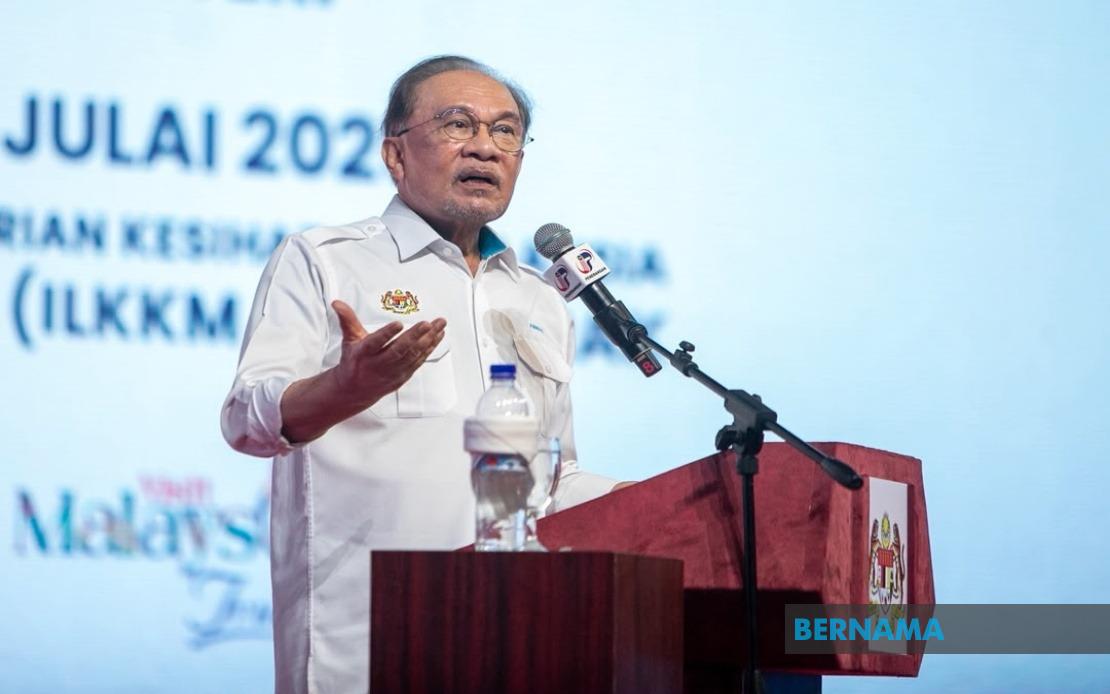
Prime Minister Datuk Seri Anwar Ibrahim has made an impassioned appeal to Malaysia's younger generation to reconnect with the nation's historical struggle for independence, stressing that contemporary citizens must grasp the profound meaning of the freedoms they inherit. Speaking at the launch of the 2026 National Month and Fly the Jalur Gemilang Campaign in Ipoh on July 19, Anwar emphasised that understanding this heritage goes beyond mere celebration—it demands genuine appreciation for the immense personal costs borne by previous generations of independence fighters.
The Prime Minister framed his message around a three-part framework for national consciousness: revisiting historical records, reinforcing unity through symbolic actions like flag-flying, and collectively building a stronger future. In his view, this approach moves beyond superficial patriotism to create a generation that understands the tangible connection between past sacrifices and present prosperity. Anwar stressed that the independence achieved by Malaysia represented the culmination of relentless effort, personal hardship, and unwavering determination from those who fought for the nation's sovereignty.
Anwar's remarks carry particular significance in the contemporary Malaysian context, where concerns about national cohesion and generational disconnection from foundational values have become increasingly prominent in public discourse. By addressing the youth directly, the Prime Minister is attempting to bridge what some observers perceive as a growing gap between younger citizens and the institutional narratives surrounding Merdeka. His emphasis on the emotional and physical toll endured by independence fighters—described as blood, sweat, and tears—serves to humanise historical figures who might otherwise remain abstract to students learning from textbooks.
The timing of this campaign launch, scheduled for 2026, suggests a deliberate effort to build momentum toward the nation's 70th year of independence in 2027. Government officials often view such milestone years as opportunities to reinvigorate national sentiment and recommit populations to foundational principles. By beginning promotional activities well in advance, the administration signals that this particular anniversary holds strategic importance for national narrative-building.
The event brought together several senior government figures, including Communications Minister Datuk Seri Fahmi Fadzil, National Unity Minister Datuk Aaron Ago Dagang, and Perak Menteri Besar Datuk Seri Saarani Mohamad. This multi-ministerial attendance underscores the cross-government commitment to the campaign and reflects how national unity and historical commemoration fall within the purview of multiple policy domains. The presence of the National Unity Minister alongside communications and state leadership demonstrates the government's integrated approach to reinforcing national identity messaging.
For Malaysian readers, particularly those engaged in education, civil service, or community leadership, Anwar's message resonates with broader policy initiatives aimed at strengthening patriotic education and institutional values. The Prime Minister's specific invocation of historical struggle as a counterweight to present comfort levels speaks to anxieties about materialism and individualism potentially eroding collective national consciousness. This rhetorical strategy—contrasting the hardships of the past with contemporary ease—has become a recurring theme in speeches by Malaysian political leaders seeking to motivate civic engagement.
The National Month campaign, by connecting to the Jalur Gemilang (Malaysian flag), transforms a physical symbol into a vessel for historical memory and national aspiration. The campaign's dual focus on remembrance and forward progress reflects a deliberate balancing act: honouring sacrifices without dwelling exclusively on past grievances, while simultaneously projecting confidence in Malaysia's future trajectory. This approach attempts to avoid the pitfall of nostalgia-driven nationalism that might alienate younger citizens who see their stake primarily in contemporary and future challenges.
Anwar's framing of independence as an achievement requiring collective effort—bringing together diverse contributions from multiple communities and generations—aligns with the government's broader emphasis on national unity as both historical fact and ongoing project. By casting the independence struggle as a shared endeavour built on sacrifice, the message implicitly challenges more divisive narratives that might emphasize particular ethnic or religious groups as sole bearers of nationalist credentials. This inclusive framing matters significantly in Malaysia's multi-ethnic context, where national identity requires constant negotiation and reaffirmation.
The campaign's launch in Ipoh, the capital of Perak, also carries regional significance. By choosing a state capital rather than the federal capital, the Prime Minister signals that national identity-building is not concentrated in Kuala Lumpur but distributed across the federation. Regional launches can help ensure that national messaging penetrates beyond urban centres and reaches communities that might feel distant from federal-level discourse. This geographic strategy reflects understanding that genuine national consciousness requires engagement at state and local levels.
For Southeast Asian observers, Malaysia's approach to national commemoration offers interesting contrasts with neighbouring countries' strategies for managing historical memory and contemporary identity. While some regional nations emphasise particular ethnic or ideological narratives within their independence stories, Malaysia's emphasis on sacrifice and blood—deliberately non-specific about which communities made those sacrifices—represents a distinctive rhetorical choice aimed at inclusive nationalism.
The practical implementation of such campaigns through flag-flying initiatives and educational activities will determine their effectiveness in reaching and influencing younger audiences. Digital engagement and school-based programmes will likely prove essential for resonating with Malaysians under 30, many of whom process national narratives through social media and online platforms rather than traditional civic ceremonies. The government's willingness to adapt historical messaging for contemporary media landscapes will significantly impact whether Anwar's appeals to historical consciousness actually reach their intended audience.

