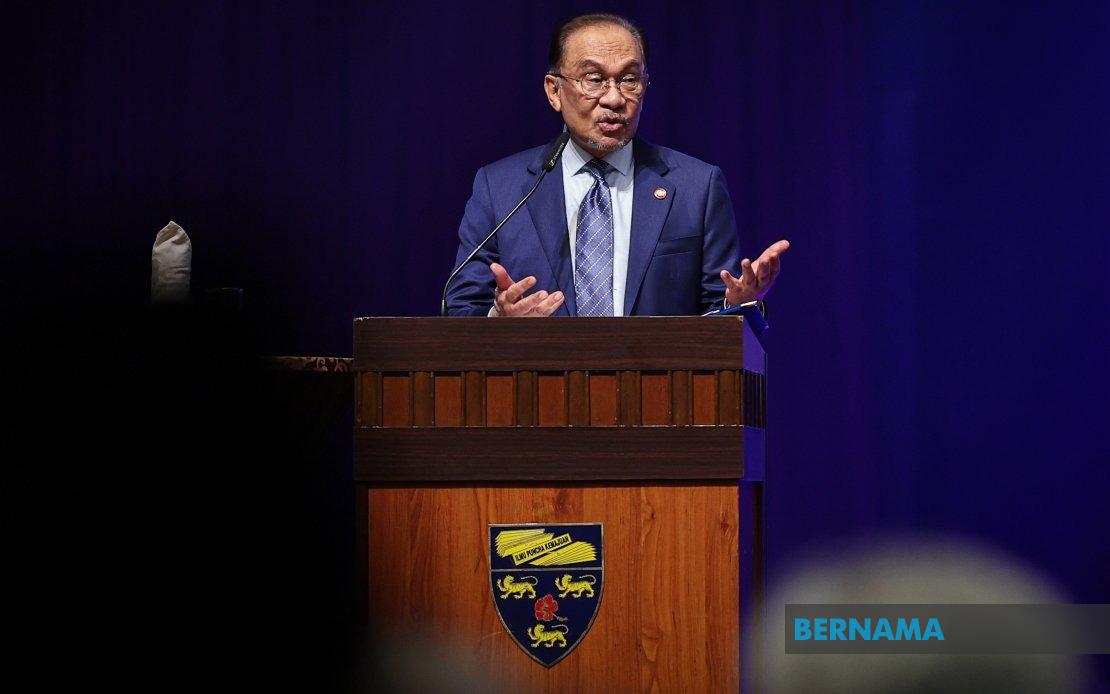
Prime Minister Datuk Seri Anwar Ibrahim has stepped in to help a gravedigger struggling with a debilitating illness, authorising a cash donation of RM2,000 to support the man's mounting medical expenses. Rosli Abdullah, 52, who has endured mouth cancer for the past three years, received the assistance through the Implementation Coordination Unit (ICU) of the Prime Minister's Department (JPM), with the funds handed over during a ceremony at Flat Batas Baru surau in Kuala Terengganu on July 9.
Azhar Abd Hamid, deputy director of the Terengganu Federal Development Department's (PPPN) ICU, presented the donation and outlined the government's dual approach to addressing Rosli's predicament. Beyond the immediate cash support aimed at easing his financial strain and offsetting upcoming surgical costs, the government identified a critical administrative gap: Rosli had not been enrolled in the e-Kasih social assistance programme despite meeting all eligibility requirements. Azhar confirmed that registration proceedings would commence immediately, positioning Rosli to receive ongoing government support beyond this initial intervention.
Rosli's health trajectory has become increasingly precarious in recent months, according to Mohd Radzali Mohamad, deputy chairman of the Flat Batas Baru surau management. The swelling affecting his mouth and right cheek has progressed to the point where Rosli has been completely unable to communicate verbally for the past month. The physical deterioration extends to his nutritional intake, with the patient unable to consume solid food for two weeks and surviving solely on fluids administered through a feeding tube—a stark illustration of the severity of his condition.
The medical journey has been neither short nor simple. Rosli has already undergone surgery on two previous occasions, yet the malignancy has recurred, necessitating additional intervention. The Sultanah Nur Zahirah Hospital in Terengganu has deemed his case sufficiently complex to warrant specialised tertiary care, referring him to Universiti Sains Malaysia Hospital in Kubang Kerian, Kelantan for advanced follow-up surgery. This referral pattern suggests the cancer may have progressed beyond what local facilities can manage, underlining the urgency of the procedure.
Rosli's vulnerability extends beyond his health crisis. He has maintained residence at the surau for more than three decades, having integrated himself into the community through his work as a gravedigger and cleaner. Living alone and unmarried, he possesses no family safety net. His deteriorating physical condition has rendered him incapable of performing the labour that once sustained him, eliminating both his income sources and his ability to contribute to the community that has sheltered him. The surau management has become his de facto support system, recognising an obligation to care for someone who has become dependent on collective charity for basic survival.
The surau itself has responded to the crisis by establishing a dedicated donation fund to cover Rosli's medical and surgical expenses. However, despite community goodwill, the collected funds remain inadequate to meet the full cost of his treatment. This funding shortfall illustrates the limitations of grassroots charitable mechanisms when confronting serious illness in a low-income individual. The gap between community capacity and clinical need created space for government intervention, which the Prime Minister's office was swift to fill.
Rosli's case reflects broader realities within Malaysia's social safety net. The fact that someone meeting e-Kasih criteria had not been registered despite years of need suggests systemic identification challenges—individuals experiencing hardship may not navigate bureaucratic pathways independently, particularly when incapacitated by illness. The surau management's proactive outreach to government authorities, coupled with the PM's office responsiveness, highlights how personal advocacy and institutional attention can unlock assistance for those who might otherwise slip through administrative cracks.
For Malaysian readers, the intervention demonstrates both the availability of expedited assistance channels and the critical importance of community institutions in identifying vulnerable individuals. Religious organisations like suraus function as more than places of worship; they serve as de facto social safety nets, particularly for marginalised individuals without family support. The government's willingness to cross-register individuals into formal assistance programmes based on community intelligence suggests an openness to filling gaps identified at ground level.
The political dimension merits consideration as well. Anwar Ibrahim's personal engagement in individual cases of hardship, particularly in constituencies across Malaysia, reflects a governance approach emphasising direct responsiveness to citizen suffering. While symbolic gestures carry obvious political value, the simultaneous activation of formal assistance infrastructure—the e-Kasih registration—suggests an attempt to move beyond one-off charity toward sustainable support mechanisms. For policymakers, Rosli's case underscores the value of embedding community informants within bureaucratic identification systems.

