A contingent of 200 trainees from the restructured National Service Training Programme (PLKN) 3.0 will participate in the National Day parade in Putrajaya on August 31, marking a symbolic milestone for the rejuvenated conscription initiative. The selected participants will represent the fresh cohort of young citizens who have undergone the reformulated training regimen, standing before the King, Prime Minister, and Cabinet members in what officials describe as a momentous occasion for the nation's youth development agenda.
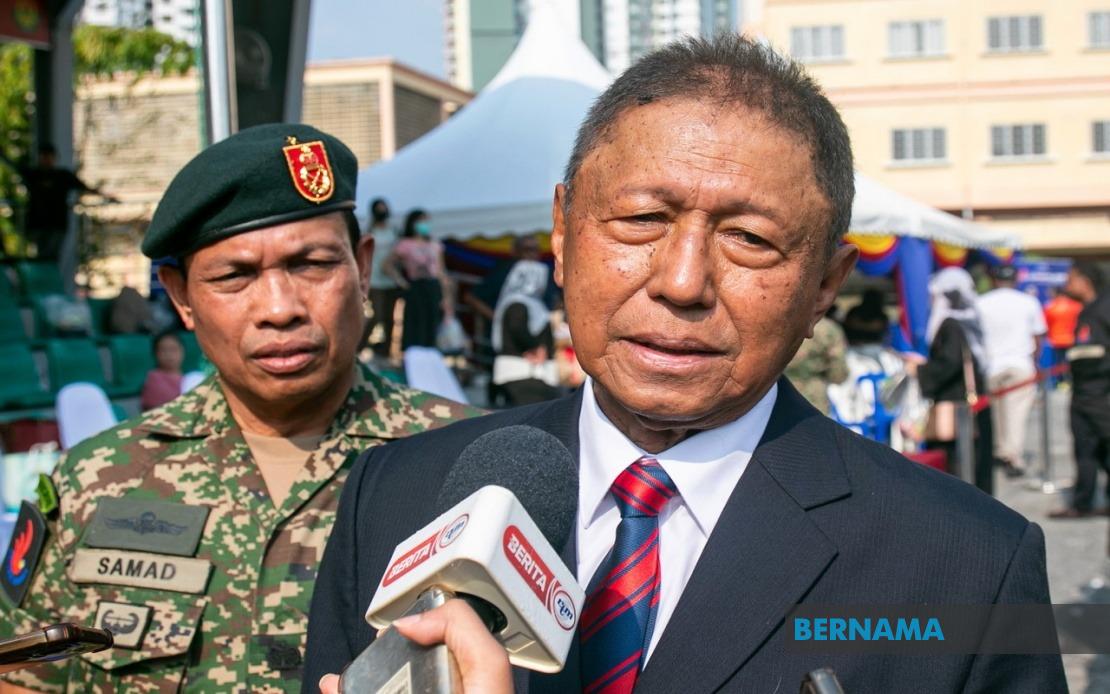
General (Rtd) Tan Sri Dr Abdul Aziz Zainal, chairman of the National Service Training Council (MLKN), confirmed the participation while highlighting the broader significance of the event. Rehearsals will commence immediately in Putrajaya, allowing the contingent to prepare meticulously for the high-profile showcase. The decision to incorporate PLKN 3.0 trainees into the National Day festivities reflects a strategic effort to elevate public awareness of the programme's outcomes and to demonstrate the tangible benefits of the mandatory training experience to Malaysian society at large.
The timing of this announcement follows the successful completion of PLKN 3.0 Series 3/2026, which concluded with a passing-out ceremony at the National Service Training Branch at 515 Territorial Army Camp in Kuala Lumpur. A total of 795 trainees finished the eight-week programme, which commenced on July 11 and operated across three training facilities nationwide. The cohort comprised 106 female trainees from Camp 504 AW in Bukit Keteri, Perlis; 442 male trainees from Camp 505 AW in Pekan, Pahang; and 247 female trainees from Camp 515 AW in Kuala Lumpur, demonstrating the geographically distributed nature of the training infrastructure.
Among the graduating class, three trainees earned recognition as top performers at their respective facilities. An'nur Najiha Muhammad, an 18-year-old from Ipoh, Perak, achieved distinction at Camp 504 AW, whilst Muhammad Firdaus Muhammad Said, also 18 and from Kuantan, Pahang, received similar honours at Camp 505 AW. At Camp 515 AW in Kuala Lumpur, Cheyenne Alessandra Michael, likewise 18, stood out as an exceptional trainee. These individuals exemplify the calibre of participants progressing through the updated programme structure.
Cheyenne Alessandra's pathway into PLKN 3.0 reveals much about the scheme's appeal to Malaysia's younger generation. She volunteered for the programme motivated by aspirations to pursue a military career, and she has characterised the 45-day training experience as transformative in nurturing patriotic sentiment. Her exposure to soldiers at the Wataniah Territorial Army camp deepened her appreciation for the armed forces and crystallised her understanding of the sacrifices made during Malaysia's independence struggle. This personal narrative underscores how the programme functions beyond formal military conditioning, fostering emotional connections to national service and collective heritage.
The expansion trajectory of PLKN 3.0 signals confidence from policymakers in the initiative's trajectory. Abdul Aziz revealed plans to significantly enlarge the capacity of Series 4/2026 by establishing additional training centres and forging partnerships with the Malaysian Volunteer Corps Department (RELA). By leveraging RELA's existing infrastructure alongside the current facilities, the MLKN anticipates training more than 1,000 recruits in the forthcoming series, nearly doubling the throughput of preceding cohorts. This expansion represents a substantial commitment to scaling the programme nationally.
The geographic footprint of PLKN 3.0 is set to broaden considerably. Five new camps will commence operations, including Camp 503 at Hutan Melintang in Perak, Camp 506 at Sungai Durian in Kelantan, and Camp 513 at Bukit Pinang in Kedah. Additionally, two Public Training Institute (ILA) centres in Sungai Petani, Kedah and Tuaran, Sabah will function as supplementary facilities. This decentralised approach aims to reduce barriers to participation across Malaysia's diverse regions and to distribute the administrative burden more equitably across the peninsula and East Malaysia.
For Malaysian policymakers and observers, the expansion reflects acknowledgment that the controversial mandatory service scheme required structural refinement to gain broader acceptance. PLKN 3.0 emerged from feedback and reforms to the original programme, addressing criticisms regarding training quality, camp conditions, and relevance to contemporary national challenges. By integrating RELA training expertise and expanding capacity, the authorities signal an intent to professionalise the initiative and embed it durably within the nation's civic institutions.
The National Day parade debut carries symbolic weight within Malaysia's political landscape. Public visibility of PLKN 3.0 trainees marching in formal ceremonial contexts sends a message about government investment in youth mobilisation and national identity-building. For supporters of the programme, such visibility legitimises the substantial fiscal and administrative resources committed to mandatory conscription. For critics concerned about the scheme's effectiveness or necessity, it represents an attempt to manufacture legitimacy through ceremonial grandeur.
Cheyenne Alessandra's reflection that the training experience fostered gratitude for past sacrifice and responsibility toward future peace-building captures the psychological objectives underlying PLKN 3.0. Beyond physical conditioning and basic military skills, the programme aspires to cultivate a particular conception of citizenship rooted in martial service and national devotion. Whether this aspiration translates into measurable improvements in social cohesion, civic engagement, or national resilience remains contested among analysts and stakeholders, particularly given the programme's compressed timeframe and voluntary-cum-mandatory status for different demographics.
The expansion to more than 1,000 trainees in Series 4/2026 positions PLKN 3.0 as an increasingly significant institution within Malaysia's social and educational landscape. If sustained at this enlarged scale, the programme will eventually encompass tens of thousands of young citizens over successive years, making it a formative experience for a growing proportion of Malaysia's youth cohorts. This expansion trajectory warrants ongoing scrutiny regarding resource allocation, trainer quality, curriculum effectiveness, and long-term outcomes for participants and national development priorities.
Regionally, Malaysia's commitment to expanding mandatory national service contrasts with policies in several neighbouring Southeast Asian nations that have scaled back or eliminated conscription schemes. The decision to enlarge PLKN 3.0 reflects particular strategic calculations about national security, social integration, and governance approaches that reflect Malaysia's distinct political economy and demographic composition. Observers across the region will monitor whether the expanded programme achieves stated objectives and whether it generates policy feedback affecting other nations' approaches to youth engagement and national resilience.

