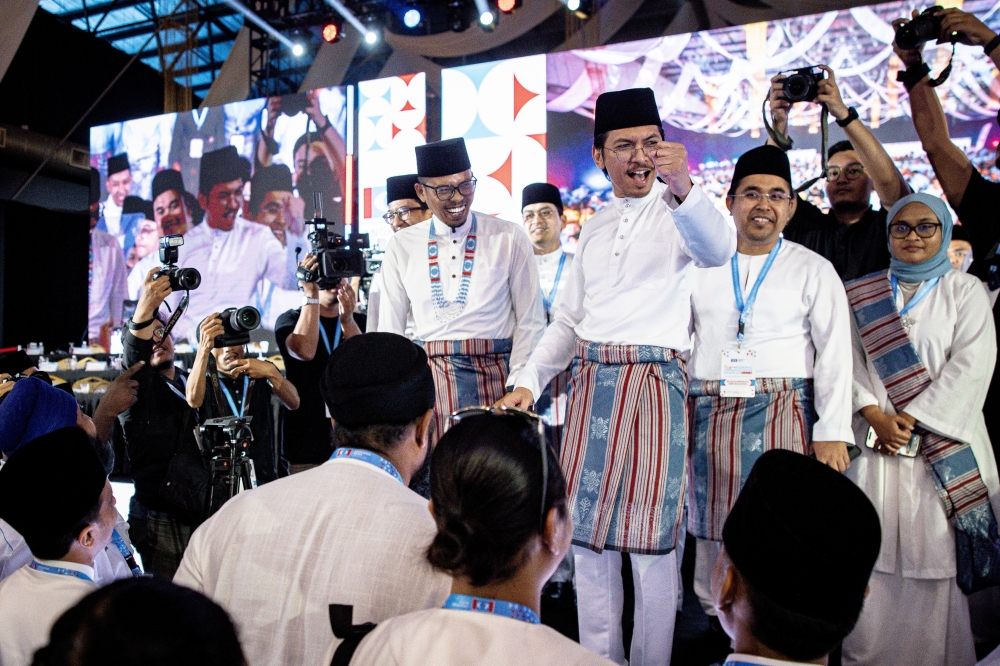
The youth wing of Pakatan Rakyat's People's Justice Party has publicly endorsed Prime Minister Datuk Seri Anwar Ibrahim's commitment to dismantle the Universities and University Colleges Act, signalling broader party alignment on the contentious higher education legislation that has long restricted student freedoms. The backing from PKR Youth represents a consolidation of reformist sentiment within the ruling coalition and underscores growing political consensus that the Act, which has governed tertiary institutions since its introduction, requires fundamental overhaul to align with contemporary democratic expectations.
Prime Minister Anwar Ibrahim had previously announced his government's intention to repeal the legislation, a position that carries significant symbolic weight given Malaysia's historical tensions between campus activism and state control. The Universities and University Colleges Act has traditionally served as a mechanism to regulate student conduct, restrict political participation, and constrain academic freedoms on public campuses—measures that civil society groups and youth organisations have repeatedly criticised as obstacles to genuine democratic development. PKR Youth's support crystallises this commitment within the party structure, creating internal political accountability for implementation.
Beyond simply endorsing the repeal, PKR Youth has issued a broader call for student mobilisation and engagement with the reform process itself. The youth wing appears cognisant that legislative change alone is insufficient; institutional cultures, administrative practices, and campus governance structures developed over decades under the existing regulatory framework require parallel transformation. By urging students to actively participate in articulating reform demands, PKR Youth is essentially positioning the upcoming changes as an opportunity for young people to reshape their own institutional environments rather than passively receiving reforms handed down by government.
This messaging carries particular resonance in Malaysia's political context, where youth voter participation and engagement have become increasingly central to electoral outcomes and policy legitimacy. Universities constitute crucial spaces where political consciousness develops, and student activism has historically served as a bellwether for broader social movements. The PKR Youth initiative recognises that meaningful repeal of the Act requires students themselves to become vocal agents in the reform process, articulating concrete demands regarding curriculum autonomy, student governance participation, and protection of expression rights.
The call for wider reforms extends beyond the narrow scope of legislative repeal. Educational analysts across the region have increasingly argued that Malaysian higher education requires comprehensive restructuring to address quality concerns, enhance institutional autonomy, improve international competitiveness, and foster critical thinking capacities. The removal of the Universities and University Colleges Act could serve as a catalyst for broader conversations about university governance models, resource allocation, research prioritisation, and the role of tertiary institutions in a knowledge-driven economy. PKR Youth's framing positions student activism not as peripheral to these discussions but as central to their legitimacy and effectiveness.
The initiative also reflects international academic trends emphasising student-centred governance and participatory decision-making in higher education institutions. Malaysian universities, despite their regional ranking and international visibility, have operated under relatively restrictive administrative models compared to peer institutions in developed democracies and some neighbouring countries. The repeal of restrictions on student political engagement and academic freedom could facilitate institutional benchmarking against global best practices and position Malaysian campuses as more attractive destinations for international scholars and researchers.
From a governance perspective, PKR Youth's emphasis on student voice during the reform process addresses a critical implementation challenge. Legislative change without corresponding shifts in administrative attitudes and institutional cultures frequently results in nominal compliance rather than genuine transformation. By mobilising students as reform advocates rather than passive beneficiaries, the party wing is attempting to create countervailing pressure that might sustain momentum beyond the initial legislative victory and into the deeper institutional transformation required for lasting change.
The repeal initiative also carries implications for Malaysia's international standing and soft power. Education rankings increasingly incorporate indicators of institutional autonomy, academic freedom, and student engagement in governance. Current restrictions under the Universities and University Colleges Act have occasionally featured in critical commentary regarding Malaysian higher education by international academic organisations and rankings agencies. The removal of these restrictions could modestly improve Malaysia's profile in education-related global assessments and enhance its appeal to both international talent and students considering tertiary education destinations.
Politically, PKR Youth's backing of the repeal reflects broader reformist positioning within the ruling coalition and may indicate efforts to consolidate support among younger voters and campus-based constituencies. While the broader Pakatan Rakyat coalition contains diverse viewpoints on certain policy matters, the Universities and University Colleges Act repeal appears to command consensus, suggesting this could represent one area of unified coalition implementation in the coming legislative session. The emphasis on student participation also serves to distribute some ownership of reform outcomes among the young people most directly affected by changes, potentially strengthening the political credibility of government educational policies more broadly.
The path forward requires coordinated action across multiple government agencies, institutional stakeholders, and student organisations. Beyond legislative repeal, authorities must clarify the regulatory framework that will replace the Act, establish mechanisms for meaningful student participation in university governance, protect academic freedom protections in institutional bylaws and regulations, and develop administrative cultures genuinely committed to the freedoms the new legislation will provide. PKR Youth's call for student activism suggests the party organisation intends to maintain engagement with these implementation details rather than treating repeal as the endpoint of reform efforts.

