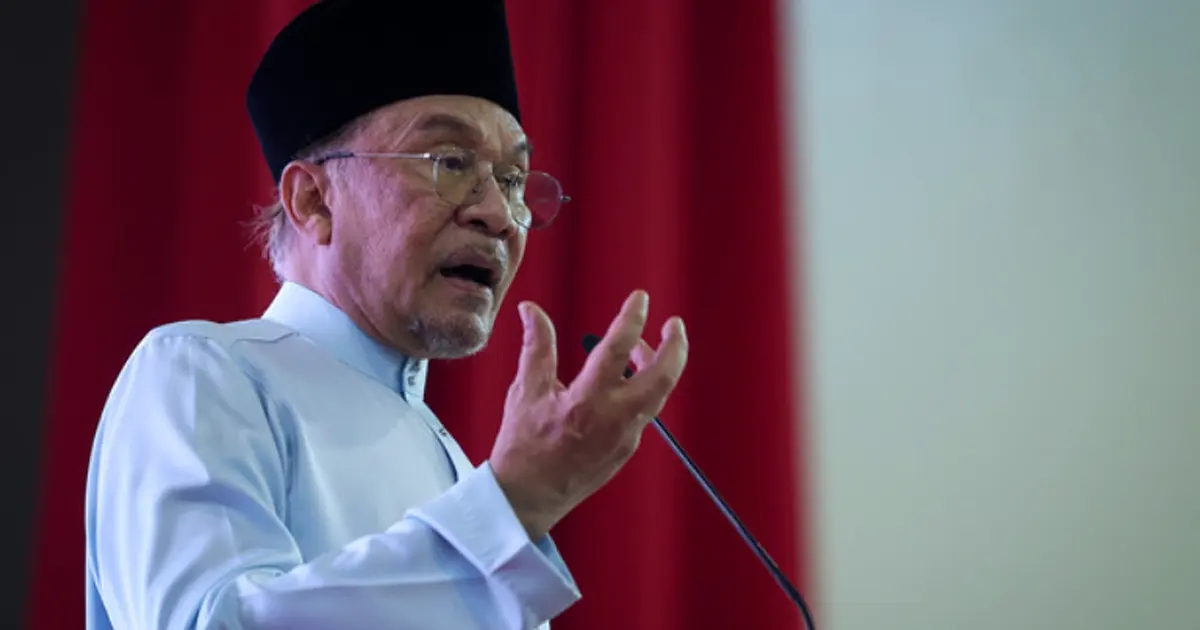
A prominent figure within PKR's youth wing has levelled sharp criticism at Umno, contending that the party has ungraciously repaid Prime Minister Anwar Ibrahim's political support in the aftermath of the 15th General Election. Huraimi Husri, representing the Federal Territories chapter of PKR Youth, articulated the grievance that the PKR president extended crucial assistance to Umno during a period of acute organisational vulnerability, yet faced what he characterises as a betrayal in return.
The remarks underscore simmering tensions within Malaysia's ruling coalition that emerged following the tight electoral outcome in November 2022, when no single party secured an outright parliamentary majority. In the uncertain political environment that followed, the formation of a functioning government required delicate negotiations and unprecedented cooperation between parties that had traditionally competed fiercely. Anwar Ibrahim's pivotal role in assembling the Pakatan Harapan coalition and subsequently negotiating with both Barisan Nasional and Gabungan Parti Sarawak proved instrumental in establishing the current administration.
From PKR's perspective, the engagement with Umno carried considerable political cost. The party needed to forge pragmatic arrangements with a rival that had long been portrayed as emblematic of the ancien régime against which reformist movements had mobilised. For Umno, receiving support from Anwar and Pakatan Harapan represented an extraordinary reversal of fortune. The party faced existential questions following GE15, having lost its supermajority status and faced the prospect of extended opposition after decades of uninterrupted governance. The coalition between these traditional adversaries, therefore, effectively rescued Umno from political obsolescence.
Huraimi's characterisation of Anwar as a friend who extended a helping hand reflects PKR's narrative construction of recent political history. In this framing, the PKR president's actions transcended partisan calculation and represented a statesmanlike commitment to political stability and inclusive governance. The youth leader's invocation of friendship language carries particular weight within Malaysian political discourse, where personal loyalty and reciprocal obligations occupy significant symbolic territory. By deploying such rhetoric, PKR Youth underscores what it perceives as an implicit understanding that underpinned the coalition arrangement—one grounded in mutual respect and shared commitment rather than mere transactional politics.
The accusation of betrayal, however, reflects deeper frustrations within the PKR leadership regarding how subsequent coalition dynamics have unfolded. Since the formation of the government, tensions have periodically surfaced between Umno and Pakatan Harapan partners, with disagreements over ministerial appointments, policy direction, and the distribution of political patronage. These frictions have occasionally threatened the government's stability, prompting recurrent negotiations to maintain the coalition's cohesion. From the PKR perspective, such episodes suggest that Umno has failed to acknowledge adequately the debt it owes to Anwar's political intervention.
For Malaysian readers monitoring coalition politics, these comments signal the fragility of arrangements forged through necessity rather than ideological alignment. The partnership between reform-oriented Pakatan Harapan and the traditional establishment Umno always carried inherent contradictions. Umno's recovery since accepting coalition status has arguably strengthened its negotiating position within government, allowing it to assert claims and demands with greater confidence. This dynamism may be interpreted either as the natural evolution of coalition politics or, as PKR Youth suggests, as opportunistic repositioning at the expense of past benefactors.
The broader significance of Huraimi's remarks extends to questions about how Malaysian political actors memorialise and interpret recent history. PKR's insistence that Anwar's role should be remembered as salvific and generous reflects an attempt to establish a particular narrative of recent events—one that emphasises PKR's statesmanship and Umno's ingratitude. Such narrative battles prove consequential for future coalition negotiations, as they shape how parties justify their demands and grievances to both supporters and potential allies.
Regionally, the commentary illuminates how Southeast Asian coalition politics operate in contexts of hung parliaments and fractured mandates. Malaysia's experience since 2022 demonstrates both the necessity and the strain of broad coalitions that unite disparate political forces. Other democracies in the region watching Malaysia's trajectory may draw lessons regarding the sustainability of arrangements built on pragmatism rather than shared programmatic vision.
The timing of such criticisms also warrants attention. Public articulation of grievances by party youth wings often reflects broader leadership calculations about coalition management and positioning ahead of potential political transitions. Whether Huraimi's remarks represent tactical pressure on Umno or express genuine underlying frustration may indicate evolving coalition dynamics that warrant close monitoring by observers of Malaysian politics.
Moving forward, such public airing of coalition tensions underscores the necessity for explicit mechanisms of dispute resolution and renewed commitment from coalition partners to honour reciprocal obligations. Without such arrangements, the delicate ecosystem that has sustained Malaysia's multi-party government since GE15 may face continued strain.

