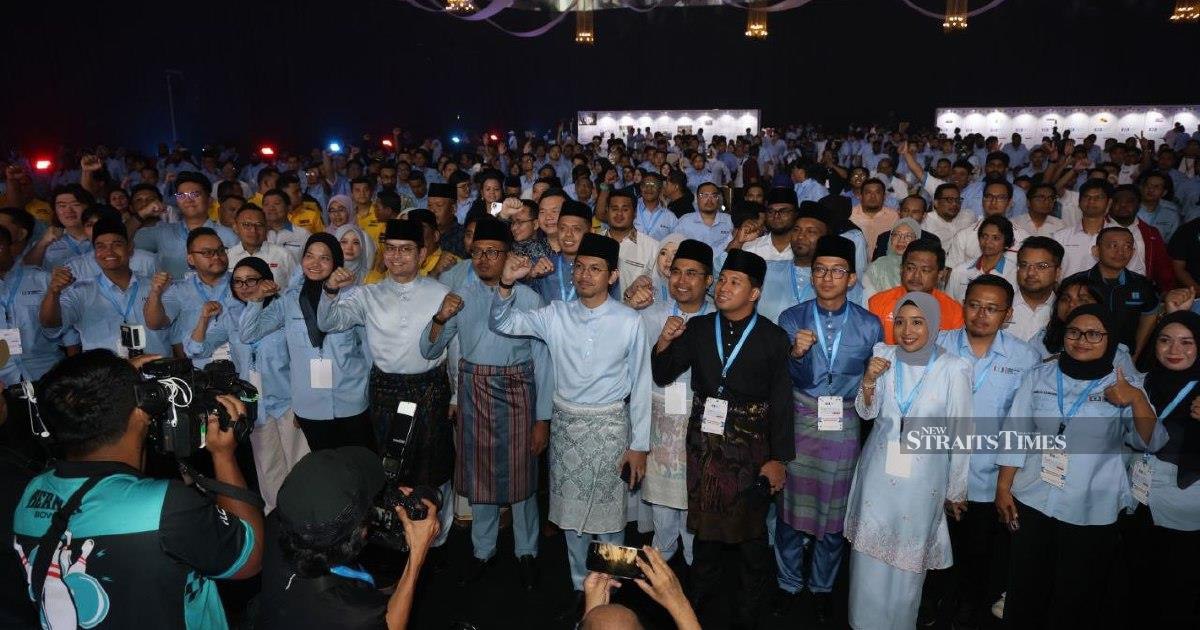
The Pakatan Harapan coalition faces a critical moment of introspection following disappointing performances in recent state elections, according to PKR Youth chief Muhammad Kamil Abdul Munim. Speaking in Ayer Keroh, Kamil delivered a blunt message to his own coalition's leadership: voters are justified in their decisions, and PH must bear responsibility for its current standing rather than deflecting blame onto the electorate.
This candid assessment from within the opposition coalition reveals growing frustration among younger party members with how PH's senior leadership has responded to electoral reverses. The Johor and Negeri Sembilan state elections served as a reality check for an alliance that once rode a wave of reform sentiment to federal power in 2018, only to face the collapse of that government three years later. Instead of engaging in recrimination against voters, Kamil's intervention suggests PH ought to conduct serious self-examination about why it has lost the confidence of significant portions of the Malaysian electorate.
The underlying message is particularly significant given Kamil's position within PKR's youth wing. As a representative of the party's younger cadre, his willingness to criticize the current approach indicates that generational tensions exist within Pakatan Harapan over strategy and accountability. Youth members appear more willing to acknowledge fundamental failings than some of their senior counterparts, viewing the electoral performance as a symptom of deeper organizational and leadership issues rather than the result of external factors or voter irrationality.
Malaysia's political landscape has undergone seismic shifts in recent years, and voter behavior has become increasingly volatile and sophisticated. Rather than interpreting rejection at the ballot box as a judgment error on the voters' part, Kamil's argument suggests that PH should treat electoral losses as meaningful feedback about public perceptions of the coalition's performance, values, and viability as an alternative government. This perspective aligns with political science research showing that consistent electoral rejection typically reflects genuine dissatisfaction rather than voter confusion or manipulation.
The timing of Kamil's remarks carries additional weight given ongoing discussions within Malaysian political circles about coalition recalibration and the prospects for the next general election. Pakatan Harapan's ability to regain momentum depends significantly on demonstrating genuine responsiveness to voter concerns rather than adopting defensive postures. States like Johor and Negeri Sembilan are bellwethers for broader national sentiment, and their recent results suggest that the coalition has work to do in rebuilding its relationship with the Malaysian public.
Trust in political institutions and leaders across Southeast Asia has been challenged in recent years, and Malaysia is no exception. For opposition coalitions seeking to return to power, credibility becomes an essential currency. When voters reject a coalition, the coalition's response to that rejection matters enormously for future political prospects. A defensive approach that implicitly questions voter judgment may deepen skepticism, while an approach acknowledging legitimate concerns creates space for potential reconciliation.
Kamil's intervention also speaks to broader challenges within multi-party coalitions in Malaysian politics. Pakatan Harapan comprises parties with distinct ideological orientations and constituency bases, making unified messaging difficult. Youth wings often serve as testing grounds for new political narratives before they gain wider acceptance. By articulating this position on the need to rebuild trust rather than blame voters, Kamil may be signaling emerging consensus among younger party members about the direction PH should take.
The specific mention of both Johor and Negeri Sembilan elections suggests these states represent turning points in how PH is perceived. Johor, once a stronghold of the Barisan Nasional, remains a significant political prize in Malaysian politics, while Negeri Sembilan historically has been more competitive between coalitions. If PH struggled in both contexts, it indicates the coalition's challenges span different demographic and geographic zones, pointing to systemic issues rather than localized problems.
Moving forward, Pakatan Harapan faces a choice between two fundamentally different responses to electoral setback. One path involves recommitment to core principles and transparent acknowledgment of where the coalition fell short in implementing promises or meeting public expectations. The other involves emphasizing external obstacles and questioning voter behavior. Kamil's statement suggests at least some influential voices within PH recognize that the first path offers better prospects for genuine political recovery.
For Malaysian voters themselves, these internal PH discussions carry practical implications. Opposition coalitions that demonstrate capacity for honest self-assessment and course correction may prove more trustworthy potential governing alternatives than those that blame external factors for underperformance. The coming months will reveal whether Kamil's perspective influences broader PH strategy or remains a minority position among party elites.
The broader regional context matters as well. Across Southeast Asia, voters have shown increasing willingness to shift support between political camps when dissatisfied, and incumbent coalitions cannot assume automatic voter loyalty. For Pakatan Harapan to emerge as a credible alternative to whatever coalition currently holds federal power, demonstrating responsiveness to public concerns becomes essential. Kamil's message, though directed at PH leadership, implicitly acknowledges this reality and suggests a path toward rebuilding the kind of trust that enabled PH's surprising 2018 victory.

