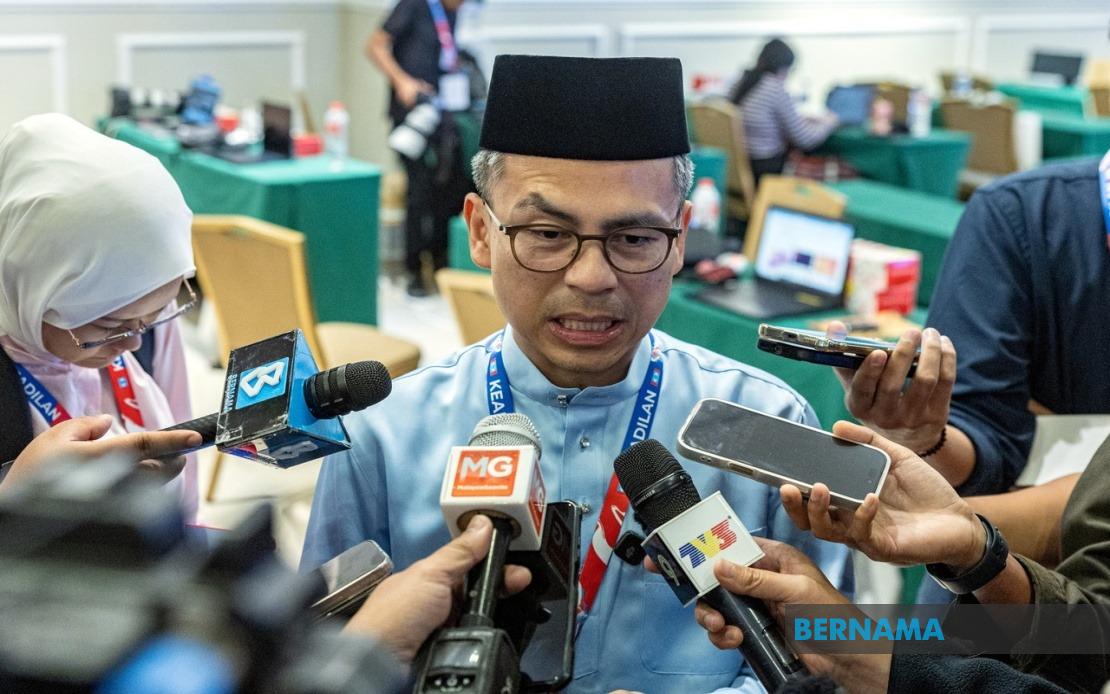
Parti Keadilan Rakyat has committed to reinforcing its communication infrastructure during the ongoing PKR National Congress 2026 at the Melaka International Trade and Exhibition Centre, recognising that stronger information dissemination channels are essential for connecting policy achievements with public understanding. The party leadership, responding to feedback from delegates gathered in Ayer Keroh, acknowledged that despite considerable government effort and tangible economic progress, these gains have not sufficiently translated into felt improvements in Malaysian households.
Communications Minister Datuk Seri Fahmi Fadzil, who also serves as PKR's Information Chief, framed the initiative as a critical priority for both the ministry and the broader Pakatan Harapan coalition. Speaking to reporters at the congress, he underscored that this represents one of his key messages as Communications Minister and as communications director for the coalition government. The initiative reflects a recognition that effective governance requires not merely the implementation of policies but also their successful articulation to citizens, a challenge that has preoccupied many ruling coalitions across Southeast Asia.
The communications overhaul emerged from multiple proposals tabled by delegates during congress deliberations. Fahmi indicated that formal recommendations regarding information dissemination and enhanced communication protocols would be presented during the session's concluding remarks, signalling that this is not an ad-hoc response but a structured effort to reform party communication mechanisms. The acknowledgement that household-level economic improvements lag behind headline macroeconomic indicators touches on a persistent governance challenge: translating aggregate national statistics into relatable narratives about living standards and opportunity.
Fahmi demonstrated openness to the diverse perspectives raised by branch-level leaders, praising their willingness to assume greater responsibility in information dissemination efforts. He noted that while informal communication channels have existed historically within PKR, a more formalised arrangement would ensure that concerns raised at parliamentary level reach decision-makers in Putrajaya and that coordinated solutions can be developed. This hierarchical framing suggests that the party recognises communication breakdowns may occur between constituency-level feedback and central government response mechanisms.
The proposal to strengthen communication pathways reflects a broader governance reality in Malaysia's political ecosystem. As a coalition government, Pakatan Harapan comprises multiple parties with distinct constituencies and communication networks, creating both opportunities and potential friction points. A more structured approach to information dissemination across PKR's extensive party machinery could serve as a model for coalition-wide coordination, particularly given PKR's role as the largest component party.
The timing of this initiative at the national congress is politically significant. Party congresses serve as crucial venues where grassroots members provide feedback to leadership, and the prominence accorded to communication issues suggests that party activists perceive existing channels as inadequate. This grassroots dissatisfaction, if widespread, could threaten electoral prospects in key constituencies where voters feel disconnected from government narratives about economic performance.
Fahmi's emphasis on making internal leadership changes first suggests PKR recognises that effective external communication depends on internal alignment. This acknowledgement that transformation must begin within the party's own hierarchy indicates a commitment to substantive rather than cosmetic reform. The Central Leadership Council's receptiveness to delegate proposals, as Fahmi indicated, may signal that PKR leadership views this moment as opportune for internal restructuring.
For Malaysian voters, particularly in constituencies where PKR holds significant influence, this commitment to enhanced communication carries practical implications. Clearer government messaging about economic policies, development projects, and social initiatives could improve policy acceptance and citizen engagement. Conversely, if implementation lags behind promises, the improved communication infrastructure could amplify public frustration if gaps persist between rhetoric and household reality.
The broader Southeast Asian context adds weight to PKR's initiative. Across the region, ruling coalitions face persistent challenges in convincing citizens that economic growth translates into tangible improvements in their daily lives. Inflation, employment uncertainty, and access to services remain concerns even in growing economies. PKR's recognition that communication deficits compound these challenges reflects learning from regional experiences where governance legitimacy depends not solely on policy outcomes but on citizens' perception that government understands and addresses their concerns.
The party's focus on bridging parliamentary-level issues with Putrajaya decision-making also addresses a structural weakness in coalition governance: ensuring that feedback from elected representatives genuinely influences executive decisions. In Malaysia's parliamentary system, this connection is essential for maintaining backbench discipline and public confidence that constituent concerns reach central government. Formalising these channels could strengthen PKR's internal cohesion and its contribution to overall coalition effectiveness.
Moving forward, the success of PKR's enhanced communication strategy will depend on implementation rigour and resource allocation. Merely announcing improved information dissemination without adequate funding, training, and technological infrastructure risks creating further frustration among party cadres tasked with communication responsibilities. The party's willingness to resource this initiative will serve as a meaningful indicator of leadership commitment.
Ultimately, PKR's initiative reflects a mature recognition that governing requires sustained attention to how policies are explained and discussed among citizens. In an era of fragmented information environments and competing narratives, political parties that master communication strategies gain significant electoral advantage. For Pakatan Harapan, demonstrating that government achievements translate into household-level improvements remains central to maintaining coalition viability heading toward the next general election.

