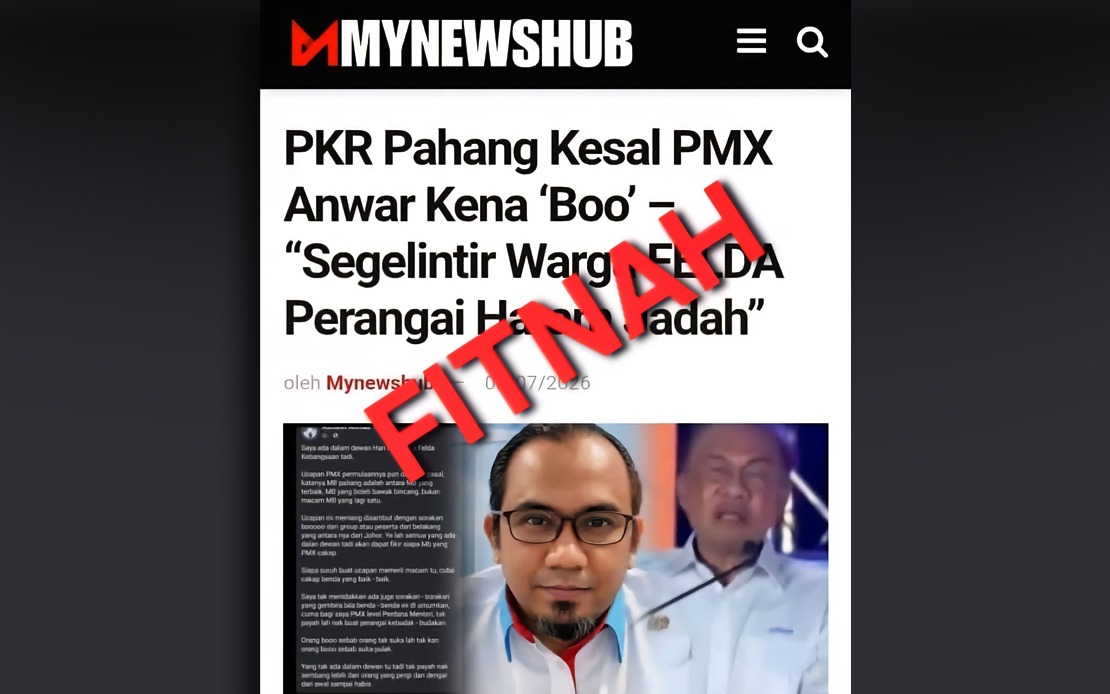
The PKR Pahang division has moved swiftly to counter what it characterises as a false and damaging narrative surrounding Prime Minister Datuk Seri Anwar Ibrahim's attendance at FELDA Settlers' Day and the organisation's 70th anniversary celebration held at Stadium Tun Abdul Razak in Jengka. The party's information chief Datuk Dr Suhaimi Ibrahim issued a categorical denial of claims circulated by an online portal, asserting that PKR Pahang neither issued the statement attributed to it nor expressed any disappointment regarding the Prime Minister's reception at the event.
Dr Suhaimi, who was present throughout the proceedings, provided a first-hand account contradicting the reported narrative. According to his statement, the gathering was characterised by energy and efficient organisation, drawing overwhelming participation from tens of thousands of FELDA settlers across the state. He emphasised that the allegations of the Prime Minister being booed represented a distorted version of events that bore no resemblance to what actually transpired on the ground, suggesting instead that such characterisations were sensationalised misrepresentations designed to inflame rather than inform.
The PKR Pahang information chief highlighted that announcements concerning settler initiatives and welfare measures were consistently greeted with applause and positive engagement from attendees. This observation stands in direct contrast to the online portal's framing, which suggested a public reception characterised by resistance and dissatisfaction. The distinction between these two accounts is significant, particularly given the political implications of such narratives during a period when FELDA communities represent a crucial electoral constituency in Malaysian politics.
A central concern raised by Dr Suhaimi centred on what he described as the irresponsible invocation of PKR Pahang's name to lend credibility to statements the party had never authorised or issued. By attributing statements to the political organisation without its consent, the online portal not only misrepresented the party's position but potentially violated basic journalistic standards regarding source verification. Dr Suhaimi stressed that such practice was misleading, could inflict reputational damage on PKR Pahang, and appeared calculated to distort rather than clarify political developments.
The PKR Pahang official further characterised the disputed report as reflecting an approach more aligned with political perception management than factual journalism. He suggested that the construction of a narrative portraying public discontent, whether accurate or fabricated, served particular political interests and that this appeared to be the underlying motivation for the online portal's coverage. This critique implies broader concerns about information integrity in Malaysia's increasingly fractious digital media landscape, where partisan narratives can proliferate rapidly.
Beyond the immediate denial, Dr Suhaimi issued a broader appeal to media practitioners and social media users to exercise greater diligence in verifying information before sharing or publishing content. His call reflected frustration with what he characterised as an environment where sensationalism often trumps accuracy, and where the speed of digital dissemination frequently outpaces the verification process. This concern resonates with broader anxieties about misinformation in Southeast Asia, where false or misleading narratives can gain traction particularly quickly during politically sensitive periods.
The disputed event itself represented a significant occasion for the federal government. Prime Minister Anwar Ibrahim had officiated the celebrations and announced seven specific incentives designed to enhance development initiatives and improve welfare programmes within FELDA communities. These announcements constituted substantive policy initiatives aimed at addressing settler concerns and strengthening the government's connection with this demographic. The framing of such positive policy announcements as occurring against a backdrop of public hostility would fundamentally undermine their political effectiveness.
FELDA settler communities occupy a distinctly important position within Malaysia's political economy and electoral mathematics. Historically, these communities have represented a significant voting bloc, and contemporary administrations continue to compete intensively for their support. Any suggestion that public sentiment among FELDA populations has turned against the current Prime Minister carries serious political weight, making the accuracy of such claims essential rather than peripheral to understanding current political dynamics. PKR's robust response reflects the stakes involved in how these communities are portrayed.
The incident illustrates persistent vulnerabilities within Malaysia's information ecosystem, particularly regarding the proliferation of unverified claims through online platforms. Even as traditional news agencies maintain editorial standards, online portals operate with fewer institutional constraints and verification mechanisms, creating space for narratives that may prioritise sensationalism over accuracy. The willingness of such platforms to misattribute statements to political organisations without verification suggests structural problems that transcend individual editorial choices.
For the Anwar government, the episode underscores the ongoing challenge of maintaining effective communication with key constituencies while contending with sometimes hostile media environments. The need to rapidly counter false narratives consumes political energy and resources that might otherwise be directed toward policy implementation or substantive political engagement. PKR's swift response reflected the recognition that allowing such claims to circulate unchallenged risked calcifying into accepted political truth within voter consciousness.
The broader context includes ongoing tensions between digital media platforms and established political organisations regarding information control and narrative framing. As digital channels have proliferated, traditional gatekeeping functions have weakened, enabling alternative narratives to circulate that might previously have been constrained by editorial hierarchies. This democratisation of information distribution carries both benefits for transparency and risks regarding the spread of misinformation, a tension particularly acute during election cycles or politically sensitive periods.
Moving forward, the incident raises questions about accountability mechanisms for online publishers and the development of information literacy among Malaysian citizens. As digital platforms continue to expand their influence over political discourse, stronger industry standards, clearer ethical guidelines, and more robust verification practices appear increasingly necessary. Both media organisations and civil society stakeholders must grapple with how to establish credibility benchmarks that distinguish careful reporting from partisan mythmaking in an environment where the distinction often becomes obscured.

