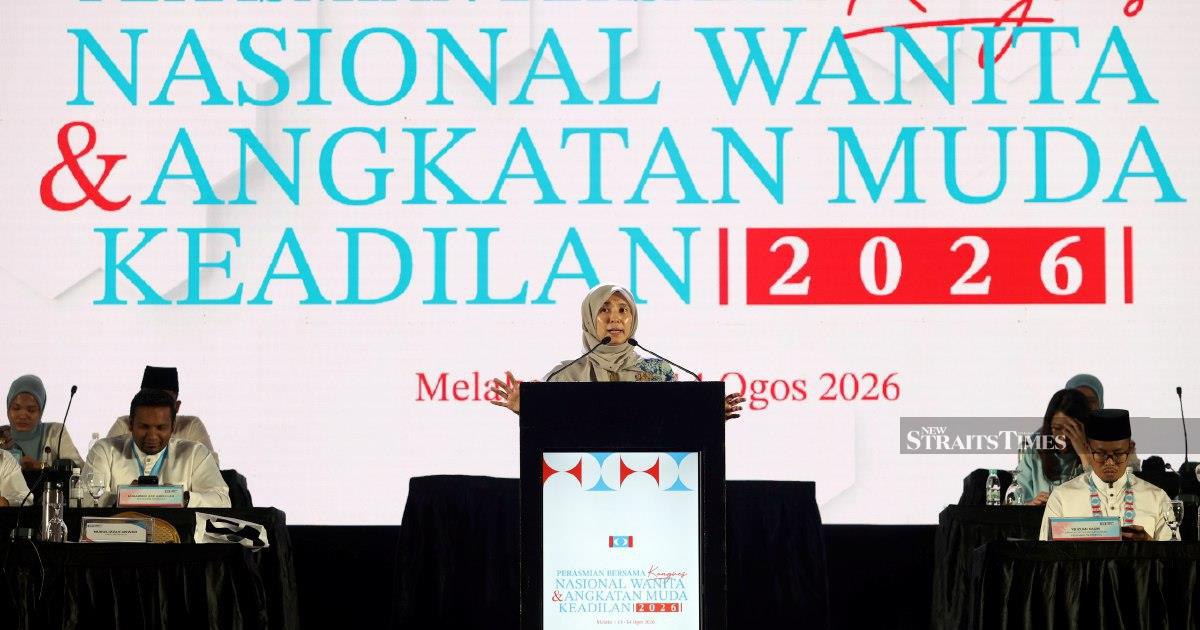
The People's Justice Party's deputy president, Nurul Izzah Anwar, has issued a pointed call for her party to articulate and maintain clear ethical parameters as it navigates Malaysia's increasingly complex political landscape. Speaking in Ayer Keroh, Nurul Izzah stressed the importance of defining what constitutes non-negotiable principles for PKR, a party that has undergone significant transformation since its early days of reform activism.
The emphasis on establishing "red lines" reflects growing concerns within PKR about the pressures inherent in coalition politics and the pragmatic compromises that often accompany holding ministerial positions and government influence. Nurul Izzah's intervention suggests internal discussions within the party about where boundaries should lie between acceptable political flexibility and capitulation on core values. Her warning carries weight given her family's long association with PKR's founding principles and her father Anwar Ibrahim's history as a vocal critic of corruption and institutional abuse.
Nurul Izzah's statement implicitly addresses a persistent tension in Malaysian politics: how ruling coalitions can maintain coherence and functionality whilst safeguarding against the moral hazard of power. Political alliances, particularly in Malaysia's fractious multi-ethnic democracy, frequently require give-and-take on policy positions and electoral preferences. However, she drew a firm distinction between reasonable compromise on political matters and accepting malfeasance as the price of coalition maintenance.
The deputy president was particularly emphatic that corruption—a perennial concern in Malaysian governance—should never be justified or overlooked in the name of keeping alliances intact. This stance takes on particular significance given Malaysia's ongoing efforts to rebuild institutional integrity following years of high-profile corruption scandals that had deeply eroded public confidence in government. PKR itself has positioned itself as a reform party, and Nurul Izzah's remarks suggest the party leadership is acutely aware of its responsibility to live up to that self-definition.
Abuse of power, another area Nurul Izzah highlighted, encompasses a broad range of potential misconduct from nepotism to selective law enforcement. Such abuses frequently undermine democratic institutions and public trust in governance far more subtly than outright theft or bribery, yet they are equally corrosive to the social contract. Her inclusion of this category alongside corruption demonstrates sophisticated thinking about institutional degradation and the various mechanisms through which governments can lose their legitimacy.
The timing of Nurul Izzah's remarks comes as PKR manages its role within the existing political configuration, where the party holds multiple cabinet positions and significant parliamentary representation. Coalition politics in Malaysia has repeatedly demonstrated its capacity to erode parties' founding missions as they become absorbed into the machinery of government. PKR's need to reaffirm its commitment to principle suggests the party recognises this gravitational pull and is attempting to establish anchors that prevent mission drift.
For Malaysian voters and observers of politics, Nurul Izzah's intervention carries practical implications. It signals that at least some PKR leadership remains conscious of the need for moral consistency and is willing to voice concerns about institutional integrity publicly. Whether such rhetoric translates into actual enforcement of standards, particularly when doing so might strain coalition relationships or require difficult personnel decisions, will be a crucial test of PKR's genuine commitment to reform principles.
The broader Southeast Asian context adds another dimension to understanding this moment. Across the region, centrist and reform-oriented parties have struggled to maintain their ideological coherence once they assume governmental power. The pattern in Thailand, Indonesia, and the Philippines suggests that without conscious effort and internal accountability mechanisms, reform parties gradually become indistinguishable from the traditional political establishments they once opposed. Nurul Izzah's call for defined red lines can be read as an attempt to reverse this regional pattern, at least within PKR's sphere.
For Malaysian civil society organisations, watchdog groups, and the broader public concerned with governance standards, Nurul Izzah's statement provides both encouragement and a benchmark. She has essentially invited scrutiny and accountability by publicly committing to the principle that certain matters are beyond the pale for PKR. This creates political space for external actors to hold the party and its members to these announced standards, making retreat from these positions more costly in terms of reputation and credibility.
The practical challenge PKR faces is translating these principles into enforceable institutional culture. Political parties are ultimately human organisations susceptible to the self-interest and rationalisations that plague all institutions. Establishing red lines requires not just rhetorical commitment but mechanisms for enforcement, including willingness to sanction party members who cross designated boundaries and transparent processes for adjudicating violations. How PKR chooses to operationalise Nurul Izzah's clarion call will reveal whether these statements represent genuine institutional reform or merely performative politics.
Moving forward, observers will watch to see whether PKR develops concrete procedures and governance structures that embed these principles. Beyond internal party mechanisms, the question of how federal and state governments in which PKR participates respond to credible allegations of wrongdoing will provide the real test. Nurul Izzah has raised the bar for her party's behaviour; whether PKR leadership collectively accepts that higher standard remains to be seen.

