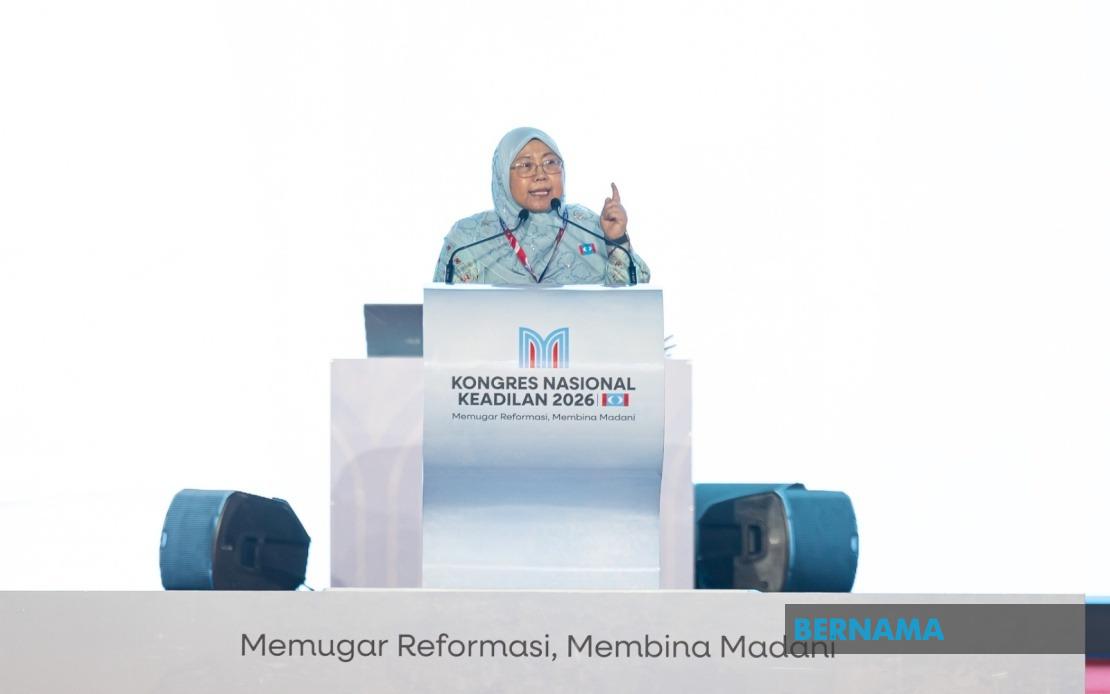
The political road ahead for Parti Keadilan Rakyat demands introspection rather than division, according to the party's secretary-general, who addressed delegates at PKR's 2026 National Congress in Melaka this week. Datuk Dr Fuziah Salleh cautioned against using the gathering as an opportunity for members to assign blame or seek retribution, instead framing it as a moment for the party to consolidate lessons from recent electoral disappointments and chart a path toward organisational strengthening.
In her opening remarks at the Melaka International Trade Centre, Fuziah emphasised that PKR's current circumstances, while undoubtedly challenging, do not represent an unprecedented crisis for the reform-focused party. She drew historical perspective by invoking the party's experience following the 2004 general election, when PKR's parliamentary representation plummeted to a single seat. Rather than succumbing to despair, the party persisted in building its grassroots infrastructure and spreading its Reformasi message across the nation. This historical comparison serves as a reminder to contemporary PKR members that institutional resilience emerges not from external validation or electoral dominance, but from internal commitment to foundational principles.
The congress theme, "Memugar Reformasi, Membina MADANI," encapsulates this philosophy of renewal grounded in original mission. Fuziah explained that the Malay word "memugar" carries profound significance for PKR, signifying a revival and revitalisation of the movement's core ideological commitments rather than a wholesale departure from established values. This distinction matters considerably for a party seeking to remain relevant in Malaysia's fluid political landscape. The approach suggests that PKR's future depends not on abandoning its Reformasi heritage but on breathing fresh life into those principles while adapting to contemporary political realities and governance challenges.
The congress drew substantial participation and international attention, with 2,594 delegates and over 2,000 observers converging from across Malaysia. The diplomatic presence proved particularly noteworthy—26 representatives from 19 countries, including six sitting ambassadors, attended the proceedings. This level of international engagement underscores the regional and global significance attributed to PKR's trajectory, particularly given Malaysia's importance within ASEAN and broader democratic discourse in Southeast Asia. The presence of foreign observers suggests international interest in how Malaysian opposition parties navigate electoral setbacks and organisational challenges.
Fuziah's messaging resonates against the backdrop of escalating political pressures facing Malaysian opposition coalitions. The recent electoral performance that prompted her cautionary remarks reflects broader structural challenges within Malaysia's political system and opposition landscape. Rather than viewing these setbacks as terminal, Fuziah positioned them as informative episodes within a longer struggle for political reform. This framing carries psychological and strategic importance for maintaining party cohesion and volunteer morale during periods when external political conditions favour ruling coalitions.
The emphasis on measured reflection over reactive recrimination speaks to internal tensions that often surface within opposition parties following electoral disappointments. Competition for leadership positions, disputes over strategic direction, and disagreements over campaign approaches can rapidly devolve into factional conflict that undermines organisational effectiveness. By establishing the congress as a venue for principled reassessment rather than score-settling, PKR's leadership attempted to channel frustration toward constructive institutional improvement rather than corrosive internal battles.
PKR's historical trajectory demonstrates how opposition parties can recover from severe electoral marginalisation through sustained organisational effort. The transition from single-digit parliamentary representation to meaningful political influence required consistent investment in party structures, volunteer development, and community engagement. Fuziah's invocation of this experience implicitly signals that the party's current challenges, while serious, remain surmountable through disciplined focus on institutional strengthening and ideological clarity. This message carries particular importance for younger party members who may lack direct memory of earlier periods of PKR's political marginalisation.
The strategic focus on Reformasi principles within a MADANI governance framework represents an attempt to synthesize PKR's historical mission with Malaysia's contemporary development agenda. MADANI, the Malaysian government's proposed development framework, provides a point of reference that extends beyond partisan opposition rhetoric toward substantive policy positioning. By connecting Reformasi ideals to MADANI implementation frameworks, PKR attempts to demonstrate its relevance to voters concerned with practical governance outcomes rather than purely oppositional posturing.
For Malaysia's broader opposition landscape, PKR's approach carries implications extending beyond the party's immediate circumstances. How opposition parties respond to electoral setbacks significantly influences the health of Malaysia's democratic institutions and political pluralism. Choosing renewal and institutional building over blame and factional warfare contributes to sustainable political competition. Conversely, descent into internal conflict can weaken opposition cohesion and ultimately concentrate political power among ruling coalitions. PKR's conscious emphasis on mature institutional responses therefore serves interests beyond its own organisational health.
The congress proceedings also reflected considerations of intergenerational party management. With substantial observer presence alongside voting delegates, PKR created opportunities for newer members and observers to absorb party culture and political values during a period of significant challenge. This mentoring function, though not explicitly highlighted in Fuziah's remarks, represents an important mechanism through which parties transmit institutional knowledge and resilience across generational cohorts. The scale of participation suggested PKR's leadership recognised importance of maintaining broad engagement during potentially discouraging circumstances.

