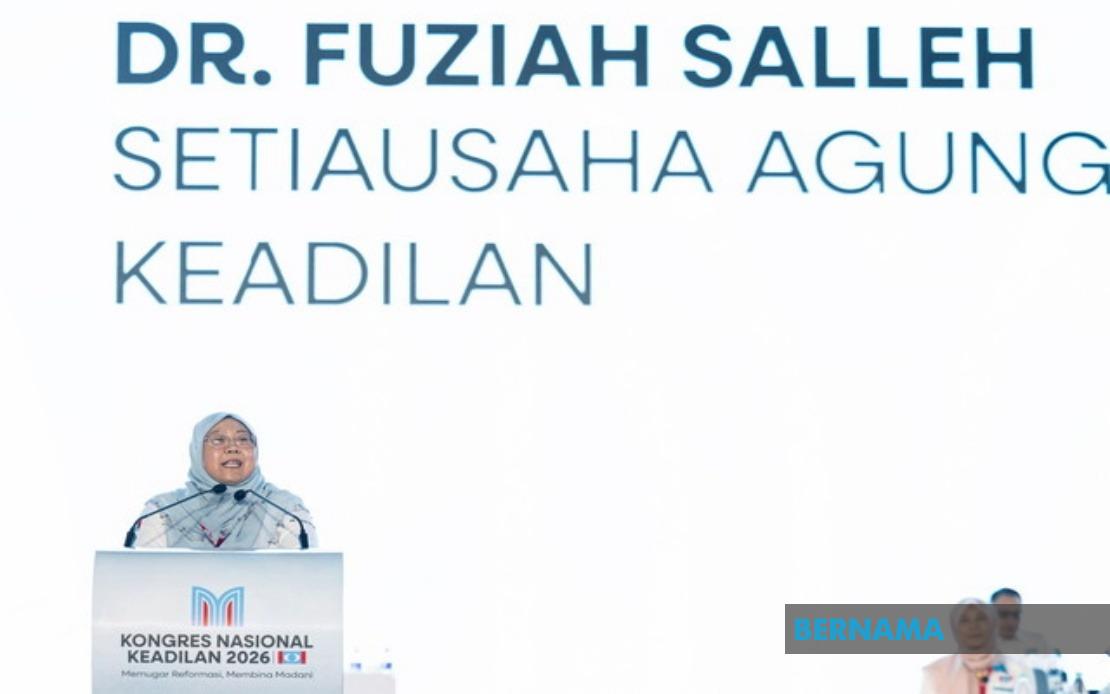
At the PKR National Congress 2026 in Melaka, party secretary-general Datuk Dr Fuziah Salleh delivered a critical message to delegates: the party must elevate its intellectual foundation and public communication around the MADANI Economy framework if it hopes to transform reform rhetoric into tangible improvements for ordinary Malaysians. Her remarks signal growing recognition within the party that policy frameworks alone cannot succeed without robust organizational discipline and coherent messaging across all tiers of leadership.
Fuziah's intervention addresses a persistent challenge facing Malaysia's ruling coalition: the gap between aspiration and execution. The MADANI Economy, unveiled as the government's economic vision, requires not merely bureaucratic compliance but genuine ideological commitment from party structures that must champion it in parliament, at state assemblies, and in community forums. Without such unified effort, Fuziah warned, the framework risks becoming another well-intentioned policy document gathering dust rather than a living blueprint for systemic change.
The party machinery itself bears substantial responsibility, according to Fuziah. Leaders operating at federal, state, and local levels must become proactive champions of MADANI thinking rather than passive administrators. This demands a deliberate shift in how PKR approaches political communication—moving beyond slogans toward substantive articulation of how the economy framework addresses the daily concerns of workers, small traders, farmers, and urban professionals. The intellectual heavy lifting required goes beyond campaign messaging into genuine party education and internal alignment.
Implementing institutional reforms within government demands an unusual combination of qualities: unwavering commitment paired with meticulous discipline. Fuziah's acknowledgment of this difficult balance reflects the reality facing Malaysia's coalition government, which must coordinate across multiple parties, state governments, and federal agencies while maintaining the political will to push through changes that often face resistance from entrenched interests. The reforms embedded within MADANI thinking—whether addressing regulatory bottlenecks, tackling corruption, or reorienting spending priorities—require sustained effort across election cycles and ministerial transitions.
The secretary-general's metaphor about ammunition proved particularly telling. Winning elections delivers political power, but converting that power into actual governance outcomes requires sufficient institutional capacity, technical expertise, and political capital. PKR and its coalition partners must invest continuously in these resources or risk squandering the mandate that voters granted in recent electoral contests. This resonates across Southeast Asia, where ruling parties frequently discover that electoral victory provides only the opening move in a far longer and more demanding game.
Fuziah placed particular emphasis on PKR's commitment to inclusive representation that transcends racial and class divides. This positioning distinguishes PKR within Malaysia's political landscape, where ethnic and religious constituencies traditionally fragment voter allegiances. By framing the party's core mission as championing the materially disadvantaged regardless of background, Fuziah articulated a vision that could theoretically broaden PKR's coalition beyond its traditional support base. However, translating this inclusive rhetoric into policy outcomes that demonstrably benefit diverse communities requires consistent delivery and visible prioritization.
The party's continued focus on justice principles and the MADANI Economy agenda provides intellectual scaffolding for navigating contemporary political complexities. As Malaysian politics grows increasingly fragmented and regional dynamics shift, having a coherent framework allows PKR to maintain strategic direction and communicate clearly with voters. Without such anchoring, ruling parties can easily fragment into narrow interest groups pursuing contradictory agendas, ultimately undermining their collective governing capacity.
Fuziah's remarks carry particular significance given PKR's central role within the current coalition. As the largest component of the ruling partnership, PKR's intellectual clarity and organizational discipline directly influence the government's overall effectiveness. If PKR fails to internalize and promote the MADANI framework systematically, competing narratives from other coalition partners or opposition forces may overwhelm public discourse, making genuine reform implementation exponentially harder.
The challenge ahead for PKR mirrors broader difficulties facing progressive governments across the region. Maintaining internal cohesion while pursuing transformation agendas, communicating effectively to diverse constituencies, and executing complex institutional reforms simultaneously demands exceptional leadership and organizational capability. Fuziah's appeal for disciplined commitment and clearer communication represents a sober assessment of what genuine governance change requires—not just good intentions or rhetorical skill, but sustained organizational effort and intellectual consistency across all party structures and government agencies.

