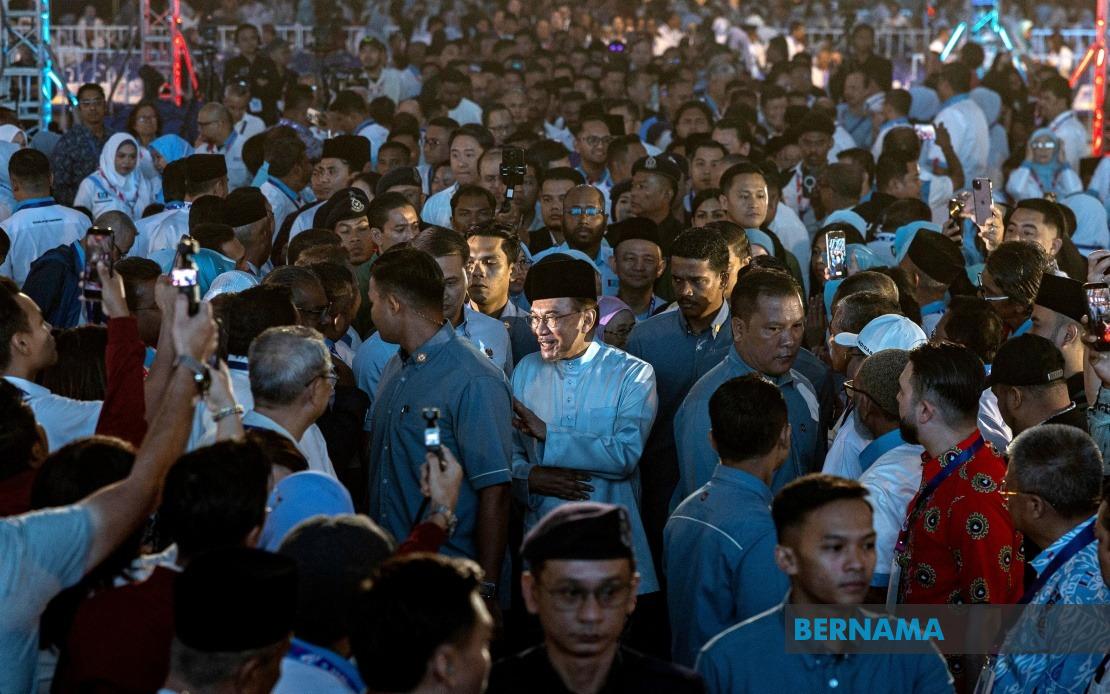
Prime Minister Anwar Ibrahim's senior political adviser Tengku Datuk Seri Zafrul Tengku Abdul Aziz has signalled that the upcoming 2026 PKR National Congress represents a critical juncture for the reformist party to undertake honest self-examination and rebuild its organisational strength. Speaking in Melaka, the ex-officio member of the PKR Political Bureau framed the congress not as a celebratory gathering but as an opportunity to address the party's internal shortcomings following disappointing results in recent state-level contests.
The call for introspection reflects widening concerns within PKR's leadership circles that electoral momentum has slowed considerably since the party's coalition partners helped propel Anwar to the premiership. While the Unity Government coalition remains intact, individual component parties have faced voter scepticism in various contests, prompting senior figures to acknowledge that the honeymoon period has effectively ended. Tengku Zafrul's intervention suggests the party apparatus recognises that merely maintaining the status quo is insufficient to preserve its political relevance or voter base in the coming years.
Central to Tengku Zafrul's message is a deliberate separation between PKR's internal responsibilities and its obligations as part of a broader coalition government. He explicitly acknowledged that while the party may harbour disappointment with Unity Government partners, PKR cannot control their actions or electoral fortunes. This pragmatic acknowledgement represents a subtle but significant shift in how the party's leadership is publicly framing accountability. Rather than attributing setbacks to coalition partners or external factors, Tengku Zafrul redirected focus squarely inward, arguing that PKR must become a stronger, more disciplined and more responsive organisation regardless of the broader political environment.
The specific emphasis on strengthening party machinery from grassroots to central leadership reflects recognition that PKR's branch structures may have atrophied or become disconnected from ground-level sentiment. Malaysian political parties frequently struggle with maintaining vibrant local organisations, and the reformist movement is no exception. By invoking the need for effectiveness across all levels, Tengku Zafrul implicitly critiqued the party's current operational capacity. A more effective grassroots apparatus could theoretically improve candidate selection, enhance voter mobilisation, and ensure that party messaging resonates more powerfully in local communities where elections are ultimately decided.
Particularly striking is Tengku Zafrul's observation about the gap between policy implementation and public perception. He noted that even if the government has achieved substantive results in its legislative agenda, these accomplishments may have failed to register effectively with voters. This diagnosis points to a communications breakdown that extends beyond mere press relations or social media strategy. It suggests that PKR members themselves may not be adequately equipped or motivated to articulate the government's achievements to constituents. For a party that has long positioned itself as a champion of transparency and democratic renewal, such communication failures represent a particular vulnerability that could erode support among educated urban voters who form part of PKR's traditional base.
The instruction to listen to public grievances with genuine openness rather than defensive responses indicates that some party cadres have apparently been perceived as dismissive or argumentative when faced with constituent concerns. Tengku Zafrul's proposed framework of "listen, acknowledge, deliver" is elementary in management theory but suggests a practical problem within PKR structures. Party members and elected representatives may be interpreting criticism as personal attacks or party disloyalty rather than valid feedback requiring substantive response. This defensive posture could intensify voter alienation, particularly among younger or more demanding constituencies that expect their representatives to engage seriously with their concerns.
For Malaysian observers, the timing of this message merits attention. The 2026 congress lies roughly eighteen months away, providing a window for party restructuring before the next general election cycle. By signalling now that internal reform is the priority, Tengku Zafrul is attempting to set expectations and shape the tenor of the gathering. Whether the congress will deliver genuine organisational change or merely provide a platform for ceremonial speeches remains an open question that will likely become clearer as specific reform proposals emerge from party leadership.
The broader context for PKR's current predicament involves the inevitable erosion that accompanies being in government. Parties that campaign on reform and change face heightened expectations and magnified criticism when their actual governance record proves mixed or disappointing. PKR's specific challenge is compounded by its role as a junior partner in a coalition where other parties, particularly Umno, command significantly greater resources and influence. This structural disadvantage has likely contributed to PKR's inability to claim credit for government achievements while simultaneously bearing responsibility for unpopular policies or limited progress on campaign commitments.
Looking forward, whether PKR's leadership will translate Tengku Zafrul's exhortations into concrete institutional reforms remains to be seen. Strengthening party machinery requires sustained investment, leadership commitment, and willingness to make difficult personnel decisions. It demands that internal party democracy function properly so that talented candidates can rise and weak performers can be replaced. It requires adequate funding, professional training for party operatives, and strategic direction that extends beyond election cycles. These are substantial challenges that many Malaysian political parties struggle to address effectively.
For Southeast Asian political observers, PKR's predicament illustrates broader difficulties facing reformist coalitions that govern. The honeymoon period inevitably ends, and voters begin evaluating parties based on tangible improvements in their lives. Tengku Zafrul's message suggests that PKR's leadership understands this reality and is attempting to position the party for the long haul. Whether the 2026 congress will mark a genuine renewal or merely provide rhetorical cover for continued incremental decline will become apparent in subsequent electoral contests.

