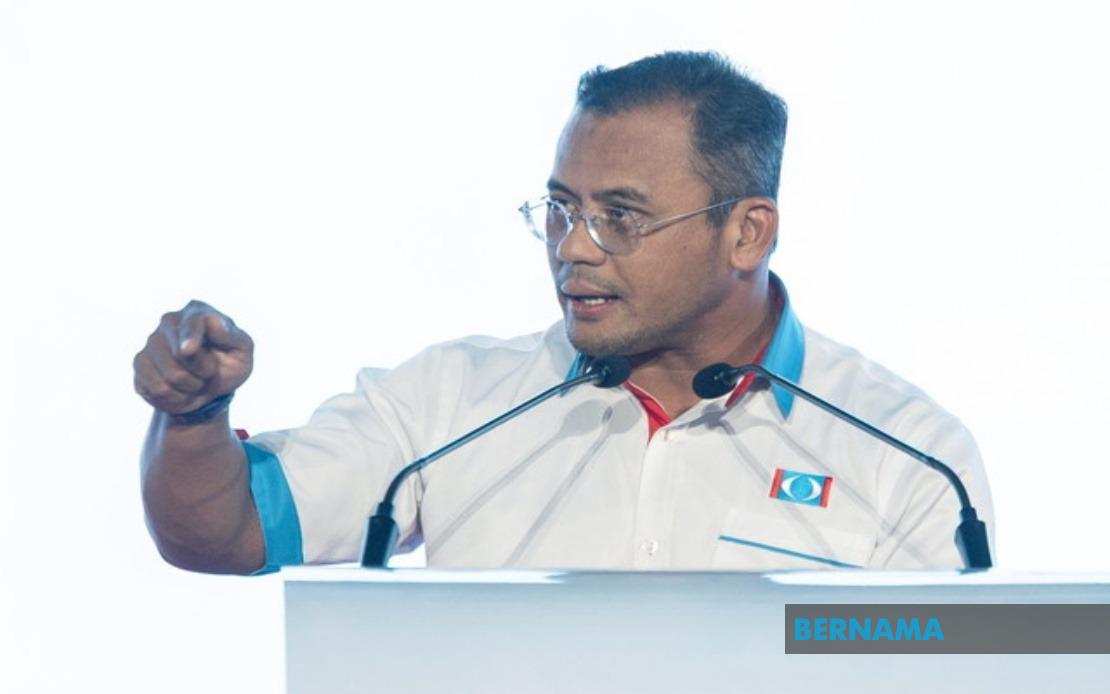
PKR's senior leadership has made an emphatic call for the party to persist in championing equitable politics that serves all sections of Malaysian society, whilst simultaneously acknowledging and respecting the constitutional protections afforded to Islam and Malays. Speaking at the party's National Congress in Melaka on August 16, the party's vice presidents laid out a vision of inclusive governance that they argue distinguishes PKR from competitors who exploit communal tensions for electoral advantage.
Datak Seri Amirudin Shari, PKR vice president and Selangor Menteri Besar, anchored his remarks on the party's foundational commitment to constitutional principles. He emphasised that the constitutional position of Islam and the Malays represents a fundamental pillar that demands respect from all political actors in Malaysia. Simultaneously, he stressed PKR's unwavering dedication to ensuring fair treatment for all citizens regardless of ethnicity or faith—whether Malay, Chinese, Indian, Christian, Buddhist or Hindu. This balancing act reflects a broader tension within Malaysian politics between honouring constitutional provisions and advancing inclusive governance.
Amirudin traced PKR's political trajectory to the reform movement initiated by party president Datuk Seri Anwar Ibrahim in 1998, arguing that the ensuing decades have witnessed substantive progress in institutionalising democratic values and fundamental rights across Malaysian society. He pointed to concrete advances in economic fairness and governmental accountability as evidence of the party's substantive rather than merely rhetorical commitment to reform. This historical framing positions PKR as a continuator of Malaysia's democratic evolution rather than a disruptor of constitutional order, a distinction the party leadership believes resonates with voters seeking change without instability.
Datak Seri R. Ramanan, another vice president who also serves as Minister of Human Resources, sharpened the party's critique of what he termed deliberate racial manipulation in Malaysian politics. Ramanan identified a pattern whereby certain political parties weaponise ethnic and religious sensitivities to mobilise voters and fracture national unity, subordinating the public interest to narrow partisan gain. He positioned PKR's commitment to defending diversity and rejecting such tactics as essential to preserving Malaysia's plural harmony and preventing what he characterised as destructive political opportunism.
Ramanan's intervention carries particular weight given his ministerial portfolio overseeing human resources policy, suggesting PKR seeks to ground its anti-divisiveness stance in concrete policy commitments rather than rhetorical posturing. His warning about the consequences of internal party division provides insight into institutional concerns within PKR itself. He cautioned that leadership disputes and ego clashes at the top cascade downward, weakening party structures at branch level, confusing rank-and-file members, and ultimately benefiting political opponents by creating internal paralysis.
The minister's call for prioritising party cohesion over personal ambitions reflects ongoing management challenges within PKR's sprawling coalition leadership. His metaphor of the party functioning as a single family suggests an attempt to frame party discipline not as authoritarian constraint but as organic solidarity. This rhetorical approach acknowledges member sensibilities whilst still demanding conformity to party strategy—a delicate balance in Malaysia's increasingly factionalised political environment.
Datak Chang Lih Kang, the third vice president to address the congress, introduced empirical evidence into the party's defence against allegations of insufficient Malay support. He argued that PKR's durability and effectiveness derive not from racial propaganda but from genuine electoral performance among diverse communities. Chang pointed specifically to the Chennah state election result in Negeri Sembilan as demonstrating the party's cross-communal appeal. The fact that Malay voters increased their backing for DAP secretary-general Anthony Loke despite what Chang termed identity politics propaganda directed against him constitutes, in Chang's framing, proof that sophisticated voters resist simplistic racial narratives when confronted with genuine service delivery.
This reference to Chennah carries broader significance for Southeast Asian politics. It suggests that electoral behaviour increasingly reflects performance metrics and constituency service rather than purely communal voting blocs, a development that could reshape competitive dynamics across the region. If validated across multiple constituencies, such evidence would indicate that opposition parties can compete effectively in traditionally Malay-majority areas not by matching rivals' communal appeals but by offering superior governance and economic outcomes.
The convergence of messaging from multiple PKR vice presidents indicates a coordinated strategic emphasis rather than ad hoc commentary. The party appears intent on establishing clear differentiation between its approach to Malaysia's plural society and that of competitors characterised as stoking divisiveness. This positioning allows PKR to occupy political space defending constitutional arrangements whilst simultaneously appealing to voters fatigued by communal conflict and seeking pragmatic governance.
Yet tension remains inherent in PKR's strategic positioning. Explicitly respecting constitutional provisions on Islam and Malay positions potentially alienates non-Muslim and non-Malay constituencies seeking equal constitutional standing, whilst simultaneously exposing the party to accusations from conservative Malay-Muslim actors of insufficient robustness in defending these provisions. Managing this equilibrium requires disciplined messaging and substantial institutional capacity to ensure field operations reflect stated principles consistently across diverse constituencies.
The timing of these statements at a party national congress suggests leadership intent to consolidate internal alignment around this strategic orientation heading into future electoral contests. The emphasis on internal unity alongside external message discipline indicates PKR recognises that effective political competition requires synchronisation between institutional coherence and public positioning. For Malaysian voters and regional observers, these statements represent an attempt by one significant political player to chart a course between constitutional respect and inclusive democracy—a balance that will likely define Malaysian politics for years ahead.

