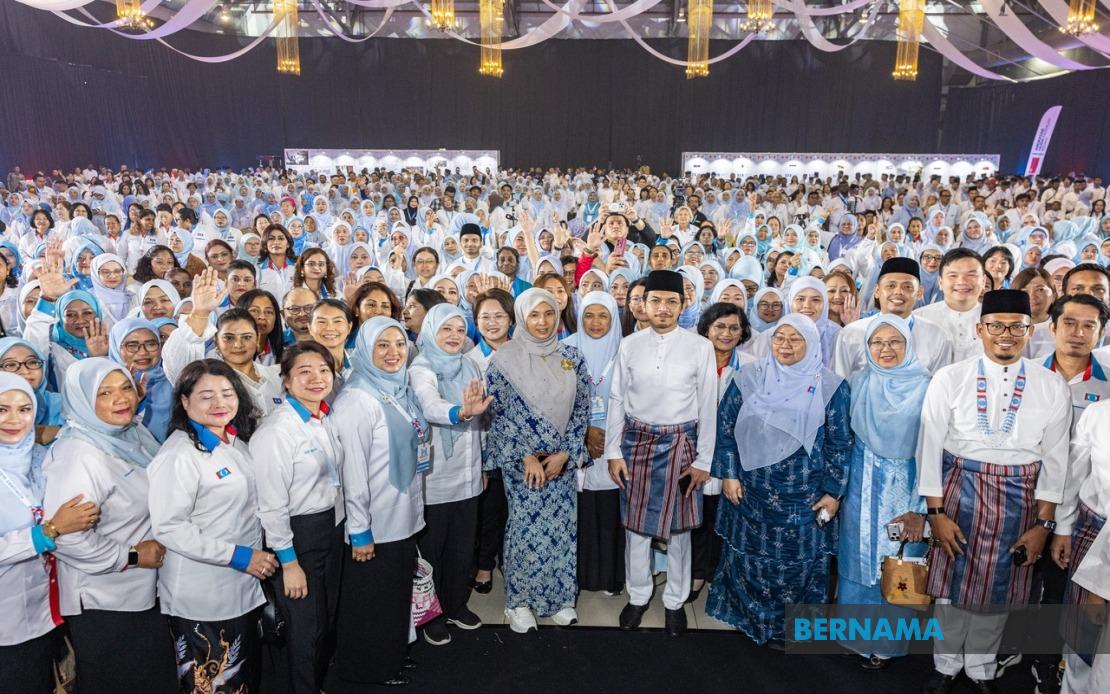
The People's Justice Party needs to construct a more persuasive political narrative if it hopes to restore public confidence in its leadership and direction, according to Angkatan Muda Keadilan chief Muhammad Kamil Abdul Munim. Speaking at the AMK's 2026 National Congress in Melaka on Wednesday, he emphasized that mere popularity cannot sustain electoral viability, pointing to lessons learned from recent state-level contests that have exposed organizational weaknesses within Malaysia's ruling coalition partner.
Muhammad Kamil's remarks reflect mounting concerns within PKR about the party's capacity to convert public sympathy into concrete electoral gains. The party has experienced a series of disappointing performances in Sabah, Johor, and Negeri Sembilan state elections, outcomes that have prompted internal soul-searching about its political strategy and organizational effectiveness. These results suggest that the party's traditional reliance on momentum-driven campaigns and public enthusiasm may no longer suffice in an increasingly fragmented Malaysian political landscape where targeted grassroots work has become essential.
The AMK chief highlighted a fundamental strategic challenge facing PKR as it transitions from opposition politics to governing party responsibilities. Since its founding in 1998, the party has capitalized on waves of anti-establishment sentiment, mobilizing ordinary Malaysians as informal campaign machinery during periods of both opposition and government participation. However, this organic approach to political organization has proven insufficient when measured against contemporary electoral requirements, particularly as competitor parties have invested substantially in institutional capacity-building and digital mobilization techniques.
Muhammad Kamil called for a comprehensive overhaul of PKR's operational framework, arguing that the party must modernize its approach, refine its strategic thinking, and restructure its political activities to function more efficiently and purposefully. He acknowledged that governing from within the ruling coalition presents distinctly different obstacles compared to opposition work, requiring PKR to balance reform aspirations with coalition management responsibilities—a tension that has occasionally manifested in public party divisions and unclear policy messaging.
The congress, held at the Melaka International Trade Centre in Ayer Keroh, was formally opened by PKR deputy president Nurul Izzah Anwar and drew participation from senior party figures including vice-president Datuk Seri Dr Zaliha Mustafa and Wanita PKR chief Fadhlina Sidek. The gathering represented a significant opportunity for the party's youth wing, which commands considerable organizational influence and membership numbers, to articulate concerns about the party's trajectory and influence internal decision-making processes.
Despite acknowledging difficult electoral realities, Muhammad Kamil urged party members and leadership cadres to maintain resolve and channel frustration into constructive action. He framed recent setbacks not as terminal decline but as a necessary reality check that should catalyze organizational renewal. This messaging reflects attempts within party leadership to reframe electoral disappointments as motivation for systemic improvement rather than symptoms of irreversible decline, a narrative management approach common among governing parties facing public confidence challenges.
Fadhlina Sidek's contribution to the congress proceedings emphasized collective reflection and institutional accountability, positioning the gathering as a moment for honest evaluation of party shortcomings. She encouraged delegates to view leadership addresses not as directives for passive compliance but as frameworks to be tested, debated, and refined through grassroots engagement. This approach signals recognition within party circles that top-down communication has proven ineffective in mobilizing committed party workers and restoring organizational cohesion.
The Wanita PKR chief's call for structured self-examination reflects broader trends within Malaysian political parties as they grapple with declining membership engagement and reduced volunteer participation. She emphasized that delegates' contributions during congress debates should constitute binding recommendations for organizational restructuring, effectively democratizing strategic planning processes and potentially diluting centralized decision-making. This represents an implicit acknowledgment that party hierarchies have sometimes operated disconnected from grassroots sentiment, contributing to implementation failures and member disengagement.
For Malaysian political observers, PKR's internal deliberations carry implications extending beyond party politics. As part of the ruling Pakatan Harapan coalition, PKR's organizational weakness affects overall government capacity to execute policy initiatives and respond to constituent demands. The party's struggles in recent state elections suggest that coalition-level coordination mechanisms may require strengthening, particularly as the 2025-2026 period approaches and electoral positioning for the next general election becomes more strategically consequential. PKR's performance directly influences whether Pakatan can consolidate its majority or faces pressure from competing coalitions.
The regional context also matters significantly. Southeast Asian political parties increasingly recognize that nineteenth-century-style grassroots organizing, reliant on local leadership networks and personal relationships, no longer guarantees electoral success in environments where voter preferences shift rapidly and media consumption patterns have fundamentally transformed. PKR's recognition of this reality positions it ahead of some regional competitors in organizational introspection, though translating diagnostic insight into effective reform remains challenging for any political party navigating the complexities of simultaneous opposition-style critique and governing-party responsibility.
Muhammad Kamil's framing of grassroots strength as essential to electoral victory underscores a paradox confronting Malaysian governing parties: the need to maintain both institutional effectiveness and revolutionary credibility. PKR emerged from reform movements and continues to position itself as a progressive force, yet governing responsibilities demand bureaucratic competence and hierarchical discipline that can conflict with the horizontal decision-making structures many party members consider ideologically preferable. Resolving this tension will significantly determine whether PKR can strengthen public confidence in coming years.

