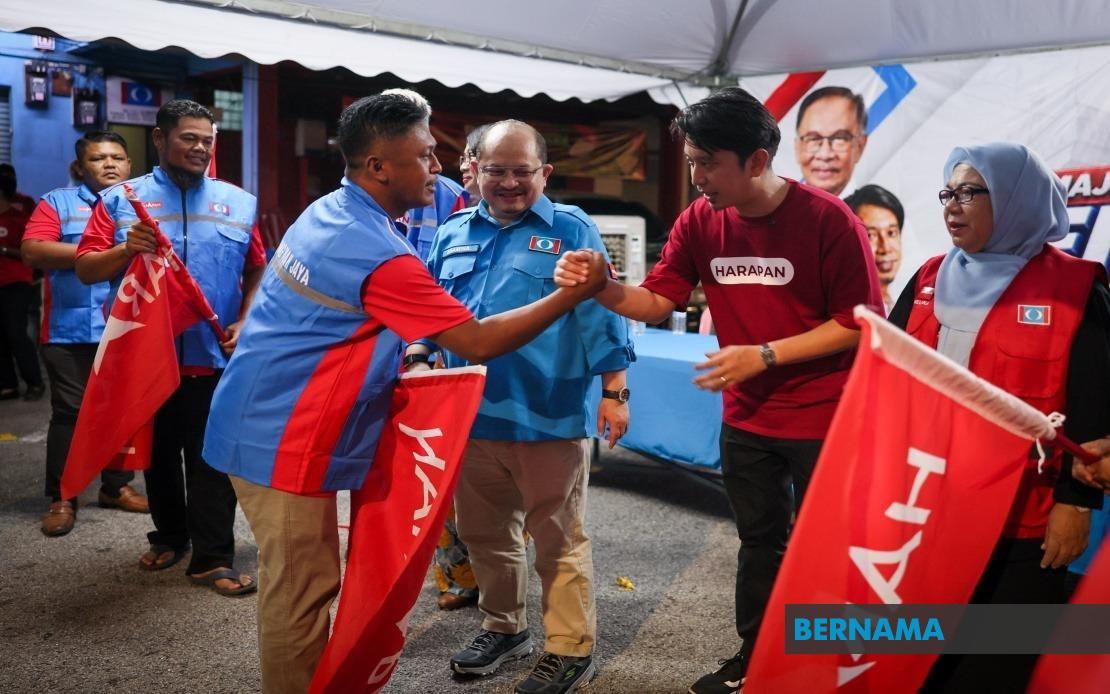
Parti Keadilan Rakyat's Melaka chapter has signalled its intention to unveil election candidates well ahead of the usual timeline, a strategic departure aimed at giving newly-selected representatives enough runway to establish themselves in their constituencies. Adam Adli Abdul Halim, acting chairman of the Melaka PKR Leadership Council, explained the rationale behind this accelerated approach during remarks made following the launch of the party's election machinery for the Hang Tuah Jaya branch in Taman Bukit Piatu. The earlier announcement responds to a perennial challenge PKR has encountered: previous delays in confirming candidate slates due to competing pressures and competing visions within the party structure.
The candidate selection mechanism operates through a tiered vetting process that begins at branch level, progresses to state-level evaluation, and ultimately reaches the central party hierarchy where the party president makes final determinations. This multi-layered screening reflects the complexity of balancing factional interests, grassroots support, and organisational priorities that characterises major political parties across Malaysia. By initiating this process with greater urgency, PKR Melaka seeks to compress the timeline while maintaining rigorous evaluation standards, acknowledging that premature announcements risk fielding insufficiently vetted candidates who lack community trust or organisational readiness.
A central motivation underpinning PKR's revised timeline relates to the party's conscious effort to inject fresh faces into electoral competition. These newer political figures require substantial lead time to develop name recognition, establish relationships with constituents, and build campaign infrastructure. Unlike incumbent office-holders who possess established networks and institutional support, debut candidates must essentially construct their political presence from scratch. The extended preparation window thus directly correlates with these candidates' capacity to mount credible election campaigns and articulate coherent policy positions to voters who may have limited familiarity with their backgrounds or political philosophies.
Gender equity and youth representation constitute additional strategic pillars motivating the accelerated timeline. PKR, aligned with broader Malaysian political discourse around inclusive representation, has committed to balancing candidate slates across generational and gender lines. Implementing such demographic objectives demands considerable advance planning to identify suitable women candidates and young party members, vet their qualifications and commitment levels, and provide mentorship structures that enable their successful electoral debuts. By frontloading this work, PKR Melaka enhances prospects that its ultimately-announced slate authentically reflects the party's stated commitment to pluralistic representation rather than appearing as a belated afterthought.
Beyond candidate selection mechanics, PKR Melaka is simultaneously undertaking an expanded organisational mobilisation campaign throughout the state. The party has scheduled election machinery launches across multiple constituencies including Tangga Batu, Alor Gajah, Masjid Tanah, and Jasin, complementing the initial Hang Tuah Jaya activation. This geographically-dispersed activation strategy recognises that electoral success depends less on individual candidate quality than on comprehensive party machinery deployment at neighbourhood and village levels. Such grassroots structures perform essential functions including voter mobilisation, volunteer coordination, and issue communication that often prove decisive in close electoral contests.
Deputy Minister of Higher Education Adam Adli articulated a philosophy that prioritises operational readiness over premature candidate designation. According to this perspective, PKR must establish robust electoral machinery capable of supporting whoever ultimately receives nomination, rather than allowing candidate announcement serve as the signal for campaign infrastructure assembly. This sequencing reflects accumulated experience suggesting that delayed machinery construction disadvantages parties regardless of candidate quality, as insufficient time remains to reach isolated voters, overcome opposition messaging, or mobilise party volunteers effectively. By decoupling machinery activation from candidate designation, PKR hopes to optimise both components independently.
The Melaka state election also occurs within a broader context of coalition politics shaping Malaysian electoral competition. Pakatan Harapan and Barisan Nasional have engaged in preliminary exploratory discussions regarding potential electoral cooperation, though formal negotiations establishing the contours of any arrangement have not yet commenced. According to Adam Adli, these discussions remain at informal stages, with PH election director Datuk Seri Amirudin Shari having initiated contact with Melaka Chief Minister Datuk Seri Ab Rauf Yusof to schedule substantive negotiations. Such inter-party communication serves multiple purposes beyond simple alliance mechanics, Adam Adli suggested, potentially establishing frameworks for more civil electoral competition that discourages the dehumanising campaign tactics and personal attacks that have increasingly characterised Malaysian politics.
The positioning of such coalition negotiations reflects underlying uncertainty about whether Pakatan Harapan and Barisan Nasional will ultimately reach accommodation or contest the Melaka election as competing forces. Adam Adli explicitly acknowledged that PKR maintains contingency preparations enabling independent electoral participation if coalition discussions prove fruitless. This dual-track approach—simultaneously pursuing potential Barisan Nasional cooperation while preparing for standalone competition—reflects rational political strategy given that premature commitment to either pathway risks disadvantaging the party depending on how negotiations ultimately resolve. For Malaysian voters observing these developments, the outcome of Pakatan Harapan and Barisan Nasional discussions will substantially shape the Melaka electoral landscape, potentially determining whether campaigns emphasise coalition building or oppositional conflict.
The Melaka state election carries significance beyond the regional context given that state-level outcomes frequently preview shifting voter sentiment that subsequently materialises in federal contests. Electoral performance in Melaka, whether for ruling coalitions or opposition blocs, thus generates broader implications for national political balance. PKR's organisational investments in the state and its strategic approach to candidate development suggest the party recognises these stakes. By institutionalising more disciplined candidate selection and machinery development processes, PKR aims to improve electoral performance while simultaneously addressing long-standing party vulnerabilities regarding candidate quality and organisational coordination. Whether such procedural reforms translate into electoral success, however, ultimately depends on voter reception of PKR's political messaging and candidate profiles when Melaka voters enter polling stations.

