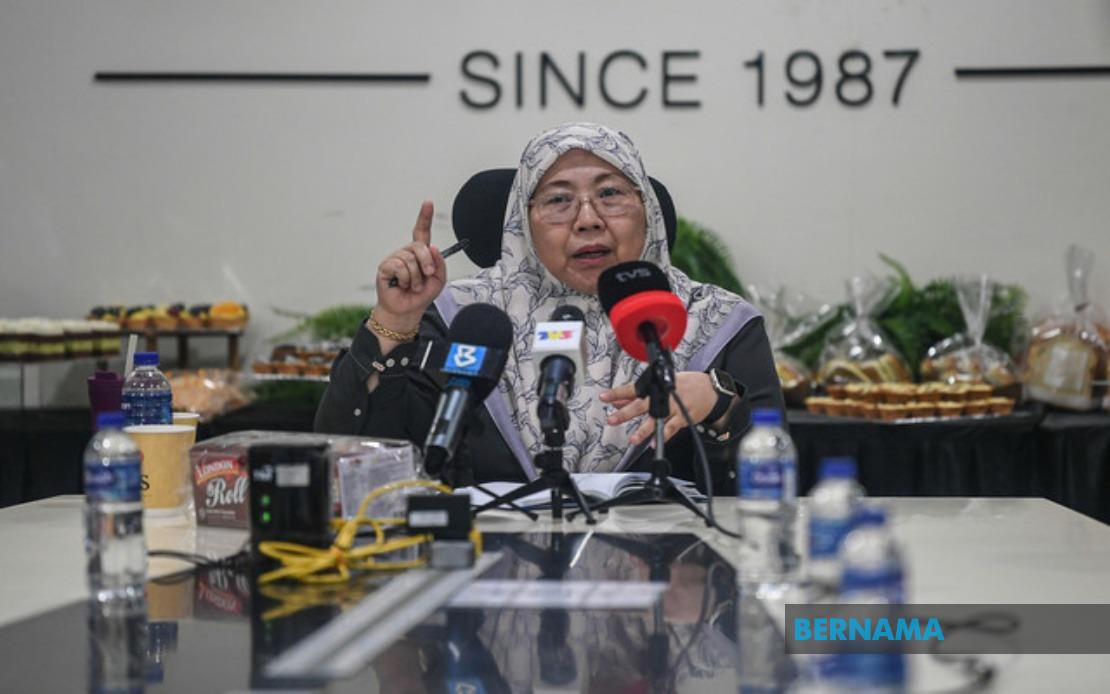
The recent migration of a contingent of PKR leaders and members to the Malaysian Indian Congress has prompted the party's leadership to reflect on the underlying causes of the defection. During a working visit to Johor on June 30, PKR secretary-general Datuk Dr Fuziah Salleh characterised the move as "rather strange," while revealing that internal investigations within the party had uncovered the primary motivation behind the exits. According to Fuziah's assessment, the departing members had cited their disappointment at failing to secure appointed positions within PKR's organisational structure as the key factor driving their decision to seek greener pastures elsewhere.
The specific incident that prompted these remarks occurred on June 28, when M. Murugan, who previously held the position of vice-chairman on the Johor PKR State Leadership Council, publicly announced his departure along with approximately 200 supporters. The group's immediate destination was the MIC Iskandar Puteri division, marking a significant shift in their political allegiances. Murugan's exit represented a notable loss for PKR in Johor, given his previous standing within the party's state structures. Fuziah's response to the defections, delivered at a press conference in Skudai, reflected a measure of equanimity regarding the departures, with the secretary-general extending well-wishes to the departing members while expressing hope that they would achieve meaningful positions within their new political home.
The timing of these defections coincides with a period of considerable political volatility across Malaysia's political landscape, particularly in Johor. The state is preparing for an election that will determine control of its state assembly, an election that carries implications not only for Johor but also for the broader balance of power within the national political system. The defection of party members to the MIC, a component of the Barisan Nasional coalition, underscores the ongoing competition between the ruling Pakatan Harapan alliance and opposition blocs for electoral advantage ahead of the July 11 polling date.
Beyond the immediate question of unfulfilled career aspirations, the political situation in Johor has become increasingly complex due to interventions from other coalitions and parties seeking to reshape electoral dynamics. The Perikatan Nasional coalition, which operates as an alternative to both the Pakatan Harapan government and the traditional Barisan Nasional opposition, has adopted what observers characterise as an aggressive strategy targeting disaffected voters from the Barisan ranks. This tactical approach has become a source of friction and strategic concern within the broader opposition ecosystem, as PN attempts to position itself as an alternative destination for voters dissatisfied with both the government and conventional opposition politics.
Complicating matters further, the president of PAS, Tan Sri Abdul Hadi Awang, issued a recent public call urging voters to withdraw their support from the Pakatan Harapan coalition. This pronouncement carries particular significance given PAS's historical relationship with both the Barisan Nasional and Perikatan Nasional coalitions. Fuziah interpreted Hadi's remarks as indicative of potential movement toward renewed cooperation between the Barisan and PAS, a development that would fundamentally reshape Johor's political landscape. Her observations suggest that discussions or negotiations between these parties may be occurring behind the scenes, even as public statements maintain official coalition positions.
The secretary-general's analysis of the emerging political dynamics reveals a sophisticated reading of the tactical cross-currents now evident in Johor politics. Rather than viewing the Perikatan Nasional's fishing expedition among Barisan supporters as a threat to Pakatan Harapan, Fuziah suggested that such manoeuvres could ultimately prove counterproductive to PN's interests. She argued that the recent statement from PAS, ostensibly directed at weakening Pakatan Harapan, might instead exacerbate internal tensions within the Perikatan coalition itself, as different partners within that alliance pursue divergent strategic objectives.
Fuziah's assessment of the electoral situation presents a distinctly optimistic view of Pakatan Harapan's position despite the apparent convergence of opposition forces. Her reasoning rests on the proposition that increased discord within opposition coalitions, particularly if PAS and the Barisan begin coordinating their efforts against the government, could fragment the anti-government vote sufficiently to benefit the incumbent alliance. This reflects a broader strategic calculation about how multiple-way contests play out when the opposition vote becomes divided among competing blocs.
The forthcoming Johor state election represents a significant electoral contest, with 172 candidates competing for 56 seats across the state. The voting structure includes an early voting period scheduled for July 7, prior to the main polling day on July 11. The scale of the election and the number of contested seats ensure that the state result will carry considerable weight in assessing the relative strengths of Malaysia's major political coalitions. For Johor voters, the period between now and the election will involve careful navigation of increasingly complex political messaging as various coalitions and parties articulate their respective visions for the state's future.
The issue of party member departures due to unfulfilled position expectations touches on a structural challenge that many Malaysian political parties face. The allocation of party posts, whether in state assemblies, federal parliament, or party structures themselves, inevitably creates competition and disappointment among ambitious members. The PKR's experience in Johor suggests that such dissatisfaction can occasionally translate into defections to rival parties, particularly when those rival parties are actively recruiting and potentially offering appointment opportunities to incoming members. This dynamic reflects broader patterns within Malaysian politics, where the distribution of office and position remains a critical currency in party politics.
For observers of Malaysian politics, the convergence of multiple electoral pressures in Johor provides a case study in how coalition politics, strategic positioning, and internal party management intersect during campaign periods. The defections from PKR to MIC, while ostensibly driven by individual disappointment, occur within a context of broader coalition maneuvring. Fuziah's public analysis, delivered with apparent confidence despite the party losses, reflects PKR's assessment that the broader electoral mathematics favour the Pakatan Harapan government, even as individual party members choose alternative political homes. The Johor election will ultimately test whether such calculations prove accurate.

