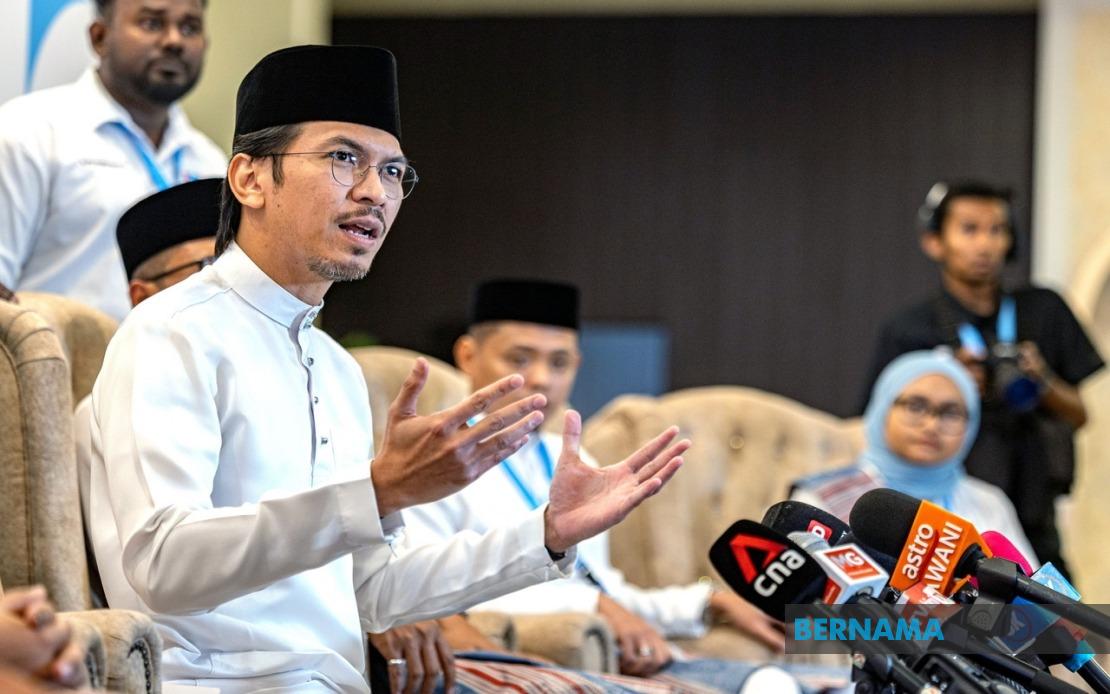
The Parti Keadilan Rakyat (PKR) hierarchy moved quickly to contain perceptions of internal erosion, with youth wing chief Muhammad Kamil Ahmad Munim asserting that recent member defections pose no material threat to the party's institutional resilience or operational capacity. Speaking during the 2026 Angkatan Muda Keadilan (AMK) National Congress at the Melaka International Trade Centre on August 14, the senior PKR official sought to reframe a narrative of organizational losses that has been gaining traction within Malaysia's opposition coalition. His remarks came in direct response to claims by Parti Bersama Malaysia co-founder Datuk Seri Rafizi Ramli that approximately one-quarter of Bersama's membership roster consists of former PKR members—a disclosure that implicitly acknowledges the scale of defections from the larger coalition partner.
The scale of member departures appears to be a sensitive point within PKR leadership, with Muhammad Kamil cautiously declining to provide precise figures while nevertheless insisting that available data indicates the losses remain marginal in both absolute and proportional terms. His careful framing suggests internal awareness that quantifying the exodus risks legitimizing concerns about party health and member morale. By positioning the departures as a natural expression of individual choice rather than evidence of systemic discontent, PKR's youth chief attempted to neutralize criticism that might otherwise exploit signs of weakening internal cohesion. The statement reflects a delicate balancing act—acknowledging that exits have occurred while simultaneously diminishing their significance—a rhetorical strategy common among political parties seeking to project continuity and confidence during periods of organizational stress.
The timing of these defections carries particular weight given Malaysia's fluid opposition dynamics. Since its formation in 2023, Bersama has positioned itself as a reformist alternative within the broader anti-government coalition, attracting members disillusioned with PKR's perceived moderation or internal governance. The fact that roughly one-quarter of Bersama's founding membership derives from PKR suggests the newer party has successfully captured not merely disaffected voters but activists with institutional knowledge and organizational experience. For PKR, such losses represent not simply numerical decline but potential erosion of capacity in areas including election mobilization, local branch administration, and grassroots engagement—functions that require experienced cadres.
Muhammad Kamil's invocation of "high turnout of delegates" at the congress as evidence of member commitment and organizational health reflects PKR's emphasis on visible demonstrations of party unity and forward momentum. The implication that robust attendance at internal party gatherings proves underlying organizational strength is a common but contested metric, as internal congress participation may not correlate precisely with broader membership satisfaction or retention rates. Nevertheless, the youth wing's framing seeks to shift attention from defection statistics toward indicators of internal engagement and party vitality, suggesting that those who remain are sufficiently committed to justify leadership confidence in the organization's trajectory.
The absence of Nurul Izzah Anwar, PKR's deputy president who is currently on extended leave, introduces an additional complication to the party's stability narrative. While Muhammad Kamil insisted that the deputy leader's unavailability has not disrupted party momentum, the timing raises questions about whether her absence relates to the broader organizational tensions evidenced by member departures. PKR's management of the deputy presidency vacancy through distribution of responsibilities among other senior figures—particularly vice-president Datuk Seri Saifuddin Nasution Abdullah and election director Datuk Seri Amirudin Shari—demonstrates institutional mechanisms for continuity, yet such arrangements typically function as temporary expedients rather than permanent solutions.
The delegation of deputy presidential duties across multiple senior leaders reflects PKR's effort to prevent any single vacuum from destabilizing party operations. By emphasizing that responsibilities have been "clearly defined" and communicated to the grassroots, the youth wing chief seeks to normalize what might otherwise be perceived as an irregular governance arrangement. This transparent articulation of the interim structure, he suggests, has secured member acceptance and prevented the kind of speculation or factional maneuvering that leaderless vacuums sometimes trigger in political organizations. However, the fact that such reassurance requires explicit mention indicates that party management recognizes member concerns about continuity and effective leadership during a period of transition.
For Malaysia's broader opposition coalition, PKR's member losses to Bersama and potentially other entities carry strategic implications that extend beyond simple headcount concerns. PKR has traditionally served as the largest and most institutionally cohesive component within the anti-government bloc, and its organizational health directly affects the coalition's capacity to mount coordinated electoral campaigns across multiple state and federal contests. The simultaneous occurrence of member departures, senior leadership transitions, and the rise of competing reform-oriented parties suggests that PKR faces mounting pressure to demonstrate both internal unity and policy relevance if it is to retain its position as the opposition's primary organizational anchor.
The broader context of PKR's member departures reflects deeper currents within Malaysian opposition politics. Bersama's positioning as a centrist, cross-ethnic political force has attracted not only former PKR members but also those frustrated with what they perceive as the Islamist orientation of PAS or the residual establishment baggage of DAP. This fragmentation of the opposition space, while reflecting healthy democratic competition, also diffuses the voting power and organizational capacity that the anti-government coalition requires to effectively contest against the Barisan Nasional-dominated federal government and allied state administrations. PKR's insistence that recent defections remain insignificant must therefore be evaluated against the structural vulnerability facing any single opposition party in Malaysia's polarized political system.
Looking toward the next election cycle—referenced in Muhammad Kamil's remarks regarding state elections (PRN) and general elections (PRU)—PKR's capacity to mobilize members for campaign activities and ground-level voter engagement will determine whether current departures prove merely symbolic or substantively damaging. The youth wing's emphasis on "strengthening and empowering the organisation" suggests recognition that internal revitalization represents the most credible response to defection pressures. Such organizational renewal efforts, if pursued with genuine vigor, could stabilize membership levels and rebuild confidence among those tempted to explore alternatives. Conversely, if departures continue and senior leadership transitions remain unresolved, the cumulative effect may eventually force PKR to acknowledge that member losses extend beyond the "insignificant" characterization currently offered by party spokespeople.

