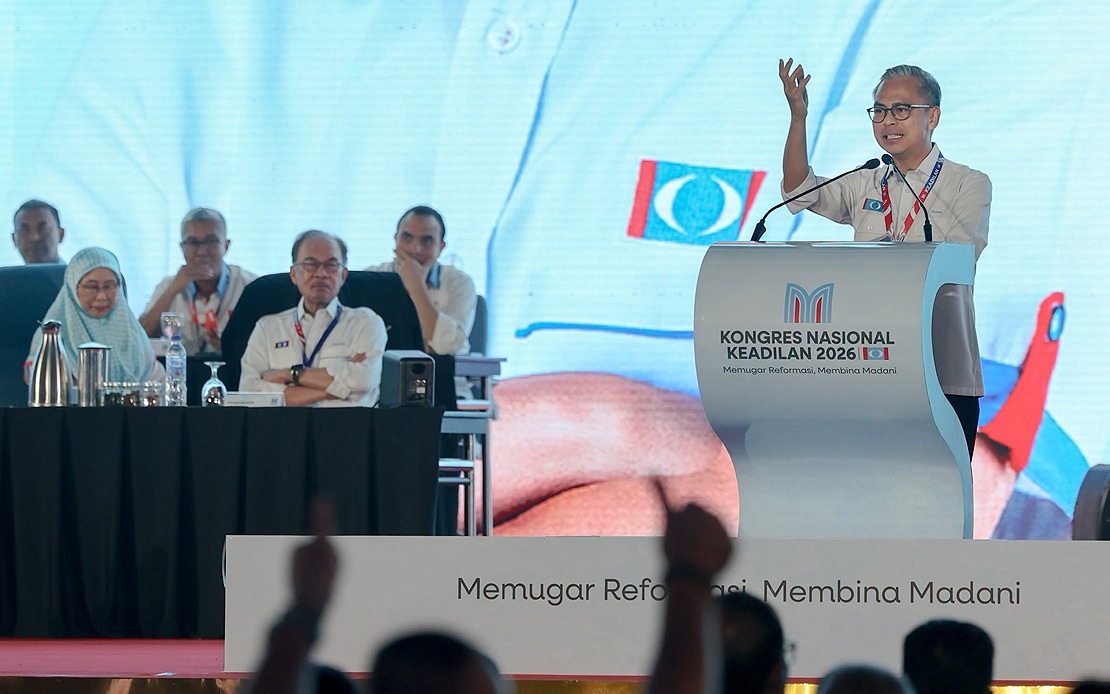
The Parti Keadilan Rakyat wrapped up its 2026 National Congress in Kuala Lumpur on August 16, projecting the gathering as a pivotal moment for the party to recalibrate its focus and reaffirm its foundational mission. Far from being a ceremonial exercise, PKR Information Chief Datuk Seri Fahmi Fadzil characterised the two-day event as an introspective exercise in which the party took stock of its position, examined internal strengths and vulnerabilities, and fundamentally recommitted itself to advancing the reformasi agenda that has defined its political identity since its inception.
Fahmi's framing of the congress highlighted a distinction between superficial political gatherings and substantive party work. Rather than serving merely as a platform for oratory and debate, he explained, the congress functioned as a space where party members engaged in genuine reflection and reconnected with the sentiments and preoccupations of the broader party membership. This emphasis on listening to grassroots voices represents a deliberate strategy to prevent institutional disconnect—a persistent risk for any political party as it transitions between electoral cycles and governance roles.
The address delivered by PKR President Datuk Seri Anwar Ibrahim underscored a core message: the reform struggle cannot be treated as a completed chapter but must remain an ongoing, dynamic commitment. In the Malaysian context, where reform movements have periodically faced institutional resistance and where political coalitions continually shift, Anwar's reminder carried particular significance. The insistence that party strength must remain rooted in the interests of ordinary Malaysians, rather than concentrated among party elites, reflects tensions that have periodically surfaced within PKR itself regarding the alignment between leadership decisions and grassroots expectations.
Fahmi called for party members to return to their constituencies with renewed energy and purpose, emphasising that the congress's conclusion marked not an endpoint but a transition back to ground-level organising. This directive carries practical implications for PKR's electoral prospects and governing legitimacy. By directing members to genuinely engage with constituent concerns, listen to grievances, and develop tangible responses to local problems, the party leadership appeared to be signalling that words alone are insufficient and that party credibility depends on demonstrable capacity to deliver material improvements in people's lives.
The emphasis on organisational discipline and coordinated team effort addresses a persistent challenge for reform-oriented parties across Southeast Asia. Political movements built on ideological commitments can sometimes struggle with coherence as they mature and assume governmental responsibility. Fahmi's call for PKR to function as an "organised and disciplined team" suggests leadership recognition that without internal cohesion and shared strategic clarity, the party risks fragmenting along factional lines or losing sight of its broader mission amid immediate political pressures.
The congress proceedings also implicitly acknowledged that PKR faces an environment of sustained political adversity. Fahmi's remark that "political challenges will continue to come" reflects the party's experience navigating Malaysia's competitive political landscape, where coalition dynamics remain unpredictable and where opposition forces continue mobilising. Rather than presenting an optimistic narrative of inevitable progress, the party leadership adopted a more steely posture: the reform agenda will be contested, obstacles will emerge, but PKR must maintain unwavering commitment to its principles regardless of external pressure.
For Malaysian readers, this congress carries significance beyond PKR's internal affairs. As a major component of whatever coalition government exists, PKR's capacity to function effectively and maintain grassroots support directly affects the pace and nature of policy reform in areas from anti-corruption enforcement to economic distribution. The party's renewal of focus on people-centred governance strikes at questions that Malaysian citizens confront: whether political parties genuinely prioritise constituent welfare or whether they become captured by elite interests once they access power.
The congress's timing, in mid-2026, positions the party roughly halfway through what would likely be a typical electoral cycle. This window allows the party to assess performance to date, recalibrate strategy if needed, and rebuild momentum heading toward the subsequent electoral contest. The decision to frame the congress as a renewal exercise rather than a celebratory affirmation suggests that party assessors recognised shortcomings or areas requiring attention—a more honest appraisal than purely triumphalist messaging would convey.
Fahmi's closing emphasis that party machinery responsibilities continue after the congress adjourns carries an undertone of caution about complacency. Congresses can generate temporary enthusiasm and renewed focus, but sustaining that momentum through difficult months of ground-level organising, managing internal disagreements, and pursuing reform initiatives amid bureaucratic and political resistance demands different capacities. The reminder that members must work harder and continue delivering tangible benefits appears designed to reset expectations: the congress was a catalyst, not a culmination.
The broader context for PKR's renewal effort includes Malaysia's evolving political landscape, characterised by flux in party alignments, generational shifts in voter preferences, and rising expectations around institutional accountability. For PKR to remain politically relevant and credible, it must demonstrate that the reformasi banner represents more than rhetorical positioning but translates into sustained commitment to addressing concrete grievances around cost of living, governance transparency, and economic opportunity that concern ordinary Malaysians.
Ultimately, the congress represented PKR's attempt to reset its internal compass and reinvigorate its organisational machinery toward greater alignment with stated ideals. Whether this renewal translates into measurable changes in how the party engages with constituents, pursues reform initiatives, and maintains internal discipline will determine its political trajectory. The test will not be in congress speeches but in subsequent months of grassroots engagement and concrete policy outcomes that affect Malaysian lives.

