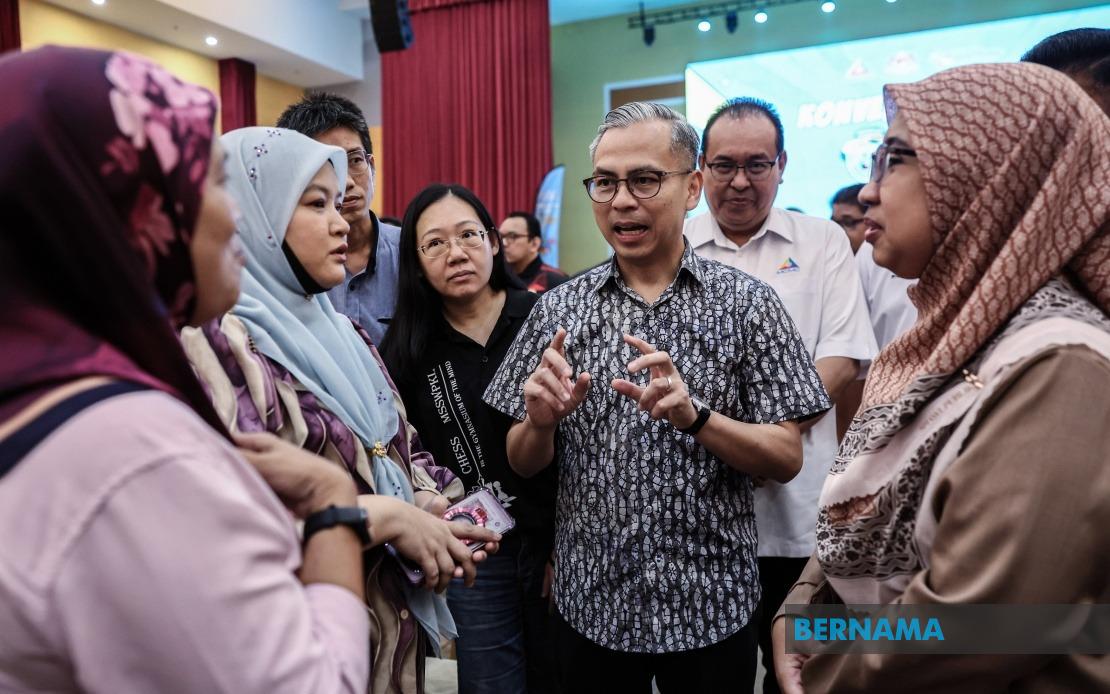
The PKR has moved to reassure the public that the temporary leave granted to deputy president Nurul Izzah Anwar will have no impact on the party's ability to function effectively or pursue its political agenda. Information Chief Datuk Seri Fahmi Fadzil made the statement during a press conference on Thursday, emphasising that the party's day-to-day operations and strategic work would continue without interruption. The assurance comes as PKR navigates a period of organisational transition while managing its role within the broader Unity Government coalition.
Nurul Izzah, the daughter of Prime Minister Datuk Seri Anwar Ibrahim, had initially submitted a resignation from the deputy president post but the PKR Central Leadership Council rejected this request instead approving her application for temporary leave. This decision allows her to concentrate on personal matters while pursuing advanced studies for her doctorate. Fahmi emphasised that despite stepping back from her formal position, Nurul Izzah remains a committed party member and is expected to continue contributing to PKR's broader reform efforts once her immediate academic and personal commitments are addressed.
The responsibility for handling the deputy president's duties has been transferred to Vice-president Datuk Seri Saifuddin Nasution Ismail, who will serve in this capacity during the leave period. The redistribution of responsibilities reflects a deliberate effort by party leadership to ensure continuity in decision-making structures and prevent any perception of a power vacuum within PKR's upper echelons. Saifuddin Nasution's appointment to this expanded role underscores the party's confidence in his ability to manage these additional responsibilities alongside his existing portfolio.
The timing of this internal adjustment occurs against a backdrop of ongoing speculation within political circles regarding potential changes to parliamentary representation. When asked about reports suggesting that Subang Member of Parliament Wong Chen might vacate his seat, Fahmi stated that no official notification had been received on the matter. He deferred to Dewan Rakyat Speaker Tan Sri Johari Abdul as the appropriate authority to make any announcements regarding parliamentary vacancies, suggesting that any developments in this area would follow formal procedures and require official confirmation through proper channels.
Fahmi also addressed public curiosity regarding the timing of the next general election, categorically rejecting suggestions that the government was considering an early poll. He reaffirmed that the administration's current focus remained on ensuring stable governance and effective delivery of public services. The government's expectation is that the next general election will be held by the end of 2025 at the latest, providing a clear timeline that allows the administration to concentrate on implementing its policy agenda without the distractions of campaign politics.
The Communications Minister highlighted the government's commitment to maintaining the stability of the Unity Government coalition, praising component parties within both Pakatan Harapan and the broader coalition for their sustained support of Prime Minister Anwar Ibrahim's leadership. This emphasis on coalition harmony reflects the delicate political balance required to maintain the current government's parliamentary majority. The continued backing of coalition partners is essential for the administration to advance its reform programme and implement the structural changes required for national development.
PKR and the larger Pakatan Harapan coalition remain focused on advancing the government's reform agenda, with Fahmi noting that significant efforts are underway to improve Malaysia's overall situation and address public priorities. The party continues to champion the reforms that were central to their 2022 election campaign and the subsequent formation of the Unity Government. This reform orientation serves as the ideological framework guiding the coalition's policy decisions and resource allocation.
Among the specific matters requiring ongoing attention is the implementation of recommendations from the Royal Commission of Inquiry on Lembaga Tabung Haji covering the 2014 to 2020 period. This issue carries significant weight given the scale of losses experienced by Hajj pilgrims during this timeframe and the broader questions it raises about institutional oversight and governance standards. The government's commitment to implementing these recommendations reflects its acknowledgment of the need for institutional reform and enhanced accountability mechanisms across public bodies.
Fahmi indicated that Prime Minister Anwar Ibrahim would be making several significant announcements in the coming period, suggestions that these communications would bring positive developments for Malaysians and contribute meaningfully to national progress. The exact nature of these announcements remains undisclosed, though the emphasis on their beneficial nature suggests they may relate to policy initiatives, economic measures, or governance reforms. Such forward-looking statements often signal the government's confidence in its policy direction and its assessment of favourable conditions for implementing planned measures.
The sequence of events surrounding Nurul Izzah's leave and the accompanying statements from party leadership illustrate how Malaysian political parties navigate internal adjustments while maintaining external stability and public confidence. PKR's handling of the situation demonstrates an attempt to balance respect for individuals' personal circumstances with the organisational requirements of a major political party. The emphasis on continuity and uninterrupted operations aims to assure both party members and the broader public that internal changes do not signal instability or weakness within the party structure.
For observers following Malaysian politics, the developments highlight how the coalitional nature of the Unity Government requires ongoing coordination and communication between constituent parties. The reliance on internal party statements to address speculation about parliamentary seats and electoral timing underscores the symbiotic relationship between the ruling coalition and the media landscape. PKR's proactive communication approach, through Fahmi's press conference, represents an effort to control the narrative and prevent unfounded speculation from gaining traction within political discourse.
Moving forward, the real test for PKR will be demonstrating that the operational transitions announced this week translate into sustained effective governance. The successful assumption of duties by Saifuddin Nasution and the demonstrated ability of party structures to function without the deputy president's direct involvement will provide evidence of organisational resilience. For the broader Unity Government, maintaining coalition cohesion while implementing the reform agenda and managing towards a general election remains the central challenge for the coming months.

