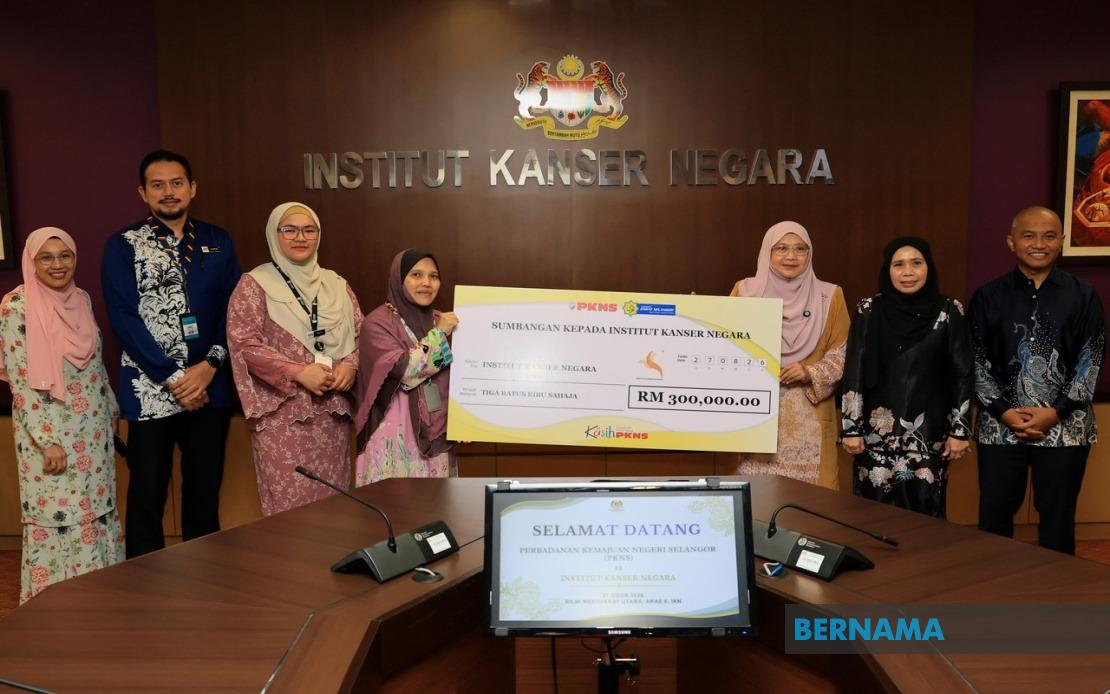
The Selangor State Development Corporation (PKNS) announced today it will distribute RM300,000 to alleviate the financial strain experienced by between 50 and 100 cancer patients undergoing treatment at the National Cancer Institute (IKN) in Putrajaya. The contribution represents a significant step by the state development agency to demonstrate corporate responsibility through tangible assistance to vulnerable populations facing one of Malaysia's most challenging health conditions.
Sapna Turmidi, senior general manager of PKNS Corporate Services, emphasised that meaningful corporate engagement extends far beyond monetary transfers. She stressed that the initiative encompasses emotional backing, compassionate engagement, and a commitment to stand alongside individuals navigating their most difficult moments. During the formal presentation of the contribution to IKN director Dr Nur Aslina Bahakodin, Sapna articulated the agency's broader vision of providing not merely financial relief but also psychological encouragement and reassurance that patients are not confronting their illness in isolation.
The genesis of PKNS's decision to contribute to IKN carries a poignant personal dimension. A staff member employed by PKNS succumbed to glioma merely four months after receiving a diagnosis in February, passing away at IKN. This tragic loss galvanised the agency's leadership to move from sympathy to substantive action, deepening their comprehension of the multifaceted hardships that both patients and their families endure throughout the treatment process. The death motivated PKNS to channel resources towards institutions directly serving cancer patients, transforming grief into purposeful giving.
Structurally, the financial assistance operates through a corporate social responsibility framework underpinned by Islamic principles. Sapna, who chairs the PKNS Zakat Management Committee, explained that funds flow through wakalah zakat—a mechanism where a corporate entity manages zakat contributions—in partnership with the Selangor Zakat Board (LZS). This arrangement ensures the distribution adheres to Islamic guidelines while maintaining rigorous accountability. The assistance specifically targets eligible Muslim cancer patients classified under the asnaf al-Gharimin category, which encompasses individuals burdened by debt or extraordinary expenses beyond their financial capacity.
The timing of this announcement coincides with PKNS celebrating its 62nd anniversary on August 1st. Since its establishment on that date in 1964, PKNS has functioned as Selangor's principal development agency, orchestrating initiatives designed to stimulate socio-economic advancement and elevate living standards across the state. The anniversary contribution thus serves dual purposes: commemorating institutional longevity while demonstrating evolving commitment to social welfare beyond traditional development mandates.
Dr Nur Aslina provided crucial context regarding the financial dimensions of comprehensive cancer care. The National Cancer Institute requires between RM1 million and RM2 million annually to furnish underprivileged patients with essential support throughout their therapeutic journey. This funding gap extends considerably beyond medical equipment and basic pharmaceutical supplies. Patients require assistance covering transportation to appointments, specialised nutritional support tailored to their specific conditions, and crucially, welfare provisions enabling families to maintain stability while one member undergoes intensive treatment. Without such comprehensive support mechanisms, the financial architecture of cancer treatment becomes prohibitively burdensome for economically vulnerable households.
Financial hardship creates cascading consequences for treatment outcomes. Dr Nur Aslina noted that cost barriers frequently prevent patients from attending follow-up consultations, fundamentally compromising treatment continuity and jeopardising timely completion of therapeutic protocols. This phenomenon represents a particularly insidious threat in cancer care, where consistent monitoring and adherence to treatment schedules directly correlate with survival rates. For Malaysian patients already navigating the physical and psychological tolls of malignancy, additional financial anxiety can transform manageable medical conditions into catastrophic life events, making corporate and institutional support not merely humanitarian but medically essential.
The IKN Medical Social Work Unit will administer the PKNS funds following comprehensive socio-economic evaluations of individual patients and their family circumstances. This careful assessment process ensures resources reach those facing genuine financial hardship rather than dispersing funds indiscriminately. Such targeted distribution reflects best practice in social assistance, maximising impact per ringgit expended while maintaining dignity and respect for beneficiaries by grounding support in documented need.
Dr Nur Aslina emphasised that escalating cancer detection rates reflect positive developments in public health consciousness and screening participation rather than necessarily indicating disease expansion. Enhanced awareness campaigns and accessible screening programmes have enabled earlier identification of malignancies, permitting intervention when prognosis remains favourable. Breast cancer emerges as the predominant cancer diagnosis among Malaysian women, while colorectal cancer leads among men. Earlier detection through screening facilitates more timely treatment initiation, substantially improving recovery probabilities and reducing treatment complexity and cost.
The PKNS initiative underscores broader dynamics within Malaysia's healthcare ecosystem. While public institutions like IKN provide core medical services, financial sustainability increasingly depends on supplementary support from multiple stakeholders. Corporate entities, zakat institutions, and non-governmental organisations must collaborate with government providers to construct comprehensive care systems. For a middle-income country like Malaysia, such cooperative frameworks become especially critical as healthcare demands escalate alongside an ageing population and rising chronic disease prevalence. The PKNS contribution, though substantial at RM300,000, represents merely one element within an urgent need for sustained, multi-sector investment in cancer patient support.
For Malaysian readers, this development carries implications extending beyond Selangor. As cancer incidence climbs nationally, the pressures facing IKN and similar institutions intensify. Corporate contributions become increasingly valuable, yet they remain insufficient substitutes for robust government funding. The PKNS model—integrating corporate responsibility with Islamic charitable frameworks through zakat mechanisms—demonstrates how institutional resources can flow purposefully toward vulnerable populations. However, this approach also highlights uncomfortable truths: that essential healthcare support depends partly on corporate benevolence and charitable mechanisms rather than guaranteed public provision, and that comprehensive cancer care remains financially inaccessible for many ordinary Malaysians absent external assistance.

