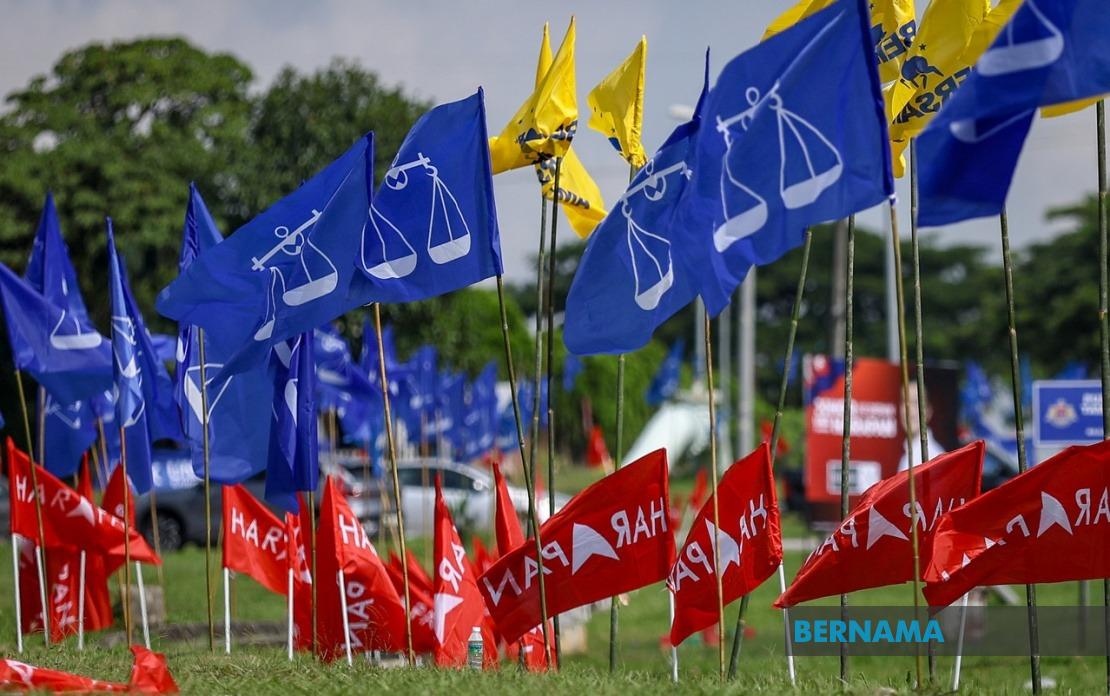
Pakatan Harapan has unveiled an election manifesto for the Johor state polls that independent analysts believe represents a genuine threat to Barisan Nasional's carefully constructed image of governmental competence and stability. Launched on July 3 ahead of voting scheduled for July 11, the 'Johor For All' platform shifts beyond rhetorical positioning into specific policy commitments addressing fundamental concerns that voters consistently prioritise in their electoral decisions.
Academics assessing the opposition coalition's platform note that it deliberately targets the core issues shaping household wellbeing across the state. Rather than attempting to compete with BN solely on bread-and-butter economics, PH has structured its promises around four pillars: employment quality, housing affordability, living standards, and governmental integrity. This framing matters because it acknowledges that voters evaluate manifestos not as abstract wish lists but as frameworks revealing a party's understanding of their daily struggles. A government that genuinely addresses these interconnected challenges demonstrates something beyond mere electoral positioning—it indicates comprehension of what sustainable development actually requires.
The specificity embedded in PH's commitments distinguishes this manifesto from typical campaign documents. Rather than vague promises, the coalition has attached numerical targets to its proposals: a RM500 million youth fund, construction of 80,000 affordable housing units, creation of 250,000 high-paying jobs, and healthcare protections. These figures, while ambitious, carry analytical weight because they provide voters with concrete benchmarks against which future performance can be measured. Such precision also demonstrates that campaign planners invested considerable effort in developing implementation frameworks rather than simply assembling popular-sounding objectives without logistical planning.
Crucially, PH's proposals gain credibility from the Unity Government's actual track record at federal level. Malaysia's recent economic indicators—ringgit strengthening, increased foreign direct investment flows, and improved trade performance—suggest that the national administration possesses real capacity to deliver on its stated objectives. This matters considerably for Johor voters assessing whether PH pledges represent realistic targets or mere aspiration. When a coalition can point to measurable outcomes achieved at the federal level, voter scepticism about whether promises will translate into actual service delivery naturally diminishes. The gap between campaign rhetoric and administrative delivery remains one of democracy's persistent challenges; evidence of prior delivery substantially narrows this credibility gap.
Analysts emphasise that PH's proposals carry particular resonance for Johor specifically because they address the state's distinctive economic geography and demographic realities. The state's close integration with Singapore's economy creates unique pressures and opportunities. PH's proposals targeting cross-border efficiency—specifically the commitment to reduce border waiting times by up to fifty percent and strengthen public transport connectivity—directly address frustrations experienced daily by tens of thousands of cross-border workers. Similarly, the emphasis on high-paying employment in digital economy and artificial intelligence sectors appeals specifically to younger voters seeking career trajectories that transcend lower-wage manufacturing and service sectors historically dominant in the region.
The challenge PH poses to BN's narrative of stability requires careful analysis. Barisan Nasional's greatest electoral asset in Johor derives not primarily from popularity but from incumbency and institutional memory. As the state government since 1974, BN has accumulated administrative experience, established relationships with federal agencies, and developed implementation networks across the state apparatus. Voters familiar with continuity sometimes prefer known quantities to uncertain alternatives. However, BN's prolonged governance has also generated accumulated grievances around infrastructure maintenance, housing allocation, and employment opportunities. By presenting concrete alternatives backed by federal-level success, PH directly challenges BN's implicit claim that its experience automatically guarantees superior outcomes.
Walter Mason, however, suggests implementation capacity remains the critical variable determining whether PH can convert manifesto promises into actual voter confidence. A manifesto lacking specific financial allocations, implementation timelines, or institutional responsibility assignments will struggle to convince undecided voters, regardless of its philosophical appeal. Conversely, PH's approach of tethering state-level pledges to federal government cooperation acknowledges a structural reality: state governments operate within fiscal constraints and legal frameworks established centrally. By framing successful delivery as dependent on intergovernmental coordination, PH implicitly argues that voting for state opposition while supporting federal Unity Government creates positive synergies rather than governmental friction.
The emphasis on integrity in governance within PH's manifesto carries particular significance given Malaysia's recent political history and ongoing discussions around corruption, institutional accountability, and public trust in government institutions. Voters across Southeast Asia increasingly recognise that economic growth divorced from institutional integrity ultimately generates political instability and reduces public confidence in state capacity. By elevating integrity as equivalent to employment and housing in its campaign platform, PH signals understanding that sustainable development requires governance systems in which resources reach intended beneficiaries and officials remain accountable for outcomes.
Demographic analysis suggests undecided voters—consistently comprising 15-25 percent of Johor's electorate—will evaluate both manifestos through multiple lenses simultaneously. They assess individual candidate calibre, but also evaluate whether candidates represent coalitions with demonstrable governance records. They seek reassurance that campaign promises involve realistic financial planning and institutional mechanisms for delivery, not merely inspirational rhetoric. For this crucial swing constituency, manifestos serve as windows into how political parties conceptualise governance itself: do they understand complexity and interdependence, or do they reduce politics to slogans?
Geographically, Johor's position as Malaysia's southernmost mainland peninsula state creates specific policy priorities diverging somewhat from other regions. Cross-border trade integration, port development coordination, and transportation linkages with Singapore constitute structural features shaping economic possibilities. PH's acknowledgment of these realities through targeted cross-border and transportation proposals suggests campaign planners conducted genuine policy research rather than simply applying generic national talking points to a specific state context. This attention to local specificity potentially increases manifesto credibility among voters who recognise whether politicians understand their state's actual economic and social dynamics.
The polling dynamics entering the final week before voting on July 11 appear tighter than some historical Johor elections, with early voting scheduled for July 7 possibly indicating closer competition than recent precedent. BN's traditional advantages—incumbency, institutional networks, campaign resources—face more organised opposition than the state has experienced in recent decades. Whether PH's manifesto proves sufficiently compelling to overcome these structural advantages depends ultimately on voter confidence that opposition candidates and coalition partners can actually govern effectively. Manifestos serve as critical documents in this evaluation, signalling whether campaigns rest on serious policy thinking or merely electoral theatre.

