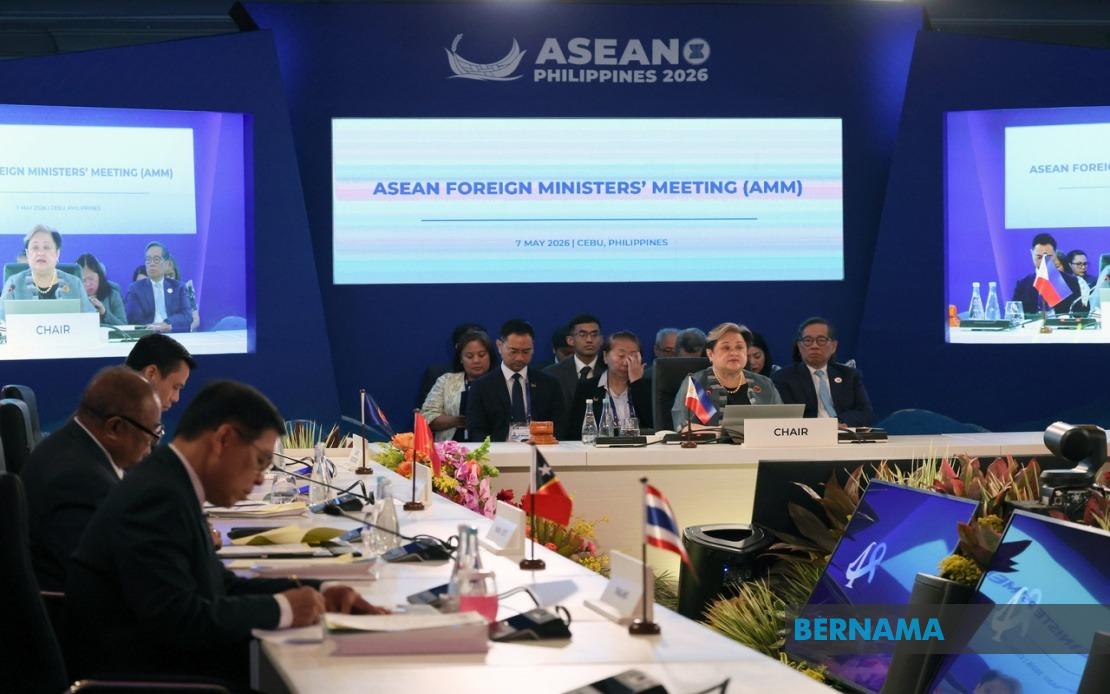
The Philippines has signalled that ASEAN's approach to Myanmar must evolve to match the stark realities unfolding on the ground, even as the bloc reaffirms commitment to its core peace framework. In a significant diplomatic statement, Philippine Foreign Affairs Secretary Ma. Theresa P. Lazaro acknowledged that some ASEAN members have raised concerns about the practical application of the Five-Point Consensus, suggesting that rigid adherence to the original 2021 blueprint is yielding insufficient progress. This positioning reflects growing frustration within ASEAN about the stalled resolution to a crisis that has claimed thousands of lives and displaced millions since the military coup in February 2021.
Adopted in April 2021, the Five-Point Consensus outlines ASEAN's diplomatic roadmap for Myanmar, encompassing five key pillars: an immediate end to violence, inclusive talks between all warring factions, the appointment of an ASEAN Special Envoy to broker dialogue, delivery of humanitarian assistance to affected populations, and the envoy's direct engagement with all stakeholders. Three years on, the framework has struggled to produce tangible breakthroughs. The military junta, officially the State Administration Council, has consolidated control while violent suppression of opposition continues, the proposed dialogue remains largely elusive, and humanitarian access remains severely restricted by armed groups and military forces alike.
Lazaro's carefully worded statement represents a delicate balancing act within ASEAN's decision-making apparatus. She emphasised that calling for a more flexible and pragmatic implementation of the consensus does not constitute abandonment of the framework itself. Rather, ASEAN Chair Philippines intends for the bloc's actions to be informed by ground realities rather than abstract diplomatic principles. This distinction matters considerably, as it allows ASEAN to potentially broaden its engagement toolkit without appearing to capitulate to pressure that the original framework was fundamentally flawed. The subtext suggests ASEAN may be preparing to explore complementary approaches—whether direct humanitarian channels, back-channel negotiations, or conditional incentives—that supplement rather than replace the Five-Point Consensus.
The question of Myanmar's representation at ASEAN forums has emerged as a critical leverage point in this diplomatic recalibration. Since the coup, ASEAN has barred Myanmar's political and military leadership from attending summits in full capacity, instead permitting only non-political representatives such as diplomats to participate. Lazaro indicated that restoring Myanmar's full representation would remain contingent upon demonstrable progress on three fronts: genuine de-escalation of military violence, meaningful participation in constructive dialogue, and measurable improvement in humanitarian access. This conditionality transforms Myanmar's seat from a reward for joining ASEAN to a privilege contingent on behaviour change—a subtle but significant hardening of ASEAN's previously more accommodating stance.
The annual ASEAN Leaders' Review and Decision on the Implementation of the Five-Point Consensus provides the institutional mechanism through which this assessment occurs. These gatherings, chaired by the rotating ASEAN Chair, enable member states to collectively evaluate Myanmar's compliance and chart the bloc's next moves. As Chair, the Philippines has indicated its intention to use these forums not merely as rubber-stamp sessions but as genuine deliberative spaces where member states can openly debate Myanmar policy direction and recalibrate ASEAN's engagement strategy. This represents an attempt to inject more rigorous accountability into ASEAN's notoriously consensus-driven, opaque decision-making process.
Malaysia's Foreign Minister Datuk Seri Mohamad Hasan's parallel statement in late June reinforces the emerging regional consensus that operational adjustments are necessary. Malaysia, with its own border concerns related to Myanmar refugee flows and potential security spillovers, has positioned itself as a stalwart in ASEAN's Myanmar engagement, pledging to maintain dialogue with all relevant parties—the State Administration Council, the National Unity Government (the shadow civilian administration), the People's Defence Force (the armed resistance movement), and various ethnic armed organisations. This comprehensive engagement strategy acknowledges that no single faction controls Myanmar's political landscape, and that durable peace requires negotiation with a fragmented array of actors rather than merely the military government.
The mention of Malaysia's willingness to engage the National Unity Government and People's Defence Force is particularly significant, as it suggests ASEAN may be gradually extending legitimacy to opposition forces without formally abandoning the notion that the junta represents Myanmar's government. This represents a pragmatic accommodation of Myanmar's de facto political fragmentation. The ethnic armed organisations, which control significant territory and maintain complex relationships with both the junta and resistance movements, add another layer of complexity that traditional diplomatic frameworks often overlook. These groups have been key to controlling Myanmar's borderlands and possess substantial autonomy from centralised military control.
For Malaysia and other ASEAN members, the Myanmar crisis carries direct implications for regional security architecture. Sustained instability in Myanmar risks creating ungoverned spaces where transnational criminal networks flourish, refugee populations destabilise neighbouring countries, and cross-border ethnic conflicts intensify. Malaysia, with its significant Myanmar migrant worker population and proximity to conflict zones, faces acute pressure to show that ASEAN's engagement is producing results. A Myanmar peace framework that merely goes through diplomatic motions without achieving genuine de-escalation serves neither ASEAN's collective interests nor the humanitarian imperative of protecting vulnerable populations caught in the crossfire.
The Philippines' reframing of ASEAN's Myanmar strategy reflects broader acknowledgement that the bloc's consensus-based diplomatic model faces constraints when confronting internal state collapse and civil conflict. ASEAN's foundational principle of non-interference, while providing a framework for state equality, has arguably hindered more assertive mediation. Yet openly rejecting non-interference remains politically fraught for member states jealously protective of their own sovereignty. The pragmatic middle path Lazaro articulates—maintaining the Five-Point Consensus as a guiding framework while permitting more flexible implementation—allows ASEAN to appear principled while gradually expanding the scope and intensity of its engagement.
The pathway forward likely entails several tactical adjustments. ASEAN may establish informal working groups on specific issues like humanitarian access or localized ceasefire arrangements, rather than insisting on comprehensive national dialogue frameworks that the junta has consistently rejected. The bloc might also explore incentives beyond diplomatic recognition—economic arrangements, conditional development assistance tied to specific peace metrics, or security cooperation with cooperative ethnic armed groups. Such approaches would require nuanced coordination among ASEAN members with divergent interests in Myanmar, but the growing consensus that current strategies are insufficient may finally be generating sufficient political will for experimentation.
Ultimately, the Philippines' position reflects ASEAN's difficult reckoning with the limits of its conflict resolution capacity. The Five-Point Consensus remains valid as a statement of principles, but its operationalisation in Myanmar's complex, fragmented reality demands sophisticated diplomacy that the bloc has historically struggled to execute. Whether ASEAN can translate Lazaro's call for pragmatism into actual policy innovations—rather than simply repackaging existing stalled initiatives—will determine whether the bloc can meaningfully contribute to resolving Myanmar's humanitarian catastrophe or becomes merely a helpless observer of its neighbour's collapse.

