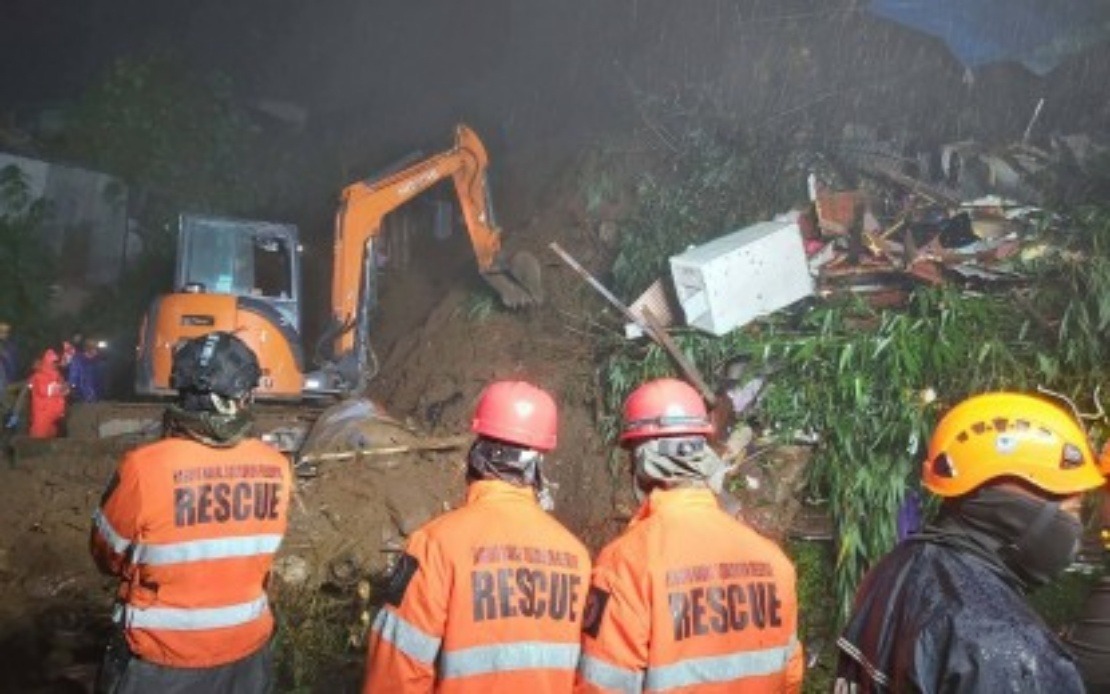
The Philippines continues to reckon with the devastating aftermath of consecutive tropical weather systems, with the Office of Civil Defence confirming 19 fatalities and an estimated 2.2 million people affected by Tropical Depressions Luis and Maymay alongside the southwest monsoon that swept across the archipelago. The scale of the humanitarian crisis underscores the vulnerability of the island nation to seasonal weather patterns that regularly overwhelm infrastructure and displace vast populations, a challenge that resonates across Southeast Asia as climate variability intensifies.
According to Diego Mariano, the public information officer for the Office of Civil Defence, the confirmed death toll reflects verified reports from the worst-affected regions. Benguet province bore the heaviest burden with 12 deaths, followed by Rizal with four fatalities and Batangas accounting for three. Beyond those killed, authorities documented 15 injured persons, with Benguet again recording the highest number at 12 cases, while isolated injuries were reported in Ilocos Sur, Rizal and Cavite. The geographical distribution of casualties points to how terrain and local rainfall patterns concentrate impacts in specific mountainous and lowland areas.
The missing persons tally stands at four individuals, with three unaccounted for in Benguet and one in Batangas. These figures, though smaller than death counts, represent ongoing anguish for families and complicate disaster response operations that must balance immediate rescue efforts with other pressing humanitarian needs across sprawling affected zones. The search and recovery operations in Benguet particularly highlight the challenges posed by Philippine geography, where mountainous terrain and limited road access hamper accessibility for rescue teams.
The geographic reach of the disaster extended across roughly half the nation's administrative regions. A total of 646,676 families representing 2,270,862 individuals experienced some form of disruption, spanning the Ilocos Region, Cagayan Valley, Central Luzon, Bicol Region, Western Visayas, Zamboanga Peninsula, Calabarzon, the Cordillera Region, the National Capital Region and Mimaropa. This widespread footprint demonstrates how tropical systems affecting the Philippines generate cascading impacts across vast territories, complicating resource allocation and recovery planning.
The humanitarian response infrastructure has been substantially stretched, with approximately 919 evacuation centres now sheltering around 26,174 families totalling 94,997 individuals. These figures reveal only a portion of displaced persons, suggesting that many others remain with relatives or in makeshift shelter arrangements. The concentration of evacuees in designated centres indicates severe property damage and flooding that rendered homes temporarily or permanently uninhabitable, particularly in low-lying and riverside communities.
Physical infrastructure sustained significant damage, with 639 houses suffering partial or structural damage and 45 residences completely destroyed. While these numbers may appear modest relative to the affected population, the reality involves damaged roofing, waterlogged interiors, and compromised structural integrity that require months of repair. The destruction pattern typically concentrates in informal settlements and rural areas where construction standards offer less resilience to extreme weather.
The economic toll extends beyond homes into the productive sectors of the economy. Infrastructure damage alone reached PHP1.46 million, a figure encompassing roads, bridges, water systems and power networks that underpin basic service delivery across affected provinces. More consequential for livelihoods, agricultural losses totalled PHP135.33 million, reflecting damage to crops, livestock facilities and irrigation infrastructure critical to rural communities dependent on farming. For context, this agricultural loss figure approximates RM97,000 for infrastructure damage and substantially more for farming losses, illustrating the economic weight these recurring weather events impose on a developing nation.
The southwest monsoon component of this weather event deserves particular attention, as it represents a predictable seasonal pattern that compounds the damage from discrete tropical depressions. This intersection of multiple weather systems—named storms arriving during the established monsoon season—creates compound hazards that current adaptation mechanisms struggle to accommodate. Philippine disaster management authorities face the perpetual challenge of distinguishing between routine seasonal impacts and exceptional extremes that require elevated response protocols.
For Malaysia and other Southeast Asian nations, the Philippine experience carries relevant cautionary lessons. The region's geographic exposure to tropical systems, combined with ongoing urbanization and climate variability, creates conditions for similar mass casualty and displacement events. The Philippines' response framework, while imperfect, demonstrates institutional capacity that some regional neighbours still developing. However, the recurring nature of these events—affecting millions regularly—suggests that adaptation strategies centred solely on emergency response rather than structural resilience investment may prove insufficient as climate patterns shift.
The recovery trajectory from this sequence of storms will unfold over months, consuming government resources while communities attempt to rebuild livelihoods disrupted by flooding and landslides. Agricultural recovery particularly demands sustained attention, as farming families lacking crop insurance face prolonged economic hardship. The Philippine government's disaster management apparatus will require continued donor support and regional cooperation to address both immediate humanitarian needs and longer-term reconstruction challenges that extend well beyond the crisis phase currently dominating news coverage.

