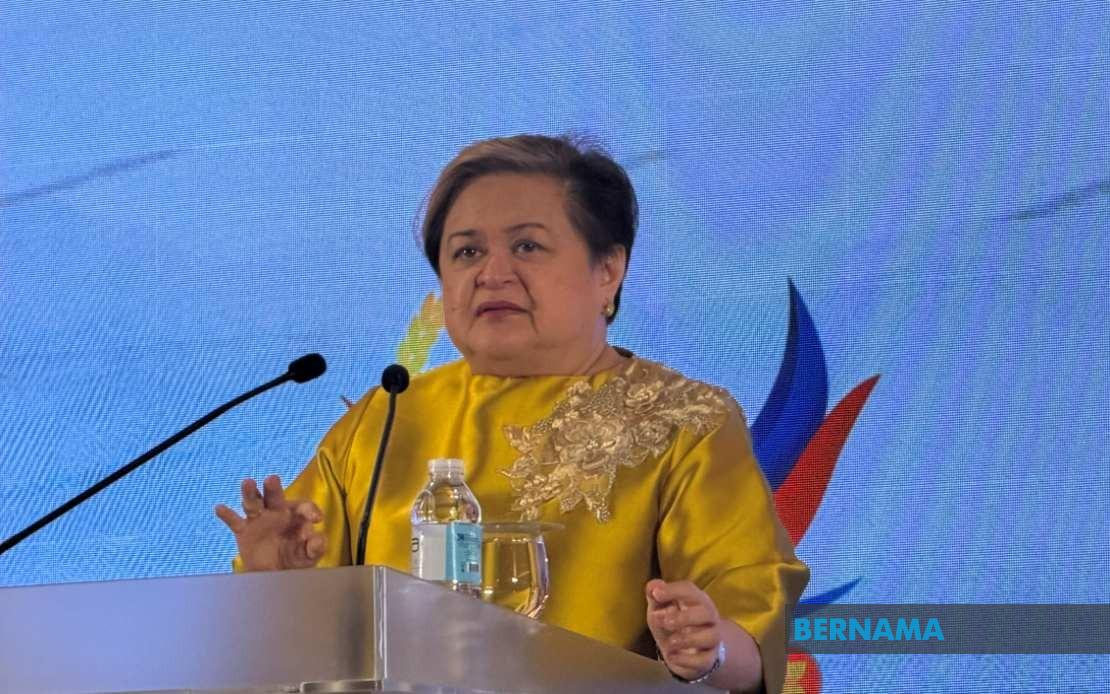
Manila has thrown its weight behind a regional call to fortify ASEAN's maritime infrastructure and protocols, arguing that the bloc cannot afford complacency as geopolitical tensions escalate across key shipping lanes. Philippine Foreign Affairs Secretary Ma. Theresa P. Lazaro issued the appeal during discussions on protecting trade routes and energy security, emphasising that ASEAN's integrated position within global commerce makes it uniquely vulnerable to disruptions far beyond its borders.
Lazaro pointed to recent turmoil in the Strait of Hormuz as a cautionary tale. When major shipping corridors face disruption—whether through conflict, piracy, or accident—the ripple effects spread rapidly through interconnected economies. Energy prices spike, inflation accelerates, food imports become costlier, and entire supply chains grind to a halt. For ASEAN member states that depend heavily on external trade, the stakes are existential. A prolonged closure of critical passages could reverse years of economic progress and trigger social instability.
The Philippines' concern reflects broader anxieties within ASEAN about its position in an increasingly fractious world. The bloc's prosperity rests on smooth passage of goods, fuel, and raw materials through waterways it shares with rival powers. The Strait of Malacca alone handles roughly a quarter of global maritime trade, making it irreplaceable to regional prosperity. Yet ASEAN has limited capacity to unilaterally secure these passages, a reality that underscores both the region's interdependence and its vulnerability.
Lazaro outlined a multi-layered response strategy centred on resilience and coordination. Beyond the obvious need to maintain secure sea lanes, ASEAN should prioritise strengthening supply chain networks so that disruptions to one route do not cascade into economic collapse. This requires diversifying logistics corridors, building redundancy into critical supply networks, and creating buffers in energy and food stockpiles. Energy security deserves particular attention given ASEAN's heavy reliance on imported oil and liquefied natural gas, and given the bloc's exposure to price volatility.
Equally important is the institutional dimension. Lazaro advocated for developing new crisis communication protocols that would allow ASEAN foreign ministers to coordinate swiftly when emergencies strike. Currently, decision-making can be sluggish, constrained by consensus requirements and competing national interests. Faster information-sharing and early warning systems could help the region anticipate problems and respond cohesively rather than fragmenting into individual responses that undermine collective leverage. Transparency and predictability, she stressed, build confidence among traders and investors who might otherwise redirect commerce to perceived safer routes.
The Philippines has also proposed establishing an ASEAN Maritime Centre as part of its 2026 ASEAN Chairship agenda. This institution would serve as a hub for addressing maritime challenges across the bloc, facilitating technical cooperation on navigation safety, environmental protection, and maritime law enforcement. By creating a dedicated venue for cross-sectoral collaboration, member states could share intelligence, coordinate patrols, and harmonise standards more effectively than through ad-hoc meetings or bilateral arrangements.
What makes the Philippines' push particularly timely is the convergence of multiple risks. Geopolitical competition between major powers in and around the South China Sea has intensified maritime tensions. Climate change is making traditional routes less predictable and occasionally impassable. Non-state actors, from pirates to human traffickers, exploit gaps in regional surveillance. Meanwhile, the global economy's fragmentation—as nations pursue friendshoring and supply chain diversification—means that ASEAN must actively work to remain a preferred transit hub rather than taking its position for granted.
For Malaysia specifically, these proposals carry practical significance. The Strait of Malacca, which hugs Malaysian shores, faces constant pressure from geopolitical competition and environmental hazards. Stronger ASEAN protocols and early warning systems would benefit Malaysian shipping, energy imports, and the country's role as a logistics hub. Similarly, improved coordination on supply chain resilience could insulate Malaysia's manufacturing sector from distant shocks. The proposed Maritime Centre, if anchored in practical cooperation rather than symbolic gesturing, could enhance regional capacity to manage crises that inevitably affect ASEAN's smallest and most trade-dependent economies.
The broader implication is that ASEAN recognises it cannot passively manage risks imposed by external powers and global volatility. Instead, the bloc must invest in institutional capacity, information systems, and strategic redundancy. This requires sustained political will and resource commitments that have historically proven difficult for ASEAN to maintain. Yet the Philippines' articulation of the challenge suggests growing recognition that the cost of inaction—in lost trade, energy security, and geopolitical credibility—far exceeds the investment required for preparedness. Whether ASEAN can translate this recognition into concrete, binding cooperation mechanisms remains an open question that will shape regional stability for years to come.

