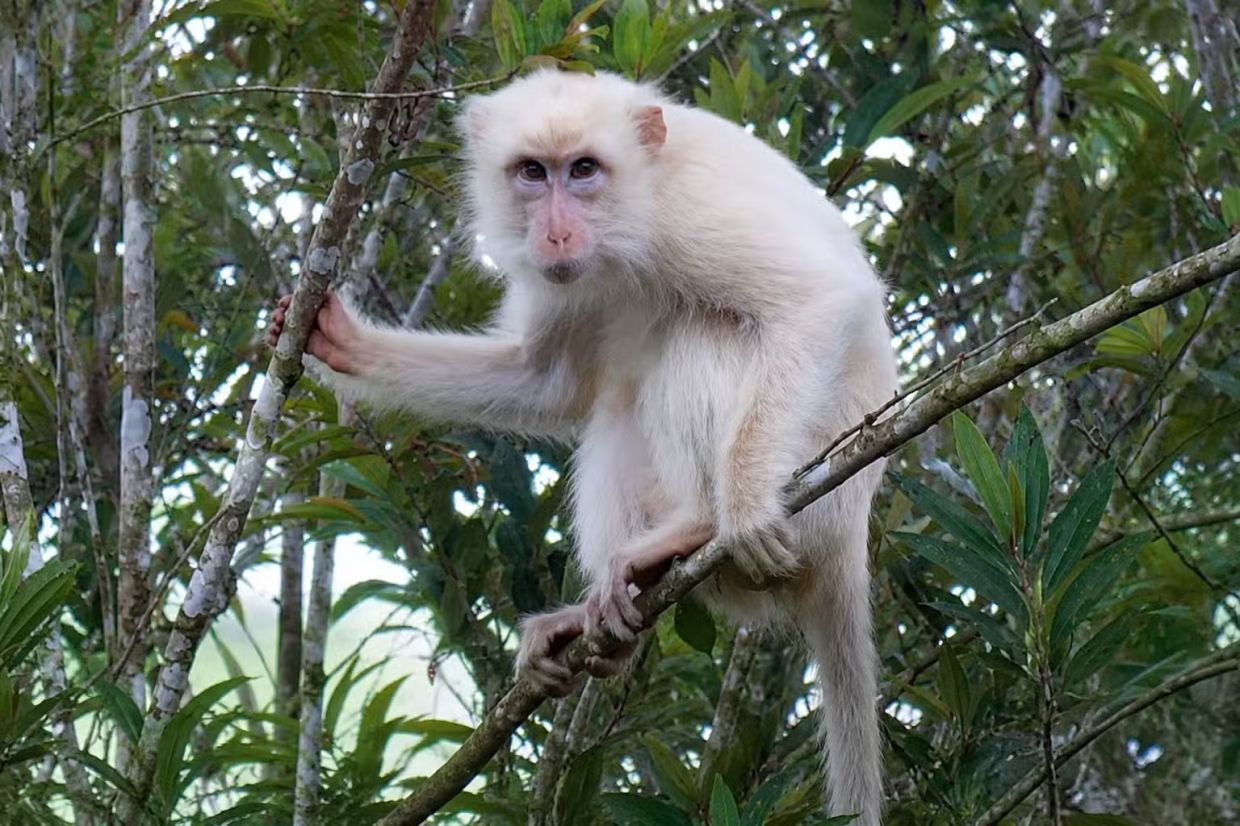
A strikingly pale macaque that has inhabited a forested region of Sultan Kudarat for nearly a decade has become the subject of an urgent conservation campaign after its discovery went viral on social media. The animal's distinctive white coloration first attracted scientific curiosity, then concern, as authorities recognised the potential dangers posed by widespread online exposure to an already vulnerable species. What began as a local oddity witnessed by residents familiar with the forest has evolved into a case study in how digital connectivity can threaten wildlife survival in remote communities, prompting Philippine environmental officials to take decisive protective action.
The Department of Environment and Natural Resources Region XII and local officials from Senator Ninoy Aquino town have jointly established restrictions around the sighting area to shield the monkey from human interference. The unusual appearance of the animal initially suggested albinism to casual observers, but a field team dispatched by DENR conducted a more thorough examination. Their assessment revealed that the macaque possessed brown to dark brown eyes rather than the pale or pink eyes characteristic of true albinism, indicating instead that the animal likely suffers from leucism or a related pigmentation condition. Despite this preliminary finding, wildlife specialists have not yet completed the formal scientific verification necessary to determine the precise nature of the condition affecting the animal.
According to Armando, a resident who has monitored the macaque's movements, the animal has been a regular presence in the vicinity since 2016, often venturing into areas accessible to local populations. The relative obscurity of its existence for years meant minimal disturbance to the creature's natural behaviour and habitat. However, once videos and photographs began circulating across social media platforms, the dynamics changed dramatically. The sudden attention created multiple risks that DENR identified as immediate concerns: the macaque could be deliberately pursued by wildlife traffickers, captured for illegal collection, hunted despite protections, or simply stressed by increased human presence in its territory.
The decision to temporarily restrict public access to the area where the macaque frequents represents a pragmatic response to these emerging threats. By controlling human entry, authorities aim to reduce disturbance while simultaneously preventing opportunistic poaching or collection attempts. DENR specifically cautioned that the animal's newfound visibility online could make it an attractive target for illegal wildlife trade networks operating across Southeast Asia, where rare or unusual primates command significant black-market prices. The strategy reflects a broader recognition across the region that social media virality poses a novel conservation challenge, one that traditional protection frameworks were not designed to address.
During the field assessment, DENR's monitoring team verified that the macaque's immediate habitat remains ecologically intact and capable of supporting the animal's nutritional needs. The secondary forest vegetation in the area continues to provide adequate natural food sources for the resident macaque population, suggesting that habitat degradation is not currently limiting the animal's survival. This positive assessment of environmental conditions indicates that direct habitat protection measures, combined with human disturbance reduction, offer a realistic pathway toward ensuring the animal's continued wellbeing.
Barangay Bugso, the local administrative unit overseeing the immediate vicinity, has begun drafting a municipal ordinance intended to create permanent legal protections for the white macaque, its habitat, and the broader forest ecosystem within which it lives. Until this ordinance receives formal enactment, unauthorised access to the core sighting area remains prohibited through temporary administrative measures. Beyond legal frameworks, the local government has outlined plans to conduct reforestation activities and habitat restoration work, framing these initiatives as dual investments in both biodiversity conservation and the development of responsible ecotourism infrastructure. This approach suggests recognition that sustainable local economic benefits from wildlife protection may prove more effective than enforcement alone in securing long-term community support.
The regulatory basis for the protection campaign derives from Republic Act No. 9147, the Wildlife Resources Conservation and Protection Act, which establishes comprehensive restrictions on hunting, capturing, collecting, possessing, transporting, trading, and otherwise disturbing all protected wildlife species without explicit government authorisation. DENR has invoked these statutory provisions to establish the temporary closure and to guide the pending local ordinance. The agency has simultaneously appealed to content creators, journalists, photographers, and social media users to refrain from publishing precise location data or geotagged images of wildlife sightings, recognising that digital coordinates can rapidly direct poachers and traffickers to vulnerable animals.
For Malaysian and broader Southeast Asian observers, this case illuminates growing challenges in protecting endemic and rare species during an era of ubiquitous mobile technology and social media diffusion. The white macaque incident demonstrates how conservation strategies must now explicitly address digital information flows alongside traditional threats. Regional governments increasingly recognise that protecting wildlife requires managing not only physical threats but also the speed at which information travels across international networks. This dimension adds significant complexity to enforcement in countries where border control and transnational criminal networks already complicate wildlife protection efforts.
DENR has committed to submitting detailed documentation regarding the macaque to the Biodiversity Management Bureau for technical evaluation, ensuring that the case receives attention from national-level conservation specialists. The agency will maintain ongoing monitoring of the animal's habitat, coordinate regularly with local government and community stakeholders, and intensify public education campaigns emphasising the legal and ethical obligations surrounding wildlife protection. This multi-layered approach acknowledges that successful conservation of rare animals in populated regions requires simultaneous action across enforcement, scientific understanding, local community engagement, and public awareness.
The white macaque now stands as a symbol of modern conservation challenges, representing the intersection of biological rarity, digital connectivity, and the persistent vulnerability of wildlife in regions where human presence and natural ecosystems overlap. For nearly a decade, the animal inhabited its forest home with minimal interference, known to residents but protected by obscurity. Now, that same obscurity has vanished, replaced by formal protection mechanisms attempting to recreate the conditions of isolation necessary for the animal's survival. Whether these interventions can succeed will depend ultimately on sustained commitment from local authorities, community cooperation, and the willingness of digital users to prioritise wildlife welfare over the attraction of viral content.

