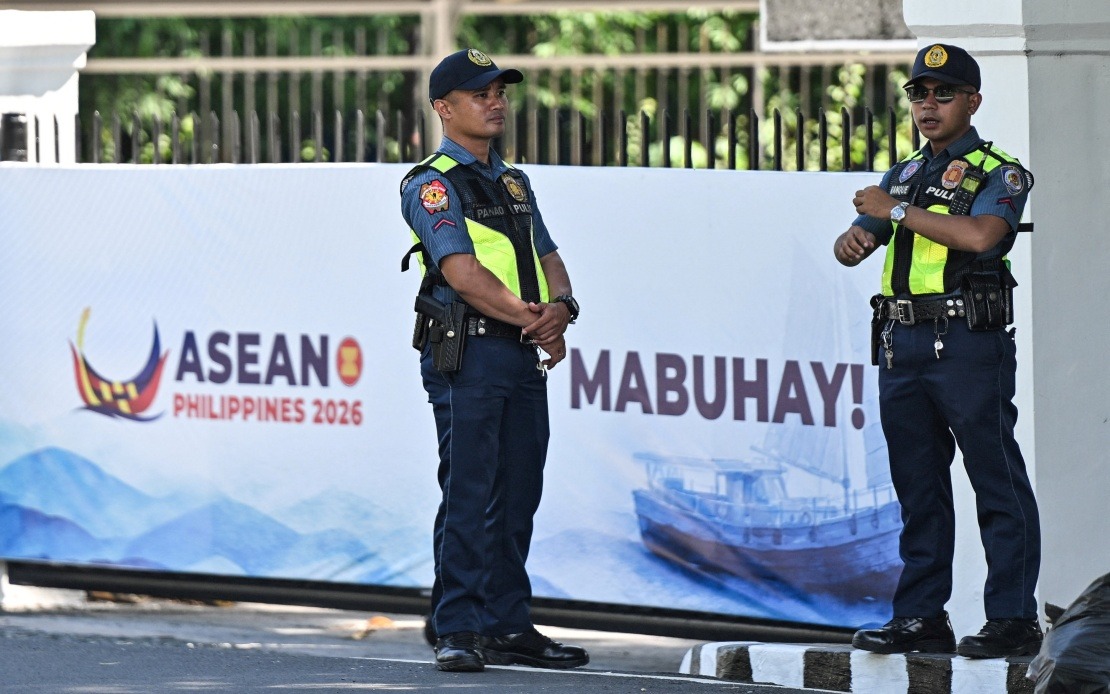
The Philippines is set to guide Southeast Asia through one of its most consequential diplomatic gatherings in recent months, with the 59th ASEAN Foreign Ministers' Meeting and Related Meetings taking place from July 20 to 24 in Manila. According to Foreign Affairs Assistant Secretary and ASEAN Spokesperson Dominic Xavier Imperial, the week-long series of discussions represents a critical opportunity for the bloc to advance shared development priorities while reinforcing regional community identity in an increasingly fragmented global landscape marked by rising tensions among major powers.
The forum commenced with the 16th joint interface between ASEAN Foreign Ministers and the ASEAN Intergovernmental Commission on Human Rights, signalling that human rights protection remains a cornerstone of the regional organisation's agenda despite persistent criticism about enforcement mechanisms. Imperial underscored that this convergence demonstrates ASEAN's institutional commitment to safeguarding fundamental freedoms across the region, particularly for marginalised and vulnerable populations who often lack adequate legal protections within their own jurisdictions. This emphasis on human rights reflects growing pressure from civil society and developed nations on ASEAN to strengthen its human rights architecture, though implementation at the national level continues to face significant obstacles due to sovereignty concerns among member states.
Another significant early session brought together the Southeast Asia Nuclear Weapon-Free Zone Commission, which convened to evaluate the region's strategic action plan for 2023-2027 and consider applications from aspiring states seeking to join the treaty framework. The commission's primary objective remains unchanged: securing comprehensive international acknowledgment that Southeast Asia stands as a nuclear-weapon-free region, a designation that carries considerable geopolitical weight in an era of renewed strategic competition between nuclear-armed powers. This ongoing commitment reflects ASEAN's foundational commitment to regional peace, a principle that has underpinned the bloc's existence since its establishment during the Cold War.
When the formal 59th AMM opens on Tuesday, foreign ministers and diplomatic representatives from ASEAN's dialogue partners will convene for substantive discussions about the organisation's progress across its three foundational pillars: the political-security community, the economic community, and the socio-cultural community. The agenda encompasses a comprehensive review of ASEAN's external relations with major powers and a broad exchange of perspectives on urgent international crises that directly or indirectly affect regional stability and prosperity. This tripartite assessment mechanism represents ASEAN's attempt to maintain comprehensive regional coordination across multiple dimensions of cooperation and governance.
The ministers are anticipated to endorse two significant documents during the meeting. The 59th AMM Joint Communiqué will serve as a comprehensive statement encapsulating ASEAN's collective positions on regional developments and international issues, functioning as the bloc's official statement to the global community. Equally important are the newly drafted Guidelines on the Modalities for Engagement of ASEAN with High Contracting Parties to the Treaty of Amity and Cooperation in Southeast Asia, a cornerstone Philippine deliverable that establishes systematic protocols for nations wishing to deepen ties with the bloc. According to Imperial, these guidelines aim to broaden ASEAN's international partnerships while preserving the Treaty of Amity and Cooperation as the fundamental instrument maintaining regional peace and building confidence among both ASEAN members and external partners.
The gathering will expand on Wednesday to include post-ministerial conferences with ASEAN's principal dialogue partners, encompassing India, the United States, Canada, Russia, China, the Republic of Korea, Japan, Australia, New Zealand, the United Kingdom, and the European Union. These structured bilateral and multilateral engagements between ASEAN and major global powers create rare opportunities for candid discussion of regional concerns and for these external actors to articulate their strategic interests in Southeast Asia. For Malaysian observers, these conversations carry particular significance as they shape the diplomatic environment affecting ASEAN's negotiating capacity and strategic autonomy in an increasingly contested region.
Following these foundational sessions, the week progresses to more sophisticated institutional mechanisms on Thursday, including the 27th ASEAN Plus Three meeting bringing together the bloc and China, Japan, and South Korea for discussions on East Asian regionalism and economic integration. The 33rd ASEAN Regional Forum, the bloc's longest-standing dialogue mechanism with major powers, provides a platform for comprehensive strategic conversation on security matters affecting the wider Indo-Pacific. The 16th East Asia Summit, which incorporates major powers including India, the United States, Russia, and Australia alongside ASEAN, represents the apex of regional strategic conversation. Imperial characterised these multilateral forums as invaluable venues for dialogue partners to collectively address contemporary challenges with regional and global ramifications, suggesting that the week's emphasis on dialogue reflects ASEAN's diplomatic preference for inclusivity and consensus-building over confrontation.
A particularly notable bilateral engagement involves Foreign Affairs Secretary Ma. Theresa Lazaro and Chinese Foreign Minister Wang Yi, a meeting that carries significance extending beyond bilateral Philippine-China relations. Imperial characterised this conversation as essential for addressing the regional implications of global tensions and for clarifying the trajectory of Philippines-China relations, which have experienced considerable volatility in recent years owing to competing maritime claims and strategic considerations. Such high-level bilateral conversations during multilateral gatherings often serve as calibration points for regional relationships and provide opportunities for both parties to signal commitment to diplomatic channels rather than escalatory measures.
Two interconnected crises will invariably dominate ministerial deliberations throughout the week. The ongoing political upheaval in Myanmar, stemming from the 2021 military coup, continues to destabilise the country and complicates ASEAN's consensus-building efforts, as member states struggle to balance engagement with Myanmar's junta administration against calls from democratic nations for stronger measures. Simultaneously, longstanding territorial disputes in the South China Sea involving overlapping claims between China and several ASEAN members remain a persistent flashpoint threatening regional stability and freedom of navigation. The Code of Conduct negotiations in the South China Sea and enforcement of the Five-Point Consensus on Myanmar will occupy permanent positions on discussion agendas, according to Imperial, reflecting their status as non-negotiable priorities for ASEAN's regional security architecture.
Regarding the Code of Conduct specifically, Imperial confirmed that this initiative remains integral to ministerial conversations, indicating that efforts to establish binding rules governing behaviour in contested waters continue despite incremental progress over several years of negotiations. The Five-Point Consensus, adopted in 2021 to address Myanmar's political crisis, includes objectives such as immediate cessation of violence, humanitarian assistance, mediation by an ASEAN envoy, and engagement with Myanmar stakeholders beyond the military junta. Imperial emphasised that ASEAN maintains systematic engagement with both Myanmar's State Administration Council and other stakeholder groups within the country, suggesting a nuanced approach attempting to maintain dialogue channels while preserving pressure for democratic restoration.
The week concludes on Friday with commemorative activities celebrating the Treaty of Amity and Cooperation's 50th anniversary, a symbolic moment reflecting on five decades of the foundational accord that has anchored regional relations and shaped ASEAN's diplomatic practices. This historical perspective provides context for understanding the current week's significance: ASEAN continues to operate within institutional frameworks and diplomatic principles established during the Cold War, frameworks that have proven flexible enough to accommodate tremendous geopolitical change including the rise of China, the rebalancing of US strategic priorities toward Asia, and the emergence of new security challenges ranging from terrorism to pandemic disease to climate change. For Malaysian stakeholders and regional observers, the gathering demonstrates ASEAN's ongoing commitment to maintaining multilateral dialogue mechanisms and rules-based frameworks as alternatives to unilateral action or great power domination of Southeast Asian affairs.

