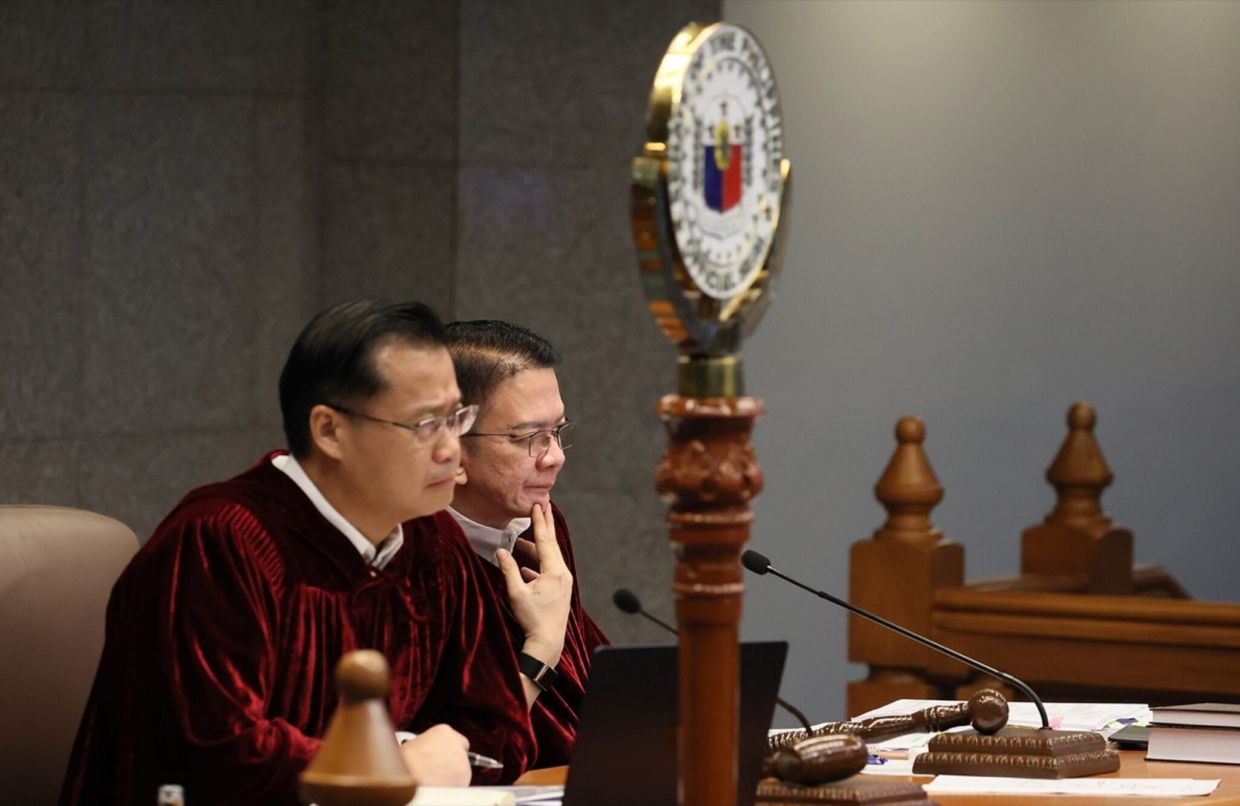
The Philippine Senate impeachment court is poised to make a significant procedural decision that could determine the trajectory of Vice President Sara Duterte's ongoing trial. On Monday afternoon, senator-judges are expected to vote on whether to grant prosecutors' request for a subpoena compelling Duterte to produce her financial records, a motion that prosecutors and civil society advocates characterise as pivotal to uncovering the truth about her alleged accumulation of inexplicable wealth during her tenure as a public official.
The prosecutors' case rests fundamentally on the principle that financial transparency is indispensable to the impeachment process. The proposed subpoena would encompass Duterte's bank accounts, income tax filings, and documents held by the Anti-Money Laundering Council, as well as similar records belonging to her husband, lawyer Manases Carpio. House prosecutors, represented by spokesperson Benjamin Tolosa Jr., have expressed confidence that the motion will succeed, grounding their optimism in legal precedent and the explicit constitutional framework governing impeachment proceedings.
A critical element of the prosecution's argument centres on the 2012 impeachment trial of former Chief Justice Renato Corona, wherein the Senate ordered the production of bank records notwithstanding the country's stringent bank secrecy laws. This precedent demonstrates that confidentiality protections yield when the Senate sits as an impeachment court. Philippine law itself reinforces this position through Republic Act No. 1405, which expressly carves out an exemption for impeachment proceedings from its general confidentiality requirements. Prosecutors maintain that this legal foundation is sufficiently robust to warrant approval of their subpoena request.
Prosecutor Chel Diokno has articulated the substantive basis for the motion with precision, arguing that the Senate derives its subpoena authority directly from the Constitution when functioning as an impeachment tribunal. Diokno contends that financial records spanning Duterte's entire career as a public official—including her years as Davao City vice mayor and mayor—are directly relevant to allegations that she accumulated wealth disproportionate to her lawful income. He has also highlighted evidence that Duterte's financial activity exceeded three billion pesos between 2007 and 2013, a figure derived from an Anti-Money Laundering Council report presented to the House. Furthermore, Diokno argues that both the bank secrecy law and the Data Privacy Act contain explicit provisions permitting disclosure pursuant to valid subpoenas issued in impeachment proceedings.
The defence has mounted a vigorous counter-argument centred on constitutional due process and the scope of impeachable conduct. Lead counsel Michael Poa characterises the prosecution's motion as an impermissible fishing expedition, contending that prosecutors are seeking financial evidence only after the impeachment complaint had already been filed. Poa further contends that the subpoena is unreasonably expansive, reaching back nearly two decades to encompass periods when Duterte held positions not subject to impeachment. He relies on a recent 2025 Supreme Court ruling in Duterte v. House of Representatives to argue that impeachable offences must necessarily be committed while occupying an impeachable office, implying that her conduct as Davao vice mayor and mayor falls outside the scope of the trial.
The defence also challenges the automatic applicability of the impeachment exception to bank secrecy laws, arguing that while such an exception exists, its invocation must still satisfy constitutional due process protections. Poa further asserts that the Anti-Money Laundering Act and the National Internal Revenue Code contain no explicit impeachment exception for their respective records, and he objects strenuously to the inclusion of Carpio's financial documents on the grounds that he is not himself an impeachable official and therefore his records bear no legitimate relevance to the trial.
Civil society organisations have intervened to advocate for the subpoena's approval, framing the vote as a watershed moment for Philippine accountability. The August Twenty-One Movement has drawn an explicit parallel to the controversial "second envelope" vote during former President Joseph Estrada's 2001 impeachment trial, cautioning that efforts to withhold critical evidence ultimately crystallised public outrage and precipitated Estrada's downfall. The organisation has called upon senator-judges to prioritise truth and justice by approving the subpoena request. The Kingdom Keepers coalition, led by activist priest Father Robert Reyes and social anthropologist Dr Melba Padilla Maggay, has similarly urged the Senate to compel production of all requested financial documents, asserting that public officials bear an unambiguous responsibility to account for their financial affairs and cannot shelter behind claims of confidentiality when their probity is under scrutiny.
The broader implications of this vote extend beyond Duterte's individual trial. For Southeast Asian observers and Malaysian readers, the proceeding illustrates ongoing tensions within the Philippine political system regarding the balance between institutional accountability mechanisms and individual privacy protections. The impeachment process, historically deployed as both a legitimate check on executive power and as a weapon in factional disputes, continues to generate fundamental questions about the relationship between financial transparency and due process. The outcome will signal whether the Senate views financial disclosure as a prerequisite to impeachment proceedings or whether it prioritises evidentiary constraints even when addressing charges of illicit wealth accumulation.
Duterte confronts four articles of impeachment alleging misuse of confidential funds, accumulation of unexplained wealth, and threats directed at President Marcos, First Lady Liza Araneta-Marcos, and former Speaker Martin Romualdez. The consequences of conviction would be severe: removal from office and permanent disqualification from holding any public position. The financial records vote therefore represents more than a procedural matter; it potentially determines whether prosecutors can substantively establish their most damaging allegations regarding her stewardship of public office.
Further testimony is anticipated from National Bureau of Investigation Director Melvin Matibag, expected to appear on Tuesday to address the agency's investigation into Duterte's alleged threats against the President. The NBI investigation has reportedly concluded that her remarks were not spontaneous utterances but rather reflected an organised plan, a finding that prosecutors plan to develop through Matibag's testimony. The convergence of the subpoena vote and forthcoming NBI testimony suggests the trial is entering a more substantively consequential phase, moving beyond preliminary procedural questions toward examination of the core allegations that triggered the impeachment action.

