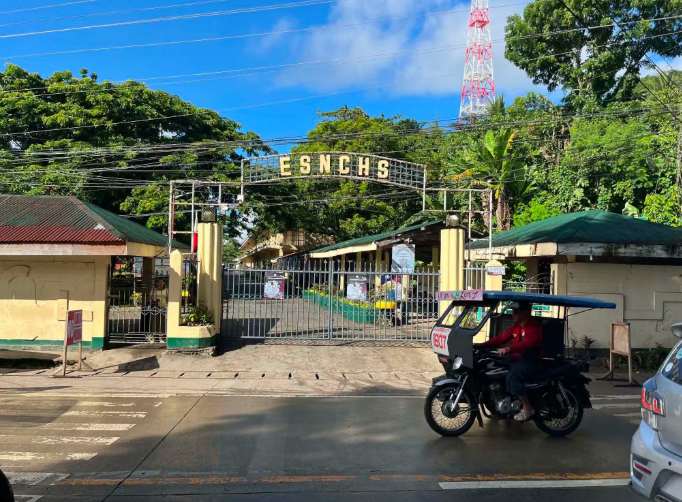
Eastern Samar National Comprehensive High School in Borongan City halted all classes on Friday following the emergence of an online post containing alleged bomb and gun threats, marking the latest in a series of security incidents affecting schools across the Eastern Visayas region. The threat, which reportedly originated from Grade 11 Kitchen Operations students, triggered an immediate response from law enforcement and forced school administrators to prioritize student safety over continuing academic activities.
The decision to shut down the campus came swiftly after Acting School Head Dean Ernest Paul Hermano received recommendations from the Borongan City Police Station to suspend operations. Coordination between the school administration, the Department of Education's Borongan City Division, and police authorities ensured a unified and organized response to the perceived threat. The closure demonstrated how seriously educational institutions in the region now view potential security risks, reflecting broader concerns about campus safety that have intensified following recent violent incidents.
Special Weapons and Tactics teams were immediately deployed to conduct comprehensive security sweeps of areas where the threatening online images were reportedly taken. The operation was thorough and deliberate, with officers examining all relevant locations to eliminate any possibility of actual weapons or explosives on campus. By 8:35 a.m. on Friday, PLTCOL Silver Cabanillas, the acting chief of the Borongan City Police Station, officially declared the school premises free of any credible bomb or gun threats, allowing administrators to begin planning for the resumption of normal operations.
The incident carries particular significance given its timing. Just eleven days earlier, on June 22, a shooter at San Jose National High School in Tacloban City opened fire on campus, killing three students and wounding twenty others. That tragedy sent shockwaves through the Eastern Visayas educational system and prompted an immediate reassessment of security protocols across schools in the region. The attack fundamentally changed how administrators and local officials approach threat assessment, creating a heightened state of vigilance that makes incidents like those at ESNCHS impossible to dismiss as mere pranks or hoaxes.
Eastern Samar National Comprehensive High School is no ordinary institution—it serves as the largest public secondary school in Eastern Samar province and functions as the region's flagship educational facility. Thousands of students from Borongan City and surrounding municipalities depend on the school for their secondary education, making its temporary closure a significant disruption affecting not only academic schedules but also the daily routines of countless families across the area. The school's size and importance within the provincial education system means that any security concern reverberates beyond the campus itself.
In the wake of the Tacloban shooting, schools and local government units throughout Eastern Visayas implemented a range of defensive measures aimed at preventing similar tragedies. These initiatives include enhanced security protocols, increased police presence on campuses, improved emergency response procedures, and more rigorous screening of potential threats. The collective response reflects a region attempting to balance the need for open, accessible educational spaces with the imperative to protect students and staff from potential violence. The challenge lies in distinguishing genuine threats from misguided social media posts while maintaining an appropriate level of preparedness.
Authorities have not yet identified the individual or individuals responsible for the threatening online post, and investigation efforts remain active. The investigation will likely determine whether the posts constituted a genuine threat, a serious misunderstanding, or perhaps the work of students attempting an ill-conceived prank without understanding the gravity of making such threats in the current climate. The outcome of this investigation will send important signals about how the educational system and law enforcement agencies respond to similar incidents in the future.
The school administration issued a formal statement assuring the public of its commitment to campus safety and its full cooperation with law enforcement authorities. The statement emphasized that ESNCHS takes all security threats seriously and remains dedicated to maintaining a secure learning environment for all students, faculty, and staff members. This messaging reflects an institutional understanding that public confidence in school safety has become as important as physical security measures themselves.
The proliferation of school-related security incidents across Eastern Visayas in recent days has prompted authorities to issue broader public warnings about the dangers of spreading unverified information online. Law enforcement agencies have urged citizens to refrain from circulating unconfirmed threat information and instead to report any genuine concerns directly to police for proper assessment and investigation. This guidance acknowledges how rapidly misinformation can spread through social media and how such sharing, even with good intentions, can amplify panic and disrupt normal community operations.
For Malaysian observers and Southeast Asian educators, the Philippine situation underscores a growing regional challenge: how schools can maintain safe, welcoming learning environments while adapting to emerging security threats in the digital age. The speed with which rumors and threats spread through social media, combined with heightened anxiety following actual incidents of school violence, creates a complex environment where distinguishing credible threats from false alarms becomes increasingly difficult. The incident at ESNCHS illustrates both the importance of taking security concerns seriously and the collateral consequences when entire institutions must close based on unverified online posts.
The broader context for these security incidents extends beyond the Philippines. Educational institutions across Southeast Asia grapple with similar challenges as social media usage among students increases and awareness of school violence spreads internationally. The question of how to respond proportionately to threats—neither dismissing genuine dangers nor overreacting to social media chatter—remains a critical concern for education officials throughout the region. The experience of Eastern Visayas provides important lessons about crisis response, inter-agency coordination, and the long-term effects of security incidents on school communities.

