The Philippine Department of Justice has launched a formal investigation into potential criminal charges against government officials in connection with a shooting incident at the Senate building on May 13 and the subsequent escape of Senator Ronald dela Rosa from protective custody early the following morning. Justice Secretary Fredderick Vida disclosed the probe, indicating that prosecutors and investigators are working to establish the nexus between these two significant security incidents that have raised serious questions about institutional vulnerability and official conduct.
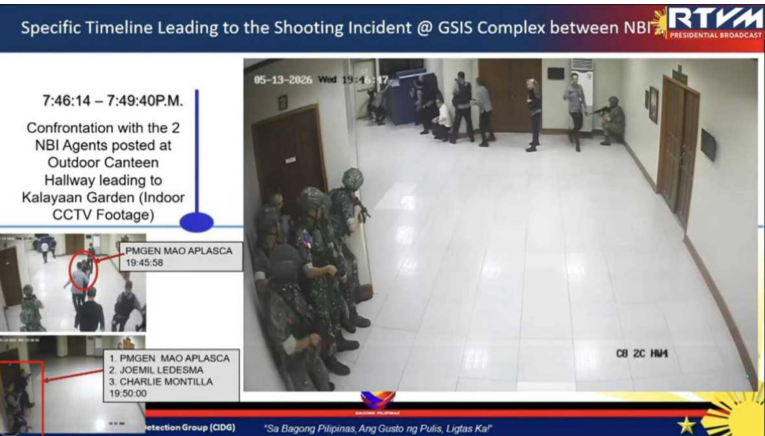
According to Vida, the investigative panel has already compiled substantial evidence in its preliminary examination of the case. The team has gathered testimonies from personnel of the National Bureau of Investigation, interviewed members of the media who were present at the scene, and reviewed CCTV recordings from the Senate complex and surrounding areas. This multi-source approach reflects the seriousness with which authorities are treating the incidents and the apparent complexity of establishing accountability across multiple agencies and officials.
The most alarming detail to emerge is evidence suggesting that sniper fire originated from the fifth floor of the Senate building itself, with shots directed specifically at an identifiable NBI vehicle stationed at the GSIS premises. The targeting of a vehicle used by the investigative agency indicates a level of coordination and planning that goes beyond spontaneous action, lending credence to theories of deliberate obstruction of official duties. The fact that the shooter could identify and target a specific vehicle used by the NBI suggests possible advance knowledge of investigative movements and security arrangements.
Vida's statement that the investigation remains "active and ongoing" signals that prosecutors have not yet completed their preliminary assessment or identified all relevant actors. However, he indicated that early findings point toward the involvement of multiple public officials, though he stopped short of naming specific individuals at this stage. This measured approach reflects established investigative practice—gathering evidence comprehensively before making formal accusations—but it also leaves significant uncertainty about which officials face scrutiny and on what specific grounds.
The Justice Secretary's cautious language regarding potential charges is noteworthy. When pressed to confirm whether specific persons are under investigation, Vida responded affirmatively that personalities involved are public officials, but emphasized that formal accusations have not yet been leveled. This distinction matters considerably: it means investigators are still in the evidence-gathering phase and have not yet determined sufficient grounds to name suspects or pursue charges. The identification of numerous public officials as being "involved" in some capacity demonstrates that this matter extends beyond isolated bad actors to potentially systemic issues within security and law enforcement frameworks.
The circumstances surrounding Senator dela Rosa's escape from protective custody represent a particularly troubling dimension of the broader incident. The timing—occurring within hours of the Senate shooting—and the apparent ease with which he departed from official protection raises uncomfortable questions about the integrity of security details and whether officials tasked with his protection were complicit in facilitating his departure. The escape of a sitting senator from law enforcement custody suggests either catastrophic breaches in security protocols or deliberate facilitation by persons within the custody apparatus itself.
Vida's assurance that the Department of Justice will pursue the investigation "professionally, objectively, and without fear or favor" carries significant weight in the Philippine context, where concerns about selective justice and political interference in investigations remain persistent. His statement that "no individual is above the law" carries implicit reference to the seniority and political standing of those potentially implicated. Yet his simultaneous reminder that "no person should be judged before the evidence has been fully examined" acknowledges the serious consequences of formal investigation for officials' reputations and careers, suggesting a desire to maintain procedural integrity despite apparent pressure for swift accountability.
The incident reflects broader institutional vulnerabilities within the Philippine security apparatus. That a sniper could operate from within the Senate building itself and target an NBI vehicle with apparent impunity raises fundamental questions about physical security, access control, and oversight mechanisms within government facilities. The fact that a senator under custody could escape suggests inadequate supervision and security protocols, or alternatively, inadequate commitment by responsible officials to maintaining custody arrangements.
For Southeast Asian observers, these developments carry implications beyond the Philippines' borders. The incident demonstrates the fragility of security institutions even in countries with sophisticated law enforcement agencies and established protocols. It reveals potential vulnerabilities in how allied nations might secure sensitive personnel and facilities, and raises questions about coordination failures between different government agencies charged with overlapping security responsibilities.
The investigation's outcome will likely set important precedents regarding accountability for government officials in sensitive security matters. If prosecutors ultimately charge and convict public officials for their role in these incidents, it would signal that institutional rank provides no immunity from consequences. Conversely, if the investigation concludes without substantive charges, it may reinforce public skepticism about the fairness and independence of official inquiries into alleged misconduct by government personnel themselves.