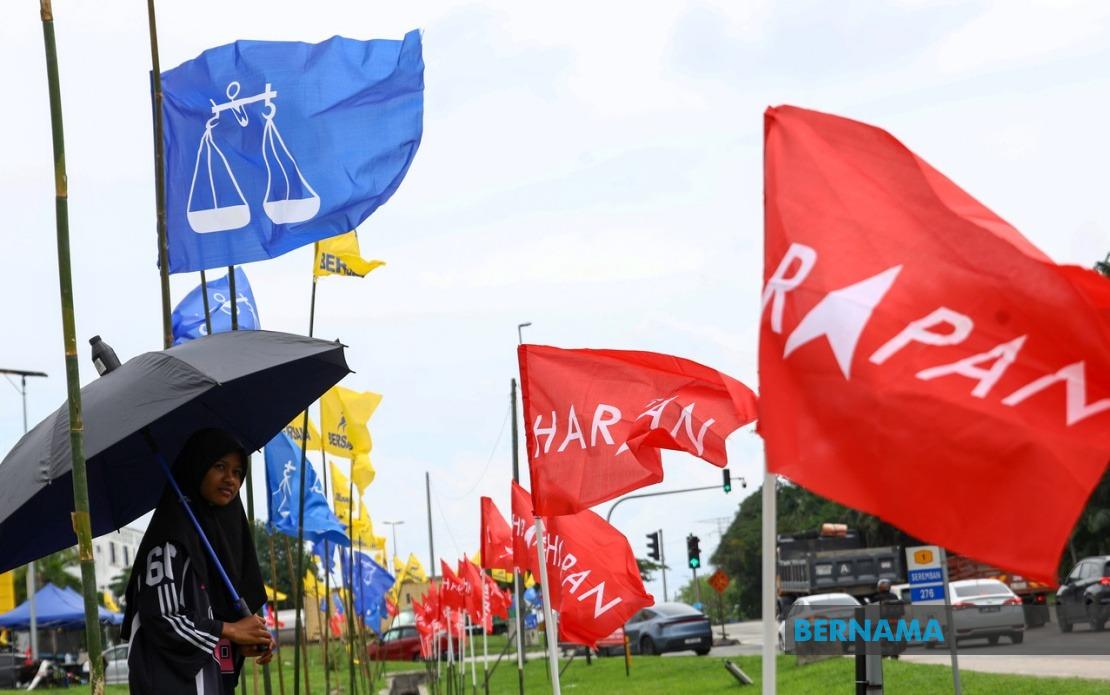
Pakatan Harapan's prospects in the upcoming Johor state election have taken on heightened significance as a mechanism for preserving democratic safeguards in the state's governance, according to DAP secretary-general Anthony Loke. Speaking at a party gathering in Kluang, Loke outlined the strategic importance of the opposition coalition's performance in the July 11 poll, framing the contest not merely as a race for electoral dominance but as a fundamental struggle to maintain institutional balance within Johor's political system.
The central thrust of Loke's argument rests on a principle that has become increasingly relevant across Malaysia's political landscape: the necessity of competitive alternatives within state legislatures. When a single political force controls an overwhelming majority of seats without credible opposition presence, the traditional parliamentary mechanisms designed to scrutinise executive power—parliamentary questions, committee reviews, and legislative debate—lose much of their practical teeth. In such environments, accountability mechanisms become ceremonial rather than substantive, and a government operates with minimal institutional restraint.
Loke's comments reflect broader concerns within the opposition regarding the consolidation of political power in several Malaysian states. He articulated the view that PH's participation across all 56 state assembly constituencies serves a function beyond merely competing for office; it establishes a baseline of representation that enables ongoing democratic accountability. Without a meaningful opposition presence distributed across legislative districts, the incentive structures that ordinarily motivate governments to respond to constituent grievances become attenuated.
The Johor election presents a particularly consequential test case for these dynamics. As Malaysia's second-largest state by population and a crucial economic contributor, the political direction Johor takes carries implications extending beyond its own borders. A state election result that concentrates power entirely in one coalition's hands would represent a significant shift in the regional political balance, particularly given Johor's historical role as a competitive electoral battleground.
PH's decision to field candidates in all 56 seats demonstrates a strategic commitment to this vision of systemic balance. The coalition, comprising PKR, DAP, and Amanah, is essentially arguing that electoral competition itself constitutes a public good, regardless of immediate seat outcomes. This approach contrasts with strategies focused narrowly on maximising seat wins through selective fielding in winnable districts, instead prioritising the objective of ensuring that voters across the entire state have access to opposition candidates and platforms.
The composition of the overall contest reflects Malaysia's robust electoral participation levels. With 172 candidates contesting the 56 available seats, the average constituency features just over three candidates—a number indicating that beyond the major coalitions, smaller parties and independent candidates continue to seek representation. This proliferation of candidates ensures that voters face genuine choices rather than predetermined outcomes, though the fragmentation also raises questions about whether smaller contenders significantly dilute opposition strength or provide voters with genuinely distinct alternatives.
Early voting provisions, scheduled for July 7 with the main poll following four days later on July 11, represent an expansion of electoral access intended to accommodate voters who might otherwise face obstacles to participation. The compression of these dates within a single week maintains the intensity of the campaign period while enabling certain voter categories to cast ballots before the primary election day.
Loke's emphasis on checks and balances resonates with ongoing international discussion regarding democratic resilience and institutional guardrails. Political science literature increasingly emphasises that competitive electoral systems derive their value not merely from allowing voters to periodically change governments, but from creating permanent incentives for those in power to govern responsibly. When opposition parties lack meaningful presence in legislatures, these incentive structures atrophy, regardless of formal institutional arrangements.
For Malaysian readers observing Johor's political trajectory, the state election carries implications for how Malaysia's federal political balance may evolve. Johor's electoral result will influence calculations within national coalitions regarding their organisational strength, policy direction, and negotiating positions in federal politics. A decisive outcome in either direction could reshape the dynamics that have characterised Malaysian politics since the 2018 general election.
The practical consequences of Loke's argument extend to policy formation and resource allocation at the state level. With opposition scrutiny, budgetary allocations face greater exposure to questioning, development projects require more extensive justification, and administrative decisions are subjected to more intensive review. While this process may slow decision-making in some respects, proponents argue it prevents the kind of fiscal waste and policy errors that unchecked administrations sometimes perpetrate.
As the campaign enters its final phase before the July 11 poll, the ideological contest between coalitions has crystallised around this fundamental question of institutional design: whether Johor's governance would benefit from the streamlined decision-making that single-coalition dominance might enable, or whether the friction and deliberation inherent in competitive systems produces superior long-term outcomes for the state's citizens and institutions.

