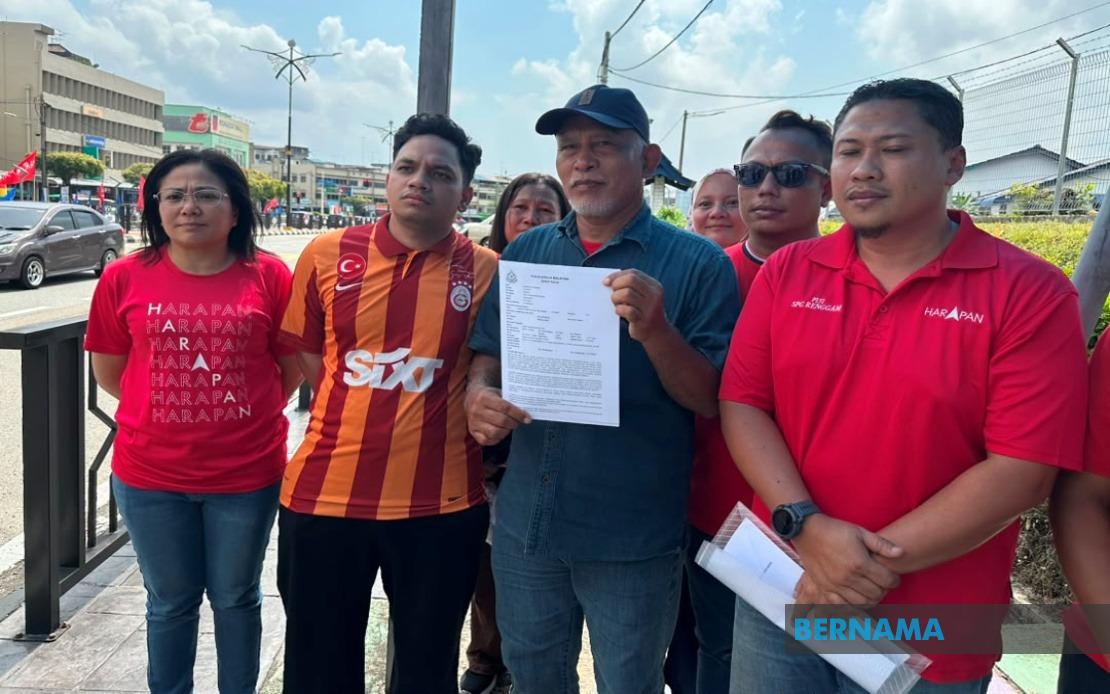
A representative of the Pakatan Harapan candidate contesting the Machap seat lodged a police report on July 9 against Johor Menteri Besar Datuk Onn Hafiz Ghazi, alleging electoral misconduct centred on the treatment of technical vocational students during the state election campaign. The complaint, filed at Simpang Renggam district police headquarters, raises fresh questions about the conduct of Malaysia's ongoing state elections and the boundaries between government resources and partisan campaigning.
Khiru Nasir Rohani, deputy division chief of Simpang Renggam Amanah and representative of the PH's Machap hopeful, contended that there had been an orchestrated programme to pressure students from local TVET institutions into attending events designed primarily to boost support for Barisan Nasional candidates. The alleged pattern suggests systemic use of educational bodies for political advantage rather than isolated incidents, creating concerns about institutional independence during the electoral period.
The allegations specifically reference a gathering held in Kluang on July 4, where TVET students were reportedly required to attend a programme that subsequently functioned as a platform for open campaigning. The characterisation of attendance as mandatory rather than voluntary forms the crux of the complaint, as it suggests students were not provided genuine choice in their participation. Such tactics could constitute undue influence on voters, particularly those who may feel vulnerable or obligated to comply with directives from educational authorities.
Khiru Nasir argued that the conduct violated the Election Offences Act 1954, particularly clauses prohibiting undue influence and the improper use of official position or institutional resources for political purposes. The invocation of specific legislation underscores the attempt to frame the complaint within established legal frameworks rather than as mere political grievance. Election law in Malaysia has long grappled with questions of what constitutes permissible political activity versus prohibited abuse of state machinery and institutions.
The complaint calls for a multi-agency investigation involving police, the Malaysian Anti-Corruption Commission, and the Election Commission. This triangulated approach suggests recognition that electoral integrity encompasses both criminal conduct and administrative breaches. The MACC's involvement is particularly significant, as it points toward potential abuse of official position rather than simple electioneering. Khiru Nasir framed the appeal for investigation as necessary to preserve democratic credibility and prevent normalisation of institutional capture for partisan ends.
The Johor state election represents a significant test of electoral integrity in Malaysia's federal context. With 172 candidates competing for 56 state seats, the election carries implications beyond the immediate state politics, as it reflects broader patterns in how Malaysian political parties and their aligned state machinery conduct campaigns. The timing of the TVET controversy, emerging just days before polling on Saturday, suggests the issue had gained sufficient attention to prompt formal action.
The incident raises broader questions about the vulnerability of TVET students as a demographic. Technical and vocational students often come from backgrounds where economic pressures may make them less inclined to refuse directives from institutions that control their credentials and future employment prospects. Using such populations for campaign purposes thus carries ethical dimensions beyond electoral law, touching on questions of coercion and institutional responsibility to vulnerable groups.
Government-linked institutions have historically occupied ambiguous ground in Malaysian electoral cycles. While state officials retain the right to participate in politics, using institutional channels and resources to mobilise students crosses into territory that most democracies reserve for genuine civic engagement rather than partisan deployment. The complaint seeks to clarify this boundary in a concrete case.
The allegation also reflects tensions within the broader PH coalition. Amanah's decision to pursue formal police channels rather than relying on party-level pressure suggests confidence in the complaint's substantive foundation and commitment to institutional remedies. This approach differs from purely partisan denunciations and signals that opposition parties may increasingly resort to legal mechanisms when alleging electoral violations.
For Malaysian voters and observers, the complaint underscores the importance of election monitoring mechanisms and voter awareness during campaigns. Allegations of institutional misuse tend to surface only when witnesses or affected parties take initiative to report them, making public alertness crucial to maintaining electoral standards. The complaint also demonstrates that such issues are not uniformly ignored by authorities, though the speed and depth of investigation will be closely watched.
The broader significance extends to how Malaysia's electoral system manages the interaction between state institutions and politics during polling periods. If substantiated, allegations of systematic student mobilisation would represent a pattern rather than occasional misconduct, warranting systemic remedies beyond individual accountability. The outcome of investigations and any resulting enforcement actions will set precedents for how such boundaries are maintained in future elections.

