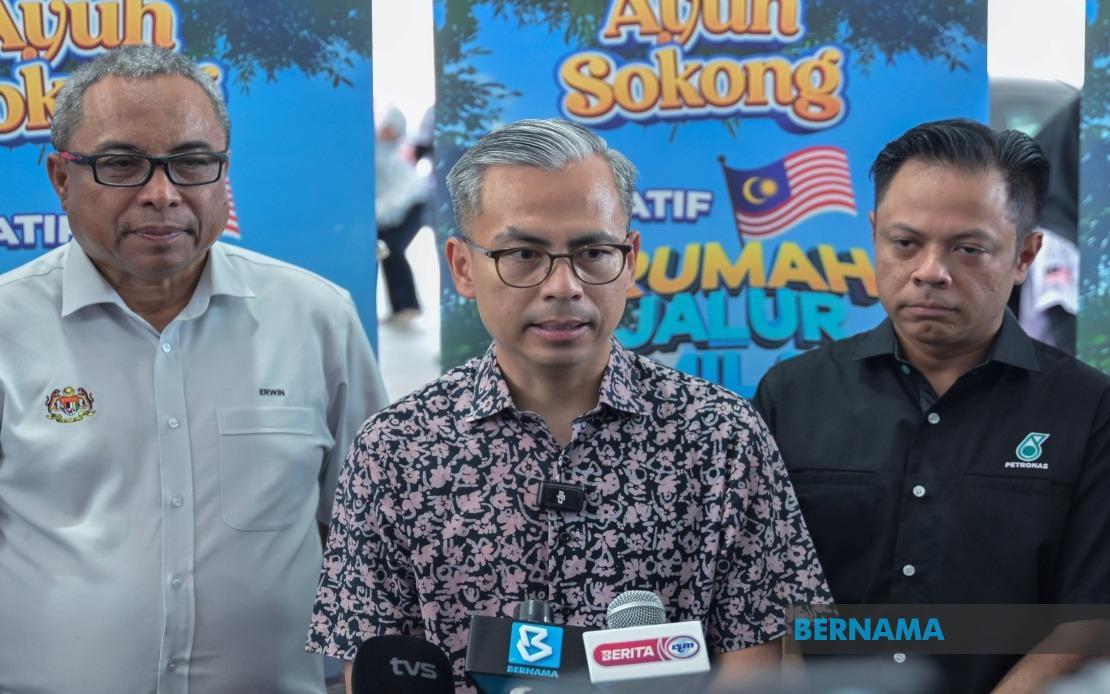
Pakatan Harapan has welcomed Barisan Nasional's willingness to discuss the allocation of seats for the upcoming Melaka state election, treating the development as a meaningful avenue for political engagement. The statement from PH's communications director Datuk Seri Fahmi Fadzil indicates that the coalition perceives BN's openness not merely as a tactical gesture but as a foundation for addressing broader concerns about stability in the state and the nation.
Fahmi emphasised that such receptiveness carries implications beyond the immediate electoral contest, suggesting it reflects a commitment to institutional governance and political maturity. His remarks indicate that PH leadership views collaborative approaches to seat distribution as beneficial for Melaka's development trajectory and for strengthening national political conventions. This framing suggests that discussions about seat allocation are being positioned within a wider context of how competing political forces can coexist productively in state administration.
The Keadilan Melaka chairman Yang Berhormat Adam Adli has been directly engaged with Melaka Chief Minister Datuk Seri Ab Rauf Yusof on the mechanics of seat distribution, according to Fahmi's disclosure. This channel of communication signals that negotiations are advancing through established party hierarchies rather than backroom arrangements, lending legitimacy to ongoing discussions. The involvement of state-level party figures underscores that any agreement would need to satisfy regional political dynamics and local party bases.
Fahmi acknowledged the mathematical reality underlying these discussions: BN currently holds 21 seats in the Melaka State Legislative Assembly while PH commands five. This disparity frames the negotiating landscape, establishing what Fahmi termed a "realistic" foundation for dialogue. The proportion reflects BN's historical electoral dominance in the state, a factor that shapes both parties' expectations and constraints in redistributing constituencies. The gap between the two coalitions explains why any seat-sharing arrangement would be inherently asymmetrical.
According to Fahmi, matters related to seat distribution can be addressed through mechanisms operating at both state and federal administrative levels. This suggests that decisions about which party contests which constituency may involve coordination beyond the Melaka state apparatus, potentially incorporating considerations from the national leadership of both coalitions. The multi-layered approach indicates that seat allocation involves negotiating interests that extend beyond a single state's boundaries.
Two days prior to Fahmi's statement, BN chairman Datuk Seri Dr Ahmad Zahid Hamidi had outlined his coalition's negotiating position with more explicit detail. Zahid Hamidi indicated that BN would entertain discussions about seat distribution and even potential exchanges of constituencies, provided such arrangements were conducted with transparency and integrity. His emphasis on honesty and sincerity suggests BN seeks to preempt public criticism that any backroom agreements might generate.
Zahid Hamidi introduced a principle that appears central to BN's negotiating stance: that seats won by any party through previous electoral contests should be respected and not unilaterally transferred to coalition partners. This criterion establishes that any seat-sharing arrangement would likely operate within defined boundaries, preserving each party's core electoral territories while creating limited flexibility for reallocations in contested or marginal constituencies. The principle essentially protects each party's strongholds from being compromised in negotiation.
The timing of these discussions reflects the approaching Melaka state election, a contest that holds significance for both coalitions' broader political strategies in Malaysia. For PH, the Melaka contest represents an opportunity to expand its footprint in a state where it has historically struggled to compete against BN's organisational machinery. For BN, Melaka remains a crucial bastion, and any concessions on seat allocation must be calibrated to maintain its electoral dominance.
The engagement between PH and BN on Melaka seat distribution illustrates a broader shift in Malaysian political behaviour, where pre-election negotiations have become routine rather than exceptional. Unlike electoral contests conducted in pure competition, this discussion-based approach allows coalitions to focus resources on winnable constituencies while potentially ceding others where their prospects appear dim. Such pragmatism can reduce campaign expenditures and concentrate organisational energy where it generates maximum return.
For Malaysian observers, these discussions underscore how seat distribution remains a crucial determinant of electoral outcomes in a proportional representation system. The willingness of both coalitions to discuss reallocation suggests confidence that they can manage internal party expectations and demonstrate to supporters why such arrangements serve strategic interests. The approach also reflects lessons from previous elections where fractured opposition or poorly coordinated coalitions allowed dominant parties to consolidate advantages.
The implications for Melaka's governance extend beyond immediate electoral considerations. If PH and BN successfully negotiate a seat allocation, the resulting assembly composition would reflect not purely voter preferences but also backroom arrangements. Such outcomes raise questions about democratic accountability and whether pre-arranged seat distributions adequately represent constituent interests. However, proponents argue that collaborative approaches prevent wasteful three-cornered contests that dilute opposition strength.
Moving forward, the success of these negotiations will depend on both coalitions' ability to sell any agreement to their respective party members and grassroots supporters. Constituencies that PH or BN voluntarily concedes risk generating resentment among local party cadres who view such surrenders as abandoning their territories. Managing these internal political dynamics while maintaining a united front against each other represents the central challenge ahead.

