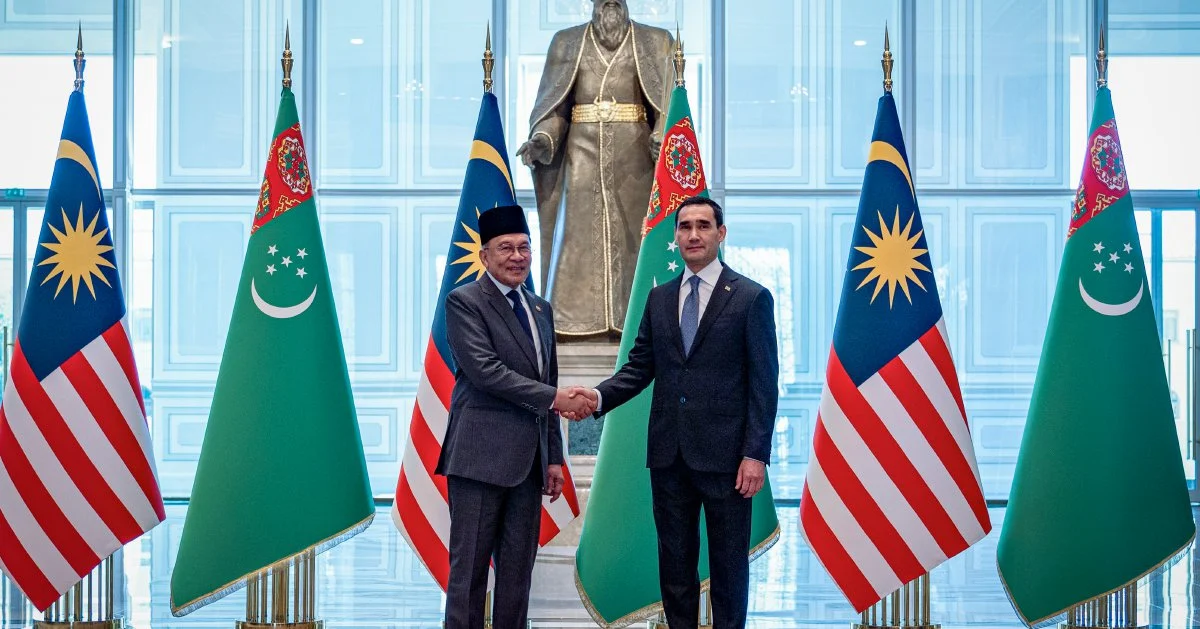
Petroliam Nasional Bhd (Petronas) is emerging as a critical bridge in deepening Malaysia's strategic partnership with Turkmenistan, the Central Asian energy powerhouse. The national oil and gas champion's growing footprint in the resource-rich nation has been reinvigorated following Prime Minister Datuk Seri Anwar Ibrahim's official state visit, marking a turning point in bilateral engagement between Kuala Lumpur and Ashkhabad.
Turkmenistan's energy sector represents one of the world's most significant untapped reserves, with proven gas reserves ranking among the planet's largest. For Malaysia, accessing and participating in development of these reserves aligns strategically with long-term energy security objectives and portfolio diversification beyond traditional operating regions in Southeast Asia and the Middle East. Petronas's established operational experience in the country positions the Malaysian player as a reliable technical and investment partner capable of delivering results in a challenging market.
The timing of Anwar Ibrahim's visit underscores the Malaysian government's recognition that energy cooperation forms the bedrock of meaningful bilateral relations with Central Asian states. Rather than treating hydrocarbon partnerships as purely commercial transactions, the government is leveraging energy engagement as a platform for broader geopolitical alignment and economic interchange. This approach reflects a deliberate strategy to expand Malaysia's regional influence beyond traditional Southeast Asian corridors.
Petronas's historical involvement in Turkmenistan demonstrates the company's capacity to navigate complex operational environments and sustain partnerships across economic cycles. The firm's technical expertise, project management capabilities, and track record executing mega-projects across diverse geological conditions make it a valued partner for Turkmenistan's government. This established relationship serves as a foundation upon which new ventures can be developed with reduced political and operational uncertainty.
The energy sector presents numerous collaboration opportunities extending beyond traditional upstream oil and gas production. Petronas and Turkmenistan can explore downstream integration, liquefied natural gas development, petrochemicals manufacturing, and technology transfer arrangements that create value across the entire hydrocarbon chain. Such diversification would insulate both parties from commodity price volatility while building interdependent economic relationships that transcend single-sector dependencies.
Beyond the energy portfolio, strengthened Malaysia-Turkmenistan ties open pathways for broader economic engagement. Trade relationships could encompass manufacturing, construction services, telecommunications, and agricultural products. Malaysian companies operating across multiple sectors could identify partnership opportunities, joint ventures, and procurement contracts that would otherwise remain inaccessible in this geographically distant market. Conversely, Turkmen enterprises may find Malaysian platforms valuable for accessing Southeast Asian markets and regional supply chains.
The geopolitical dimension warrants careful consideration for Malaysian policymakers. Central Asia's strategic location positioning it between Russia, China, and the Middle East means that Malaysia's engagement in the region carries broader implications for regional balance and alignment. By developing energy partnerships with Turkmenistan, Malaysia reinforces its credentials as a neutral, pragmatic player seeking commercial advantage without imposing political conditions. This positioning enhances Malaysia's diplomatic standing and soft power influence across the broader Asian landscape.
Turkmenistan's energy wealth, while substantial, has historically faced commercialisation challenges related to infrastructure limitations, transport constraints, and geopolitical complexities. Petronas's involvement as a technical partner and potential investor could facilitate solutions addressing these structural obstacles. The Malaysian company's relationships with international financial institutions, technology providers, and logistics operators enable it to orchestrate complex project financing and execution frameworks that Turkmenistan cannot easily assemble independently.
For Malaysian stakeholders, this partnership expands employment opportunities, creates demand for specialised services, and develops technical expertise relevant to Petronas's broader global portfolio. Malaysian engineers, project managers, and skilled workers deployed to Turkmenistan operations gain invaluable experience managing large-scale projects in frontier environments. This human capital development benefits Malaysia's broader energy sector and strengthens the nation's competitive positioning in global energy markets.
The energy transition context adds complexity to Malaysia-Turkmenistan cooperation. As global hydrocarbon demand faces structural headwinds from decarbonisation pressures, both nations face long-term demand challenges for fossil fuel exports. Strategic cooperation should incorporate planning for energy transition partnerships, including renewable energy development, carbon management technologies, and hydrogen economy positioning. Petronas's evolving portfolio increasingly encompasses lower-carbon energy solutions, positioning the company to guide Turkmenistan toward sustainable energy futures.
Sustaining momentum in this bilateral relationship requires consistent political commitment and commercial viability. While Anwar Ibrahim's visit demonstrates Malaysia's diplomatic engagement, commercial success ultimately depends on Petronas delivering profitable, technically sound operations that satisfy both Malaysian shareholders and Turkmen government expectations. Project selection, risk management protocols, and community engagement frameworks will determine whether this partnership matures into a durable, mutually beneficial relationship or remains a periodic diplomatic gesture.
Regional implications extend to Malaysia's positioning within broader Asian energy frameworks. Deepening Central Asian energy relationships diversifies Malaysian energy security, reduces Middle East concentration risk, and enhances the nation's relevance to Asian energy infrastructure discussions. As the region navigates energy transition imperatives, Malaysia's Central Asian partnerships could facilitate technology sharing and collaborative investment in emerging energy sectors.
Moving forward, success metrics should encompass both commercial performance and relationship sustainability. Petronas must deliver operational excellence while contributing meaningfully to Turkmen economic development. Simultaneously, Malaysia's government should explore complementary bilateral initiatives in education, cultural exchange, and diplomatic coordination that reinforce commercial foundations. Such comprehensive engagement transforms transactional energy partnerships into strategic relationships anchoring Malaysia's broader regional aspirations.

