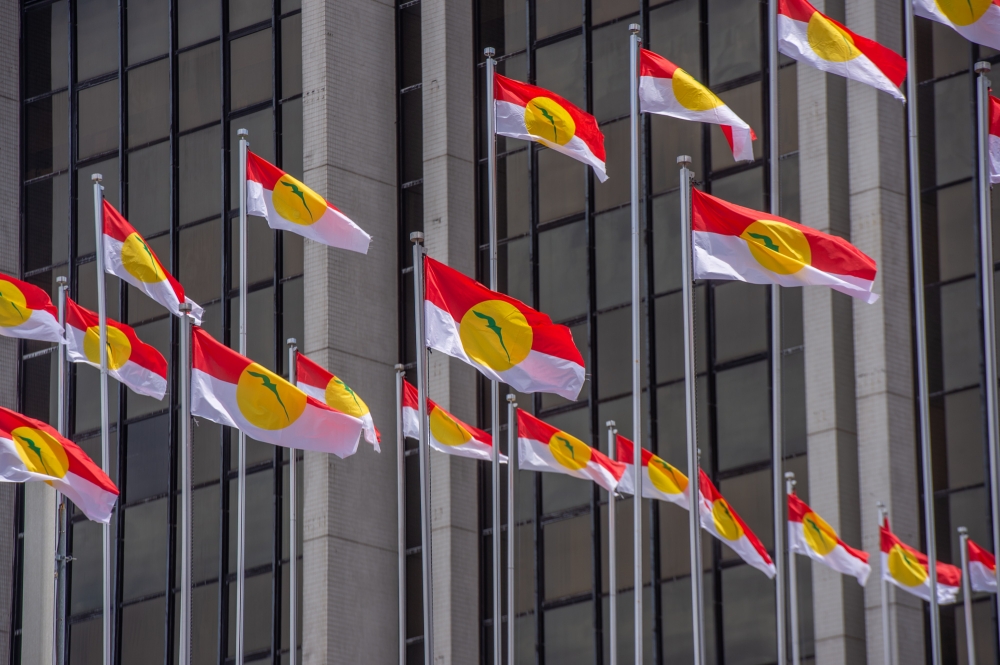
The Perlis Umno division is readying its organisational structure to mount independent candidacies across all 15 state assembly constituencies and the three parliamentary seats within the state at the next general election. This strategic repositioning marks a significant recalibration of the party's electoral approach in the northern state, reflecting deeper tensions within Malaysia's coalition politics and the evolving balance of power between traditional partners.
State leadership has begun intensive preparation of its candidate selection machinery and ground-level mobilisation efforts to ensure comprehensive coverage across the state's electoral landscape. The decision to pursue a solo campaign reflects confidence in the party's institutional capacity within Perlis, a state where Umno has historically maintained substantial organisational presence and grassroots support networks. This approach diverges markedly from the conventional multiparty alliances that have characterised federal and state-level elections in recent cycles.
The repositioning carries particular significance for understanding contemporary shifts in Malaysian coalition politics. Rather than relying on seat-sharing arrangements with partners like Pas or other Barisan Nasional components, Perlis Umno appears to be betting on its ability to consolidate the Malay-Muslim voter base through direct competition. This strategy may reflect assessments within the party machinery regarding the competitive advantage it possesses within the state's specific demographic and political context.
For Malaysian readers, especially those in the northern states, this development underscores the fragmentation occurring within traditional political alliances. Coalition arrangements that once provided predictable power-sharing formulas now face challenges from component parties seeking to maximise their individual seat allocations. The Perlis situation exemplifies how state-level dynamics can diverge substantially from national political narratives, with local parties making electoral calculations based on their particular regional strength.
The implications extend beyond Perlis itself. Should this independent campaign prove electorally successful, it could embolden similar approaches in other states, further destabilising the coalition framework that has anchored Malaysian politics for decades. Conversely, if the strategy proves costly, it might reinforce arguments for return to structured seat-sharing arrangements that protect smaller allies whilst consolidating broader voting coalitions.
Pas, which typically contests in partnership with Umno at the state level in the northern states, will likely monitor this development carefully. The Islamist party has its own considerations regarding electoral strategy and voter reach, and any substantial reallocation of seats by Umno could reshape the competitive landscape in states like Perlis where both parties maintain significant presence. The absence of clear seat-sharing mechanisms creates uncertainty that may actually fragment the opposition to Pakatan Harapan, potentially benefiting the ruling coalition despite internal tensions.
Umno's willingness to contest solo in a state like Perlis may also signal internal confidence among its leadership regarding the party's recovery trajectory following the 2020 election setbacks. The party has spent considerable effort rebuilding its machinery and reconnecting with grassroots supporters, particularly among rural Malay communities. A successful solo campaign in Perlis could serve as a proof-of-concept for this revitalisation strategy, validating the party's approach to candidate selection and campaign messaging.
The three parliamentary constituencies represent particularly contested terrain, as these seats carry national significance and would likely attract intense scrutiny from other political actors. Parliamentary representation shapes not only state development priorities but also factional dynamics within Umno itself, with successful candidates potentially building national political capital. The decision to contest all three independently suggests Perlis Umno leadership believes it can win across diverse constituencies without relying on coalition partner coverage.
Regional observers will note that this development reflects broader Southeast Asian patterns of political fragmentation and coalition instability. Across the region, traditional alliances face pressure from parties seeking to maximise electoral returns, leading to increasingly complex and unpredictable political arrangements. Malaysia's experience demonstrates how national-level coalition frameworks can become vulnerable to state-level opportunism when local parties perceive competitive advantage in independent action.
The grassroots mobilisation efforts already underway will prove crucial to execution. Umno's organisational depth at the divisional and district levels has historically been a significant comparative advantage, and Perlis possesses the territorial compactness that allows relatively efficient campaigning. However, contesting all seats simultaneously requires substantially greater resource deployment than selective participation in coalition arrangements, and the party must balance this Perlis campaign with similar preparations elsewhere.
For political observers tracking Malaysian coalition dynamics, the Perlis Umno situation represents a test case for post-pandemic electoral politics. The Covid-19 period accelerated certain political realignments and forced reconsideration of traditional partnership arrangements. Umno's decision to pursue independent candidacies in Perlis may reflect assessments that the political environment has shifted sufficiently to justify departure from conventional coalition frameworks, at least at the state level.
The effectiveness of this strategy will become apparent only following the election itself, but the preparation phase already signals that Malaysian coalition politics cannot be assumed stable or predictable. State parties increasingly assert agency over their own electoral destinies, reflecting broader democratisation pressures and the decentralisation of political power within the federation. Perlis Umno's position as a relatively strong state party allows it to take such risks; weaker parties operating from positions of dependence on coalition protection face different calculations regarding independent candidacy.

