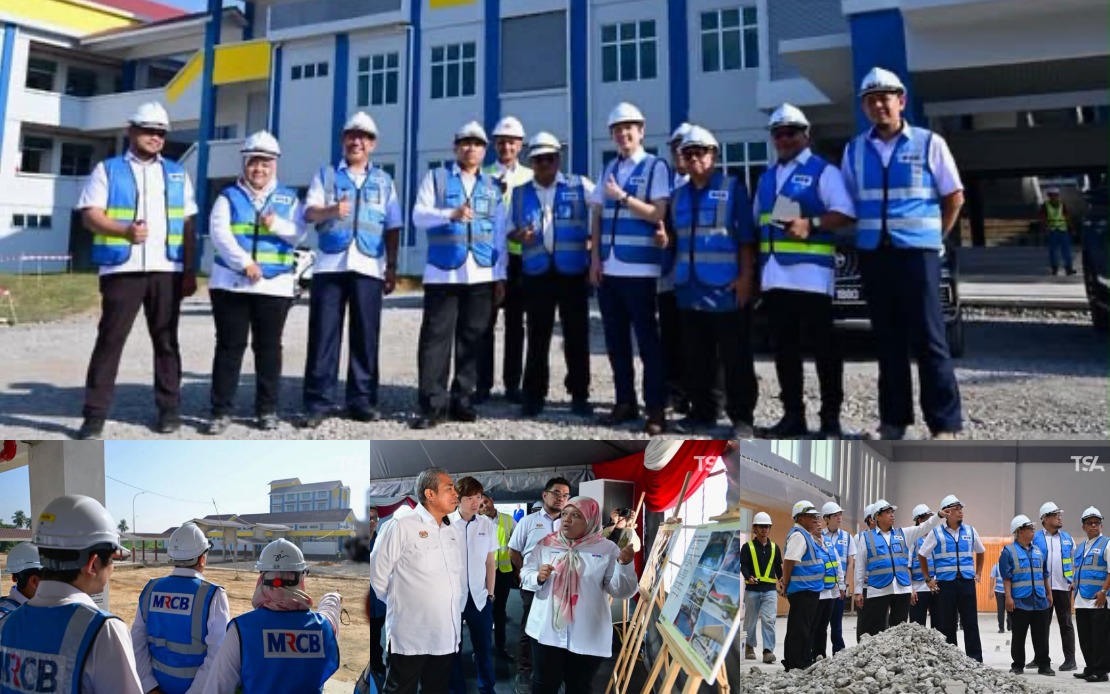
The long-stalled Perlis Malaysia Sports School project in Bukit Chabang, Padang Besar, is moving toward completion, with officials now confident the facility will be ready for operations by January 2027. The announcement marks a significant milestone for a development that has languished largely untouched for more than a decade, representing both a test of government resolve to revive infrastructure initiatives and a potential asset for regional sports development in northern Malaysia.
Chief Secretary to the Government Tan Sri Shamsul Azri Abu Bakar provided the updated timeline after visiting the construction site, noting that the first phase of work has reached between 85 and 90 percent completion. His optimism stems from what he described as successful resolution of the administrative and logistical hurdles that had previously stalled progress, particularly the shortage of skilled workers and contractor-related complications that had proven intractable under earlier management arrangements.
The project's troubled history underscores the challenges Malaysia has faced in executing large infrastructure programmes. After lying dormant since 2013, the initiative received renewed attention when Prime Minister Datuk Seri Anwar Ibrahim intervened in April last year, instructing that the school be transferred to a capable government-owned enterprise. This administrative restructuring appears to have borne fruit, with the change in operational responsibility correlating with accelerated work rates and the resolution of previously stubborn implementation issues.
For Malaysian sporting ambitions, the completion of this facility carries genuine strategic importance. A dedicated sports academy in Perlis would serve the northern region's athletic development pipeline, potentially nurturing talent in a state that has historically been underrepresented in national sporting hierarchies. The school's location in Padang Besar, positioned near the Thai border, also positions it as a potential cross-border excellence hub for regional cooperation in athletics and sports science.
Beyond the specific project, Shamsul Azri used the occasion to promote broader government efficiency initiatives. He highlighted the Government Service Efficiency Commitment Act 2025, which received gazette approval on May 22, 2025, and became fully operational from December 1, 2025. The legislation represents an attempt to embed bureaucratic reform into the legal framework rather than leaving it as mere administrative policy, theoretically creating enforceable obligations for streamlined service delivery across all government agencies.
The Bureaucratic Red-Tape Reform programme, implemented since 2024 under the government's Public Service Reform Agenda, has reportedly completed 439 individual projects aimed at administrative simplification. Officials claim these efforts have generated estimated compliance cost savings of RM2.95 billion to citizens and the business community. While such figures require careful interpretation—cost savings can be calculated multiple ways—the sheer volume of reform initiatives suggests a genuine governmental commitment to reducing friction in administrative processes.
These efficiency measures carry particular relevance for Malaysian readers and businesses grappling with complex permitting procedures, lengthy approval timelines, and overlapping jurisdictional requirements. If successfully implemented, such reforms could meaningfully reduce the time and expense required for ordinary commercial and personal transactions, from business registration to licensing applications. The alignment of the Perlis Sports School's accelerated progress with broader efficiency reforms suggests that the legislative and procedural changes may indeed be producing tangible results in project delivery.
The government's emphasis on efficiency reform also reflects an attempt to address legitimate criticisms of Malaysia's competitive positioning relative to neighbouring economies. Thailand, Vietnam, and Indonesia have each mounted targeted efficiency initiatives aimed at attracting foreign direct investment and improving the ease of doing business. Malaysia's reforms, framed within the Public Service Reform Agenda, position administrative streamlining as central to the nation's economic strategy rather than as a peripheral administrative concern.
Regarding civil service conduct, Shamsul Azri reiterated existing prohibitions against government employees engaging in political activities, noting that no complaints had been registered on the matter thus far. This statement carries contextual weight given the periodic tensions between Malaysia's professional civil service traditions and the pressures of electoral competition. Maintaining the non-partisan character of the bureaucracy remains essential for institutional legitimacy and effective service delivery, particularly in a context where government programmes and contracts carry significant economic weight.
The timing of the Perlis Sports School announcement—delivered during the Iltizam 2026 Convention at Universiti Utara Malaysia—reflects deliberate government communication strategy. Iltizam, meaning commitment or pledge in Malay, frames governance primarily through the lens of government accountability and pledge-keeping. By showcasing project progress at this venue, officials signal that earlier government undertakings are being honoured despite initial setbacks, an important message in building public confidence in institutional capacity.
Looking ahead, the January 2027 target will warrant close monitoring. Malaysian infrastructure projects have historically experienced completion delays, and the 85-90 percent figure, while encouraging, still leaves room for final-phase complications. Weather disruptions, final inspections, equipment procurement delays, or design modifications could yet push timelines. However, the apparent resolution of workforce and contractor issues, previously identified as critical constraints, suggests that the remaining 10-15 percent may proceed more smoothly than earlier phases.
The Perlis facility's eventual opening will also require attention to operational readiness beyond construction completion. Recruitment of qualified coaching staff, development of competitive programming, establishment of athlete selection criteria, and integration with national sporting bodies represent distinct challenges from the construction phase. The project's success will ultimately be measured not merely by physical completion but by its effectiveness in nurturing athletic talent and establishing Perlis as a meaningful contributor to Malaysian sporting excellence.

