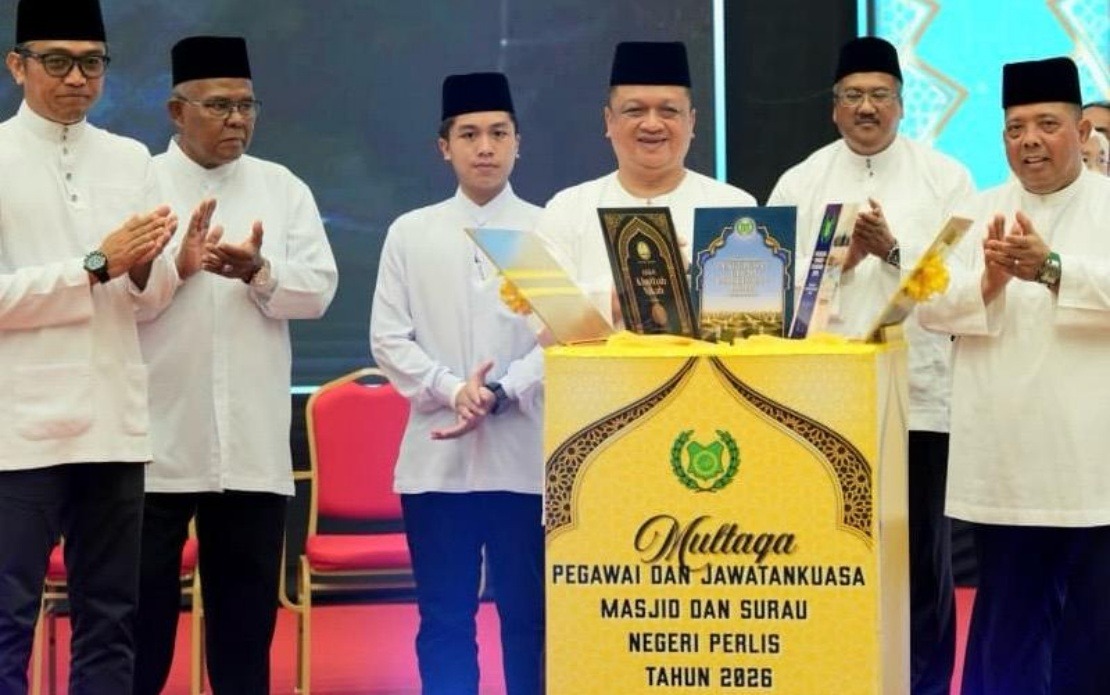
The Raja Muda of Perlis, Tuanku Syed Faizuddin Putra Jamalullail, has directed mosque and surau committees across the state to maintain the highest standards of integrity and accountability in their administration and day-to-day operations. His call reflects growing recognition that religious institutions must evolve beyond their traditional roles to meet contemporary expectations for transparent, professional governance.
Addressing officials and committee members at the 2026 Perlis State Mosque and Surau Officers and Committees Multaqa Programme in Kangar, the Raja Muda emphasised the critical importance of adhering to regulatory frameworks established by the Perlis Islamic Religious and Malay Customs Council (MAIPs) and the Perlis Islamic Religious Affairs Department (JAIPs). Compliance with these guidelines, he stressed, ensures that community affairs operate efficiently and systematically while remaining grounded in Islamic jurisprudence and state legislation.
The annual multaqa programme serves as a crucial channel for communicating state religious policies directly to those entrusted with managing mosque and surau institutions. This year's iteration focused specifically on three substantive areas: guidelines governing Muslim cemetery administration throughout Perlis, standards for mosque management divisions, and procedures for solemnising marriages and the responsibilities of jurunikah—the trained officials who conduct Islamic marriage ceremonies under state supervision.
Tuanku Syed Faizuddin Putra's remarks reflect a broader policy shift within Malaysian religious administration toward enhanced institutional accountability. The emphasis on systematic work culture addresses longstanding concerns about inconsistent practices across different mosques and suraus, which can confuse worshippers and undermine public confidence in religious institutions. By establishing uniform guidelines, state authorities aim to create a standardised framework while preserving local flexibility in implementation.
The expansion of this year's programme to include surau committees represents a significant structural evolution. Suraus, typically smaller prayer facilities serving neighbourhood communities, play an equally vital role in grassroots religious engagement and welfare provision. Recognising them as complementary to mosques rather than subordinate institutions demonstrates sophisticated understanding of how religious infrastructure functions within Malaysian Muslim communities. This inclusive approach signals commitment to coherent state-wide coordination of religious affairs.
In contemporary Malaysia, mosques and suraus increasingly function as multi-purpose community hubs extending far beyond their worship function. They manage zakat distribution, oversee Islamic education programmes, organise social welfare initiatives, and provide counselling services. These expanded responsibilities demand professional management standards typically associated with secular organisations. The Raja Muda's call for transparency and integrity directly addresses this operational complexity.
The emphasis on professional management carries particular resonance for Malaysian Muslim communities navigating rapid urbanisation and social change. Younger, educated congregants increasingly expect financial accountability and evidence-based programme delivery. Religious institutions perceived as poorly managed or lacking transparency risk losing credibility and participation. By advocating for institutional excellence, the Raja Muda aligns religious administration with broader expectations for good governance across Malaysian society.
Perlis, as one of Malaysia's smaller states with distinctive religious governance structures, often pioneers approaches subsequently adopted elsewhere. This multaqa programme may therefore establish precedents for other state Islamic religious councils considering similar comprehensive training initiatives. The deliberate focus on cemetery management, marriage procedures, and divisional administration suggests careful attention to specific operational pain points identified through consultation with mosque and surau operators.
The marriage procedure guidelines deserve particular attention, as jurunikah responsibilities have periodically generated controversy over documentation, fee structures, and timely issuance of marriage certificates. Establishing clear procedures aims to eliminate discretionary variations that sometimes cause distress to newly-married couples. Consistent application of marriage protocols across Perlis will reduce confusion and strengthen public confidence in the registry system.
The Raja Muda's vision of mosques as professional institutions responsive to community needs reflects recognition that religious legitimacy increasingly depends on demonstrated competence and ethical conduct. This perspective does not diminish spiritual dimensions of mosque management but rather situates them within frameworks enabling effective service delivery. Communities witnessing well-organised, transparently-managed institutions prove more willing to support religious activities and trust institutional leadership.
For Malaysian stakeholders observing mosque governance across the region, Perlis's structured approach offers valuable lessons. Southeast Asian Muslim-majority societies face similar challenges reconciling traditional religious authority with modern administrative requirements. The multaqa programme demonstrates that systematic training, clear guidelines, and state coordination can enhance institutional performance without compromising religious authenticity or community autonomy.
Implementation challenges inevitably emerge when introducing standardised procedures across diverse communities. Rural and urban suraus operate under different resource constraints; committee members possess varying education levels and administrative experience. The success of this initiative will largely depend on how well state authorities tailor implementation support, provide ongoing capacity-building, and remain responsive to genuine operational difficulties encountered by grassroots religious workers. This requires not merely top-down directive but sustained engagement and problem-solving partnership.

