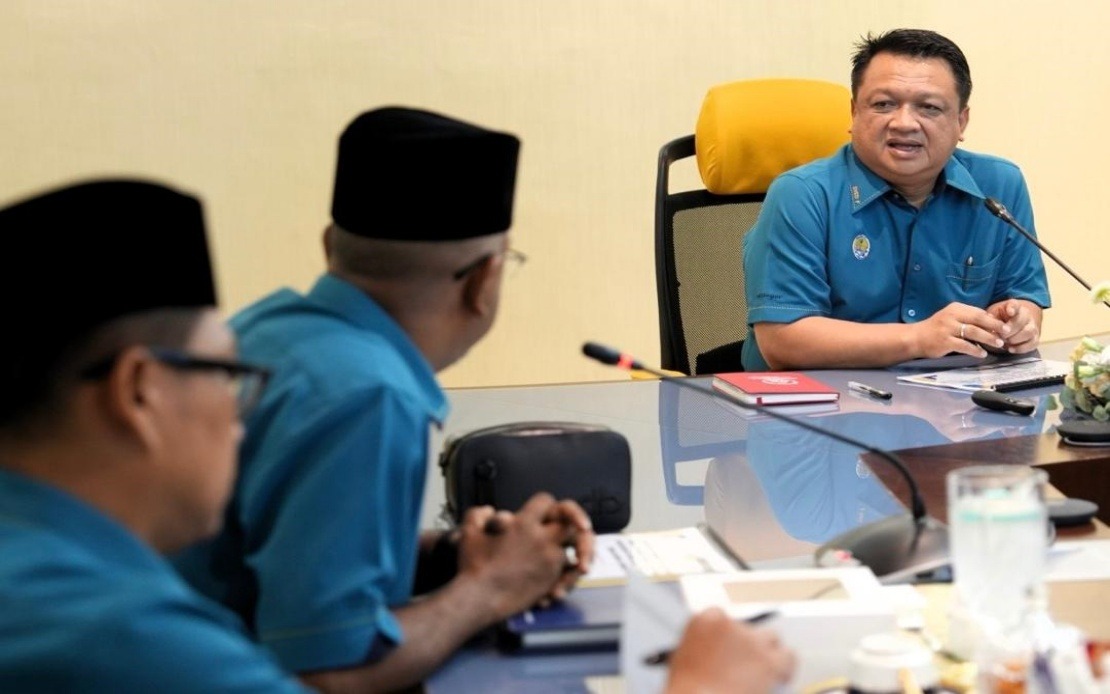
The Raja Muda of Perlis, Tuanku Syed Faizuddin Putra Jamalullail, has articulated an ambitious vision for transforming the northern state into Malaysia's premier laboratory for environmental sustainability, positioning it as a 'Green Smart State' that could demonstrate the viability of large-scale green development strategies. The proposal, delivered during an audience with the Kangar Municipal Council delegation, reflects a growing recognition among Malaysia's leadership that smaller states possess distinct advantages in piloting comprehensive sustainability frameworks before scaling them nationally or regionally.
The Raja Muda's advocacy rests on a pragmatic assessment of Perlis's geographical and administrative advantages. The state's relatively compact territorial footprint and centralised governance structures create favourable conditions for implementing integrated environmental policies without the coordination complexities that larger, more densely populated states encounter. By prioritising renewable energy deployment—particularly solar and biomass installations—alongside modern waste management infrastructure, Perlis could establish a replicable model for achieving net-zero emissions that other Malaysian states might emulate.
Central to this developmental vision is the achievement of zero-carbon status, which carries significant implications for Malaysia's international standing on climate action. As global economies increasingly scrutinise nations' progress toward climate commitments, demonstrating tangible success in at least one Malaysian jurisdiction would strengthen the country's credibility within regional and international climate forums. Such accomplishment would also validate Malaysia's broader commitment to addressing climate change, positioning it competitively alongside regional neighbours pursuing similar environmental trajectories.
The Kangar Municipal Council has already established institutional infrastructure to operationalise this vision through the Green City Action Plan, a comprehensive strategic document developed collaboratively with the Ministry of Economy, the IMT-GT Joint Business Council, ICLEI—Local Governments for Sustainability, and the Asian Development Bank. This multilateral approach, which incorporates international expertise and financial mechanisms, distinguishes Perlis's sustainability framework from ad-hoc environmental initiatives, ensuring alignment with globally recognised best practices and access to technical knowledge developed across successful green city transitions worldwide.
The GCAP, formally approved by the Kangar Municipal Council in February, identifies five catalytic projects designed to accelerate Perlis's environmental transformation. Solar photovoltaic installations across government, public, and private buildings represent the most immediately implementable component, potentially establishing Perlis as Malaysia's leading jurisdiction in distributed renewable energy adoption. Such visible infrastructure changes could generate broader community engagement and demonstrate tangible progress toward sustainability objectives within relatively short timeframes.
Transportation electrification and modal shift constitute another crucial dimension of the plan. The proposed Low Carbon Transport Plan and Micro-Mobility Zones initiative address a sector responsible for substantial greenhouse gas emissions across Malaysia. By establishing non-motorised transport facilities and reducing reliance on conventional vehicles, Perlis could create livable, pedestrian-friendly communities whilst simultaneously lowering urban emissions. This approach resonates with emerging urban planning paradigms globally, where quality-of-life improvements align directly with environmental objectives.
Waste management innovation underpins the broader sustainability architecture through the proposed 80-tonne-per-day Material Recovery Facility, designed to enhance recycling rates and divert substantial volumes from landfills. For a state confronting growing waste challenges typical of Malaysian municipalities, sophisticated recovery infrastructure addresses environmental degradation whilst creating economic value from discarded materials. The facility's capacity reflects realistic assessment of Perlis's waste generation rates whilst maintaining technological scalability should the model prove successful.
Water resource management receives integrated attention through rainwater harvesting systems implemented across the state, addressing long-term sustainability concerns as climate variability increasingly affects precipitation patterns. This forward-looking approach acknowledges that environmental resilience extends beyond carbon reduction to encompass resource security, particularly critical in tropical regions vulnerable to drought cycles. Comprehensive water management infrastructure enhances both environmental sustainability and community resilience to climate-related disruptions.
Disaster preparedness mechanisms, including the proposed Perlis State Disaster Management Plan and strengthening of the Perlis Integrated Command Centre, reflect recognition that climate sustainability requires adaptive capacity alongside emissions reduction. As extreme weather events intensify under climate change, states demonstrating superior preparedness and response capabilities protect populations whilst validating integrated sustainability frameworks that address interconnected environmental and social risks. This holistic approach distinguishes Perlis's model from narrowly focused carbon-reduction schemes.
Alignment with Malaysia's sustainable development goals and national greenhouse gas emission reduction commitments positions Perlis's initiative within broader governmental aspirations, ensuring policy coherence and potential access to federal funding mechanisms. However, the state's success depends critically on sustained implementation commitment, adequate resource allocation, and adaptive management as initial projects generate operational data. For Malaysian policymakers monitoring Perlis's progress, the state's experiences—both achievements and challenges—will provide invaluable guidance for implementing similar frameworks elsewhere.
Regionally, Perlis's positioning as a sustainability testing ground carries significance for Southeast Asia's broader environmental trajectory. As ASEAN nations increasingly recognise climate action's economic imperatives, successful demonstration of comprehensive green state development could influence policy adoption across the region, particularly among smaller jurisdictions seeking replicable pathways toward climate resilience. Malaysia's willingness to serve as an implementation pioneer may enhance its diplomatic influence within regional environmental governance forums.
The convergence of royal patronage, municipal institutional development, and international technical collaboration evident in this initiative suggests serious political commitment to transforming environmental policy from aspirational rhetoric into operational reality. The challenge ahead involves translating strategic plans into sustained implementation, navigating inevitable technical and social complexities, and maintaining momentum through political transitions and budget cycles that typically constrain long-term environmental initiatives.

