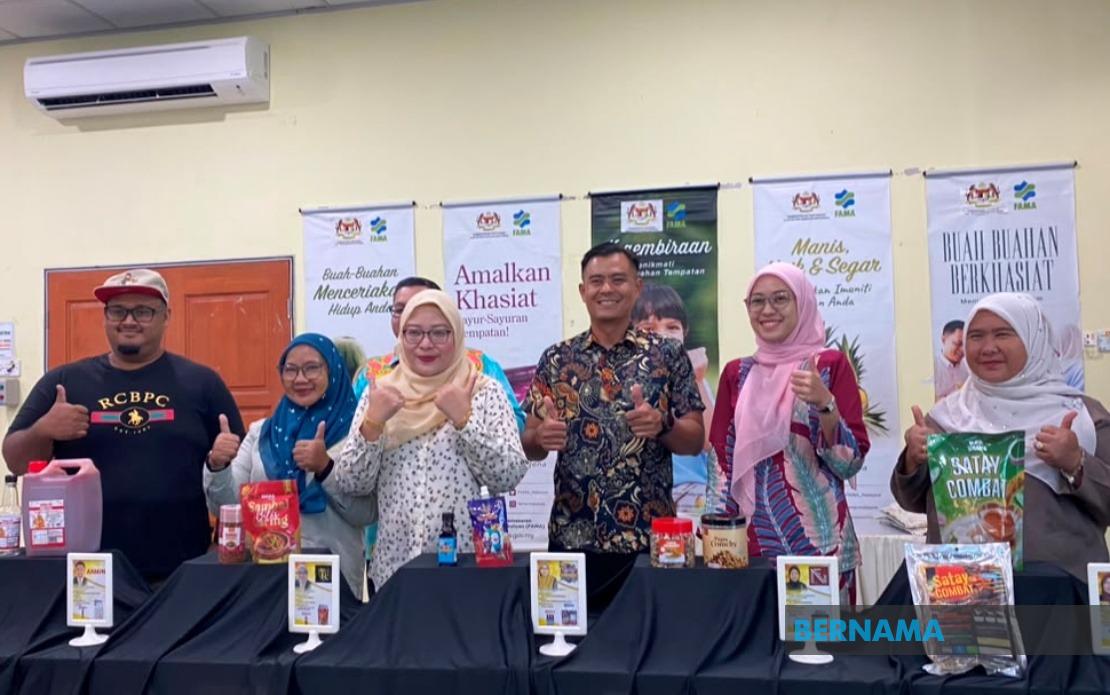
The Perlis branch of the Federal Agricultural Marketing Authority (FAMA) has taken a significant step in nurturing the state's agricultural entrepreneurial landscape by channelling RM510,500 in grants to nine agro-food business operators. This latest round of financial support, distributed as of July 30, reflects the federal agency's broader commitment to strengthening the competitiveness of small and medium-scale agricultural ventures across Malaysia's smallest state while simultaneously opening doors to wider market opportunities.
The grant allocation was divided strategically across four distinct funding categories, each designed to address specific development challenges faced by agro-food entrepreneurs at different business stages. The Agro-Tourism Grant received the largest share at RM392,000, targeting businesses looking to integrate tourism experiences with agricultural production. The remaining funds were parcelled out to support operational improvements, with RM83,500 directed toward product image and packaging enhancement, RM25,000 allocated for outlet improvements under the KSHOPPE initiative, and RM10,000 reserved for marketing equipment acquisition.
According to Mohd Anzara Azizan, the director of FAMA Perlis, these grants form part of a comprehensive strategy to empower agricultural entrepreneurs to increase their revenue streams and strengthen their market positioning in an increasingly competitive landscape. The financial support goes beyond merely handing over money; it is fundamentally about equipping business owners with the tools and resources to make their enterprises more visible, more appealing, and more accessible to consumers.
The Product Image and Packaging Improvement Grant, which was the focal point of the presentation ceremony held at the FAMA Perlis office, sits within the broader IMAT Market Development and Product Matching Project. This initiative specifically targets small and medium enterprises operating at the first three developmental stages, recognising that newer or smaller businesses often lack the capital necessary to invest in professional branding and packaging that can significantly influence purchasing decisions in retail environments.
The performance metrics released alongside the grant distribution paint an encouraging picture of the support mechanism's effectiveness. Among the 319 registered IMAT entrepreneurs operating in Perlis, collective sales reached RM4.8 million as of the distribution date, representing a notable 30 percent increase compared to the same period in the previous year. This expansion suggests that FAMA's multifaceted assistance approach—combining financial grants with technical guidance and market monitoring—is yielding tangible results for participating businesses.
The year-on-year sales growth carries particular significance for Perlis, a state often overshadowed by more industrially developed neighbours. The agricultural sector represents a cornerstone of the state's economic foundation, and the ability to generate double-digit growth in agro-food sales demonstrates both the potential of the sector and the viability of targeted government support mechanisms. For policymakers across Southeast Asia grappling with rural economic development challenges, Perlis's experience offers valuable lessons about the power of focused, multi-dimensional support.
Beyond the immediate financial transfers, FAMA Perlis maintains an active monitoring role over participating entrepreneurs' operations, particularly regarding product marketing strategies and pricing structures. This supervisory function ensures that while businesses receive support to enhance their products and services, they remain tethered to principles of affordability and market competitiveness. The approach prevents grant recipients from becoming complacent or from pricing themselves out of reach of the local consumer base they depend upon.
The availability of nearly nine distinct grant and support schemes underscores FAMA's recognition that entrepreneurial needs are heterogeneous and multifaceted. Some businesses prioritise facility improvements, others require packaging and branding expertise, while still others seek to diversify through agro-tourism ventures. This diversified menu of support options permits entrepreneurs to select assistance mechanisms most aligned with their specific growth trajectories and market circumstances.
For Malaysian policymakers and regional observers monitoring agricultural development strategies, the Perlis initiative exemplifies how government institutions can move beyond passive administrative roles to become active catalysts for entrepreneurial success. The emphasis on product presentation and marketing equipment—often neglected areas in traditional agricultural support—reveals an understanding that modern agro-food entrepreneurs must operate in an increasingly sophisticated retail and e-commerce environment where appearance and professional presentation significantly influence consumer behaviour.
The grant distribution also carries implications for Malaysia's broader agenda of increasing domestic food production and reducing agricultural import dependency. By strengthening the competitiveness and profitability of local agro-food enterprises, particularly in smaller states like Perlis, these initiatives contribute incrementally to building a more resilient national food system. Each entrepreneur who succeeds and expands their operation potentially influences supply chain development, skill transfer, and economic spillover effects across their local communities.
Looking forward, FAMA's emphasis on encouraging greater uptake of available support schemes suggests potential for further expansion of this entrepreneurial ecosystem. The stated hope that more business owners will access these facilities implies that current utilisation may not yet be at saturation levels, indicating room for growth in the programme's scope and impact. Increased awareness campaigns and simplified application processes could unlock additional entrepreneurial potential in Perlis and other states operating similar schemes.

