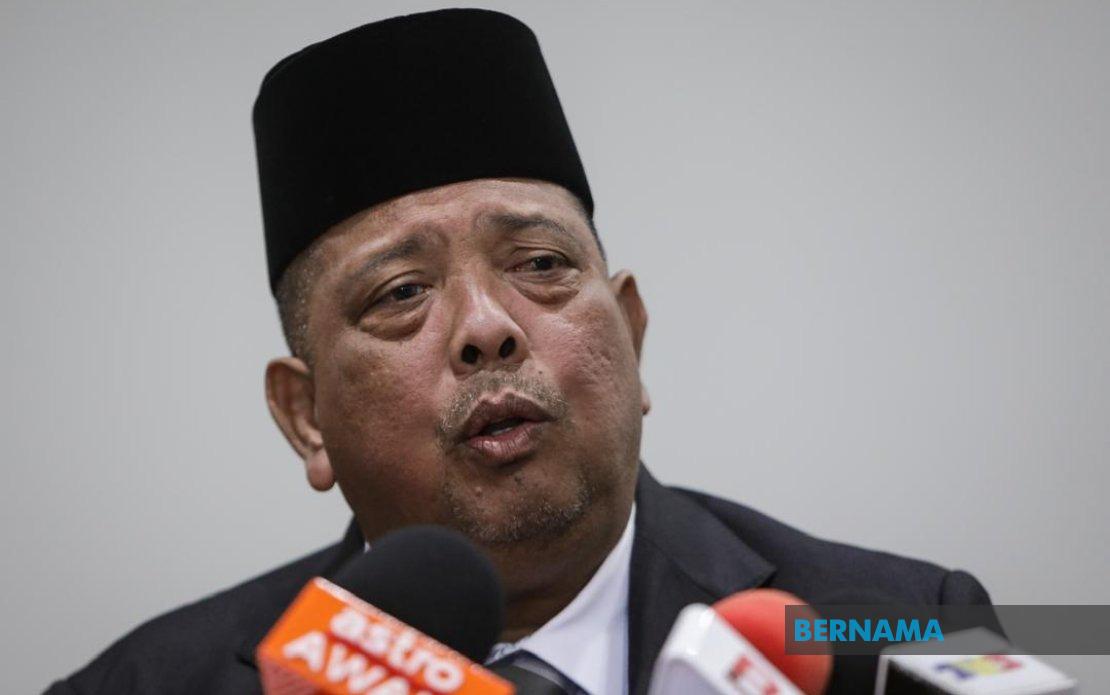
Perlis Menteri Besar Abu Bakar Hamzah has relinquished his seat on the Parti Pribumi Bersatu Malaysia (Bersatu) Supreme Leadership Council, signalling a strategic pivot toward concentrating his efforts on state-level administration. The resignation letter was submitted to Bersatu's central leadership last week, though Abu Bakar maintains his positions as the party's Perlis state chief and Kangar division chief, underscoring that his departure from the federal party council reflects a narrowing of focus rather than a fundamental break with the party apparatus.
The timing of Abu Bakar's withdrawal from the national council structure coincides with a critical juncture in Perlis governance. With approximately one year remaining before the conclusion of the current state legislative assembly term, the Menteri Besar has determined that the competing demands of a state leadership role and participation in high-level party strategic councils cannot be adequately managed alongside his primary responsibility. He acknowledged during a media interaction at Kuala Perlis that the workload in administering the state, combined with the institutional challenges Perlis faces, leaves insufficient bandwidth for meaningful engagement at the Supreme Leadership Council level.
Abu Bakar's stated priorities for his remaining tenure centre on two interconnected objectives that reflect contemporary state development imperatives across Malaysia. First, he aims to enhance Perlis's attractiveness to investors, a critical agenda given the state's relatively modest economic base and the need to generate employment and revenue to support its population. Second, he is committed to achieving established key performance indicators that would serve as a measurable legacy and demonstrate administrative competence to both state constituents and the electorate ahead of the next electoral cycle.
The decision also reflects implicit endorsement from Perlis's traditional authority. At the opening of the state legislative assembly sitting on June 3, the Raja of Perlis, Tuanku Syed Sirajuddin Jamalullail, decreed that Abu Bakar should be afforded the operational space to steer state governance without external interference until the conclusion of the 15th state legislative assembly term. This royal direction effectively provided political cover for the Menteri Besar to prioritise state matters over party obligations, validating a governance philosophy centred on the primacy of local administration.
Abu Bakar's departure from the party council occurs against a broader backdrop of regional cross-border collaboration initiatives. The announcement was made during a welcoming ceremony for a delegation from Thailand's Satun province, timed to coincide with the resumption of the Kuala Perlis-Satun ferry service at the Kuala Perlis Concourse Building Jetty. The ferry service had remained suspended throughout the COVID-19 pandemic, and its recommencement represents a significant milestone for regional connectivity and trade between Malaysia and Thailand. This context underscores Abu Bakar's focus on tangible development outcomes that directly benefit Perlis residents and businesses.
The ferry service resumption carries particular significance for Perlis, as it facilitates cross-border movement and commerce that had been severed for an extended period. Re-establishing this maritime link requires coordination across multiple government agencies and international partners, exemplifying the type of complex project that demands sustained attention from state leadership. By concentrating his efforts on state administration, Abu Bakar is positioning himself to shepherd such initiatives toward completion and to capitalise on renewed cross-border economic opportunities.
Notably, Abu Bakar's decision aligns with a pattern identified among other Perlis state officials. He indicated that Sena assemblyman and state executive councillor Datin Marzita Mansor had similarly resigned from Bersatu as a Supreme Leadership Council member, though confirmation from Mansor could not be immediately obtained. This parallel move suggests a coordinated approach among Perlis's top political leadership to align their party commitments with the practical realities of managing state governance during a constrained timeframe.
The resignation raises questions about resource allocation within Bersatu itself. The party's Supreme Leadership Council represents the apex of its internal decision-making structure, and the departure of serving chief executives may indicate either a prioritisation shift among state leaders or potential tensions between state-level governance demands and party hierarchy requirements. For Bersatu, the loss of sitting menteri besar representation at the council level could affect the party's capacity to channel state-level insights into national policy formulation.
From a Malaysian perspective, Abu Bakar's move demonstrates an emerging pragmatism in managing the frequently competing demands of party loyalty and administrative responsibility. While political leaders are expected to maintain party commitments, the recognition that such commitments can impede primary governance functions challenges traditional assumptions about the compatibility of these roles. This realignment may reflect broader pressures within Malaysian politics as state governments increasingly shoulder economic development responsibilities that demand concentrated executive attention.
The decision also implicitly acknowledges Perlis's specific vulnerabilities and constraints. As one of Malaysia's smaller and less economically developed states, Perlis cannot afford leadership distraction during critical developmental phases. Investor confidence, infrastructure improvements, and cross-border initiatives all require sustained, focused state-level engagement. By stepping back from the Supreme Leadership Council, Abu Bakar is essentially signalling that Perlis's economic trajectory outweighs party positioning considerations during this window.
Looking forward, the implications of this resignation may extend beyond Perlis's immediate political landscape. If other state leaders adopt similar approaches—prioritising state governance over party council participation—it could establish a precedent that reshapes the relationship between party structures and state administrations. For investors considering Perlis, the concentration of leadership focus on state development may offer reassurance regarding project continuity and the seriousness with which the Menteri Besar approaches economic diversification.
The move also preserves Abu Bakar's political credibility heading into the electoral cycle. By demonstrating commitment to measurable state development outcomes rather than becoming entangled in higher-level party politics, he constructs a performance-based electoral argument. Whether this strategy yields political dividends will depend on the tangible results achieved during his remaining tenure, particularly regarding investor attraction and economic indicators that voters can directly perceive.

