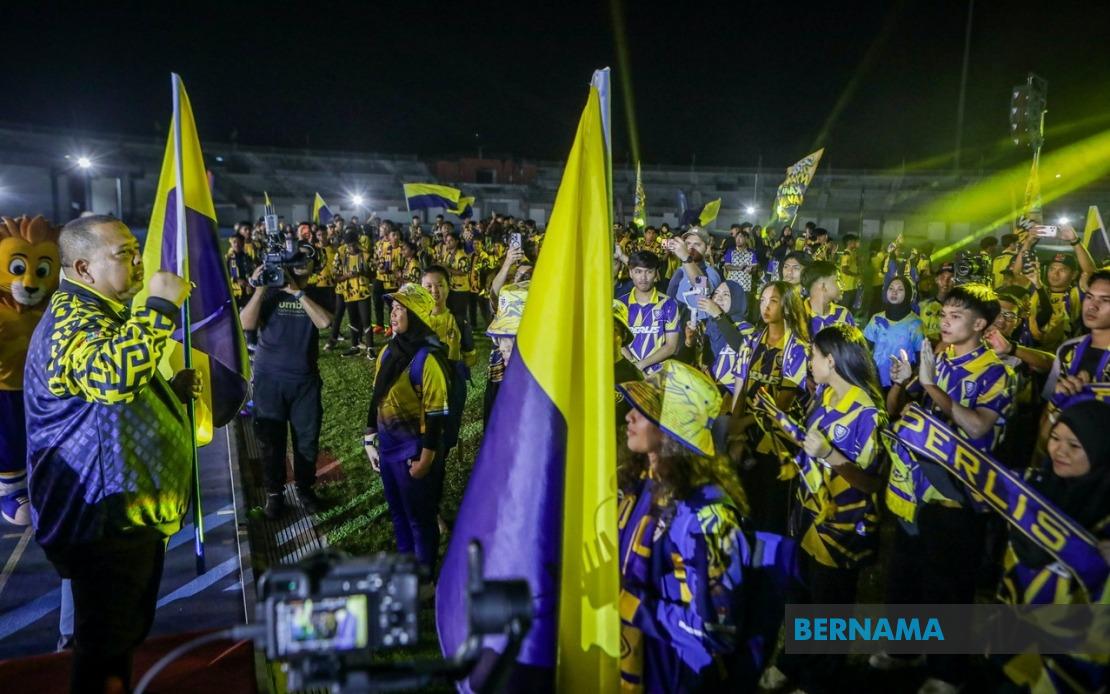
Perlis has marked a watershed moment in its sporting history by capturing 17 gold medals at the Malaysia Games (SUKMA 2026) held in Selangor, representing the most impressive haul the state has ever achieved at the biennial national competition. The accomplishment underscores the tangible benefits of sustained investment and coordinated effort across the state's sports ecosystem, validating years of planning and resource allocation aimed at elevating athletic performance across the northern border state.
Menteri Besar Abu Bakar Hamzah announced the milestone achievement during a press conference held in Kangar following an Exco meeting at Kompleks Seri Putra. He characterised the result as vindication of the Perlis state government's comprehensive approach to sports development, which has brought together athletes, technical coaching staff, sports associations, and the State Sports Council in pursuit of competitive excellence. The convergence of these institutional and human elements has produced measurable outcomes that extend beyond medal counts alone, establishing foundations for sustained athletic development in the state.
The 17 gold medals formed part of a broader medal haul that saw Perlis return from Selangor with 42 medals in total. This composite achievement—comprising seven silver and 18 bronze medals alongside the golds—reflects depth and consistency across multiple sporting disciplines rather than concentration in a single event, suggesting that the state's sports development framework has successfully cultivated talent across various domains. The distribution of medals across different categories implies strengthening institutional capacity in talent identification, training delivery, and athlete support services.
Among the standout individual and team accomplishments was a games record set by Perlis shot putters, demonstrating technical excellence and physical conditioning that surpassed previous benchmarks established at earlier SUKMA iterations. Equally notable was the state's weightlifting contingent's achievement in claiming the overall championship in their sport at SUKMA Selangor 2026, indicating concentrated strength in a discipline that demands specialized facilities, coaching expertise, and athlete dedication. These specific victories carry particular significance within the competitive structure of SUKMA, where dominance in marquee events elevates a state's profile and attracts greater attention from young prospective athletes.
The Menteri Besar's emphasis on continued investment in foundational infrastructure reflects understanding that singular tournament success, while valuable, must be sustained through systematic development. Abu Bakar outlined the state government's ongoing commitment to talent development pathways, ensuring that emerging athletes receive identification and nurturing at formative stages. High-performance training programmes form a complementary tier, targeting athletes already demonstrating capacity for elite competition and providing them access to advanced methodologies and coaching expertise.
Equally central to the state's strategic framework are investments in sports science and support services. Modern athletic competition demands not merely technical skill and physical conditioning but also nutritional optimization, sports medicine, psychology, and data-driven performance analysis. By embedding sports science capabilities into its programs, Perlis has positioned itself to extract incremental performance gains that accumulate across entire delegations. This approach resonates with international best practices observed in high-performing regional sports systems.
Infrastructural development remains foundational to sustained athletic achievement. Perlis's commitment to improving sporting facilities creates the physical environment necessary for quality training, attracts coaching talent willing to work with advanced equipment, and signals to young athletes that competitive pathways exist within their home state. Facility quality directly influences recruitment and retention of coaches and support staff, creating a virtuous cycle of institutional strengthening.
The state government is currently deliberating athlete incentive structures designed to recognize SUKMA 2026 medallists, with formal presentation ceremonies anticipated following the conclusion of Para SUKMA Selangor 2026. These incentive schemes serve multiple functions beyond immediate reward: they signal government valuation of athletic achievement, create financial motivation for prospective competitors, and establish benchmarks of success that younger athletes aspire to emulate. Transparent and generous recognition programmes also enhance the prestige of sports careers, potentially redirecting talented individuals who might otherwise pursue alternative professional pathways.
For Malaysian sports observers and administrators in other states, Perlis's breakthrough performance offers instructive lessons regarding the necessity of sustained institutional commitment and coordinated resource deployment. The state's gains did not emerge from short-term initiatives or isolated interventions but rather from systematic integration of talent development, coaching quality, facilities, and athlete welfare across an extended timeframe. This holistic approach contrasts with sporadic initiatives that typically yield inconsistent results.
The achievement assumes particular significance within the competitive dynamics of SUKMA, where states vie for medals, prestige, and claims of sporting ascendancy. Perlis's historic performance reshapes perceptions of the state's capacity in national competition, potentially elevating its standing within federal sports funding discussions and attracting athletes from neighbouring regions seeking competitive opportunities. The momentum generated by SUKMA 2026 provides valuable platform for subsequent quadrennial preparation, creating psychological advantage and institutional confidence that typically translates into sustained competitive performance.
Looking beyond the immediate medallion tally, Perlis's success demonstrates that geographical scale and population size need not constrain competitive sporting ambition. States of comparable or smaller proportions can achieve disproportionate sporting success through strategic focus, institutional discipline, and coordinated mobilization of available resources. This narrative carries implications for sporting development paradigms across Southeast Asia, where smaller territories and populations similarly navigate competitive landscapes dominated by larger jurisdictions with greater resource bases.

