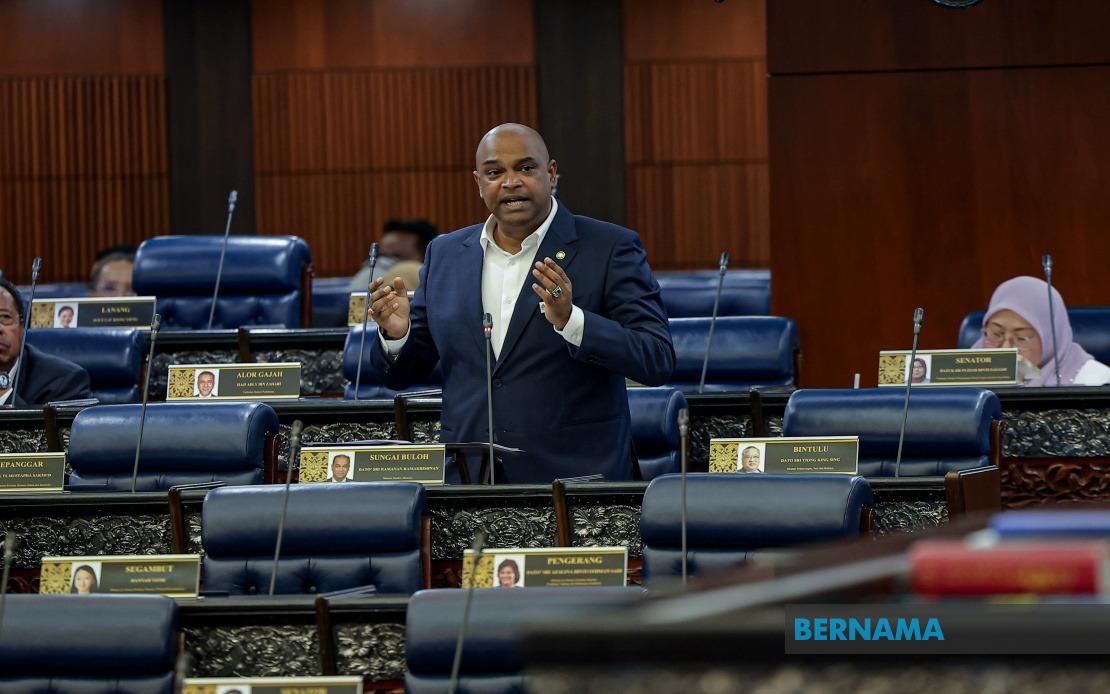
Malaysia's Social Security Organisation (PERKESO) has demonstrated robust operational performance, exceeding a 96 per cent average compliance rate in processing claims and delivering benefit payments to contributors throughout the preceding year. The accomplishment, disclosed in Parliament by Human Resources Minister Datuk Seri R. Ramanan, underscores the organisation's commitment to effective service delivery amid growing pressures on social security systems across Southeast Asia. The minister's statement during parliamentary Question Time reflects a concerted institutional effort to meet and surpass customer service benchmarks that have become increasingly critical to public trust in Malaysia's welfare infrastructure.
Central to this performance improvement has been PERKESO's implementation of stricter Customer Charter standards introduced from the previous year, establishing clear processing timelines across its three primary benefit schemes: LINDUNG Pekerja, LINDUNG Kendiri, and LINDUNG Kasih. These enhancements represent a meaningful shift toward transparency and predictability in social security administration, qualities that directly influence beneficiary confidence and the scheme's overall effectiveness. By formalising service expectations through documented charters, PERKESO has created measurable accountability mechanisms that hold the organisation to specific performance thresholds, a practice increasingly adopted by regional social security bodies seeking to modernise their operations.
The organisation has established differentiated processing timelines calibrated to claim complexity and urgency. Funeral Benefit and Temporary Disablement Benefit claims—typically more straightforward in documentation and assessment—are now processed within two days of receiving complete applications. More intricate claims, including those for Permanent Disablement Benefit, Invalidity Pension, Survivor's Pension, and Dependant's Benefit, operate on a three-day processing window. This tiered approach acknowledges operational realities while maintaining service standards that would be competitive by international benchmarks, particularly relevant as Malaysia positions itself among regional leaders in social protection delivery.
The LINDUNG Kerjaya scheme, which represents PERKESO's self-employed worker programme, has emerged as the organisation's flagship performance initiative. The 2025 Customer Charter for this scheme mandates two-day processing across all benefit categories, eliminating the differentiation applied to traditional employee schemes. Remarkably, PERKESO achieved an average compliance rate of 99.68 per cent for the LINDUNG Kerjaya scheme in claims processing and benefit payments, a figure that surpasses overall organisational performance and suggests concentrated success in servicing Malaysia's expanding informal and self-employed workforce—a segment that has grown substantially since the COVID-19 pandemic disrupted traditional employment patterns.
Digitalisation constitutes the operational backbone supporting these performance improvements. PERKESO has invested significantly in technological infrastructure designed to eliminate administrative bottlenecks and accelerate claim assessment cycles. The LINDUNG Faedah PERKESO portal represents a centralised digital interface enabling contributors to submit documentation and track claim status in real time, reducing physical touchpoints and associated processing delays. Simultaneously, the internally-focused 1Best system, fully implemented during the current year, has modernised PERKESO's benefit processing architecture, automating routine assessments and enabling staff to concentrate on complex or disputed claims requiring human judgment. These complementary systems—external-facing and internal-operations focused—demonstrate a comprehensive approach to digital transformation rather than isolated technological initiatives.
Contributor engagement and support services have been substantially expanded through the PRIHATIN application, which provides accessible information regarding PERKESO services and claim procedures. This application represents a departure from traditional documentation-heavy approaches, offering user-friendly navigation aligned with how Malaysian consumers increasingly expect to interact with government services. Beyond digital tools, PERKESO has established its Prihatin Squad (SPP), a dedicated advisory workforce tasked with delivering personalised guidance to contributors, beneficiaries, and insured persons navigating the claims process. This human-centred complement to digital services acknowledges that technology alone cannot address the varied circumstances and documentation challenges facing beneficiaries, particularly among elderly or less digitally-literate populations.
Emergency and accident-related claims represent a critical test of any social security system's responsiveness, and PERKESO has developed specialised procedures addressing these time-sensitive situations. The INSPIRE System creates direct linkages between hospitals and PERKESO, enabling immediate claim submission and assessment without intermediate documentation delays. For emergency cases, procedures have been simplified to completion within 24 hours—a significant operational commitment that reflects prioritisation of beneficiary welfare during crisis periods. This hospital-integrated approach represents a structural innovation with implications for Malaysia's broader healthcare and social welfare coordination, potentially serving as a model for regional social security systems grappling with similar coordination challenges.
Fraud prevention constitutes an ongoing institutional priority, and PERKESO has implemented a multi-layered verification framework balancing fraud detection with administrative efficiency. While artificial intelligence conducts preliminary screening of applications, human assessors conduct secondary verification as a quality control measure before claim approval. This hybrid approach, combining algorithmic efficiency with human judgment, reflects contemporary best practices in social security administration. The minister's emphasis on this dual-verification mechanism suggests PERKESO's recognition that over-reliance on automated systems, while reducing labour costs, carries risks of both false positives that harm legitimate beneficiaries and false negatives that enable fraudulent claims. The maintenance of manual verification despite AI implementation demonstrates measured rather than ideologically-driven technological adoption.
These operational enhancements must be understood within the context of PERKESO's expanding role in Malaysia's social protection architecture. The organisation administers compulsory insurance coverage for private sector employees whilst simultaneously managing voluntary schemes for self-employed workers—a dual mandate that has grown substantially complex as Malaysia's labour market has fragmented. The introduction of separate Customer Charter standards for LINDUNG Kerjaya reflects recognition that self-employed contributors face distinct circumstances requiring customised service delivery. As Southeast Asian economies undergo comparable labour market transformations, PERKESO's experience in managing heterogeneous contributor bases may offer instructive lessons for regional peers navigating similar demographic and economic transitions.
The performance metrics disclosed by Minister Ramanan suggest that PERKESO has successfully addressed historical criticisms regarding processing delays and administrative complexity. However, sustained achievement of these targets requires continuous operational refinement and adequate resource allocation. The minister's detailed enumeration of multiple initiatives—digital platforms, internal systems upgrades, advisory squads, and hospital coordination mechanisms—indicates that performance improvement reflects not single interventions but rather coordinated institutional change across multiple operational domains. Maintenance of these service standards as contributor volumes potentially increase, and as claim complexity evolves with demographic ageing, will present ongoing challenges requiring strategic investment and workforce development.
The broader policy significance of PERKESO's performance improvements extends beyond internal organisational metrics to encompass Malaysia's positioning within regional social protection frameworks. As ASEAN nations increasingly prioritise social security system strengthening, operational efficiency and transparent service delivery have become competitive dimensions among regional actors. PERKESO's reported performance suggests Malaysia is developing comparative advantages in claims processing speed and digitalisation that may inform regional policy discussions regarding social security system harmonisation or mutual recognition arrangements. For Malaysian workers engaging cross-border employment within ASEAN, the efficiency and transparency of home-country social security administration becomes relevant to decisions regarding destination countries and employment security calculations.

