Malaysia's social security system is bracing for a dramatic expansion in claims over the coming years. The Social Security Organisation, commonly known as PERKESO, projects that annual claims could increase by as much as 200 per cent from its current baseline of 170,000 cases annually, according to Human Resource Minister Datuk Seri R. Ramanan. This anticipated growth reflects a fundamental shift in how Malaysia's workforce is being protected and supported, driven by the introduction of several ambitious new schemes designed to extend coverage to previously underserved groups.
The surge is directly tied to three interconnected policy initiatives that are reshaping Malaysia's social protection landscape. LINDUNG 24 Jam, the newly enacted Gig Workers Act 2025, and an emerging Traveller Scheme are expected to dramatically expand the pool of contributors and beneficiaries accessing PERKESO's services. These schemes recognise that Malaysia's workforce has fundamentally changed, with growing numbers of workers engaged in non-traditional employment arrangements that fall outside conventional employer-employee relationships. By bringing gig workers and other informal sector participants into the formal social security net, PERKESO is preparing to handle a much larger and more diverse claims volume than ever before.
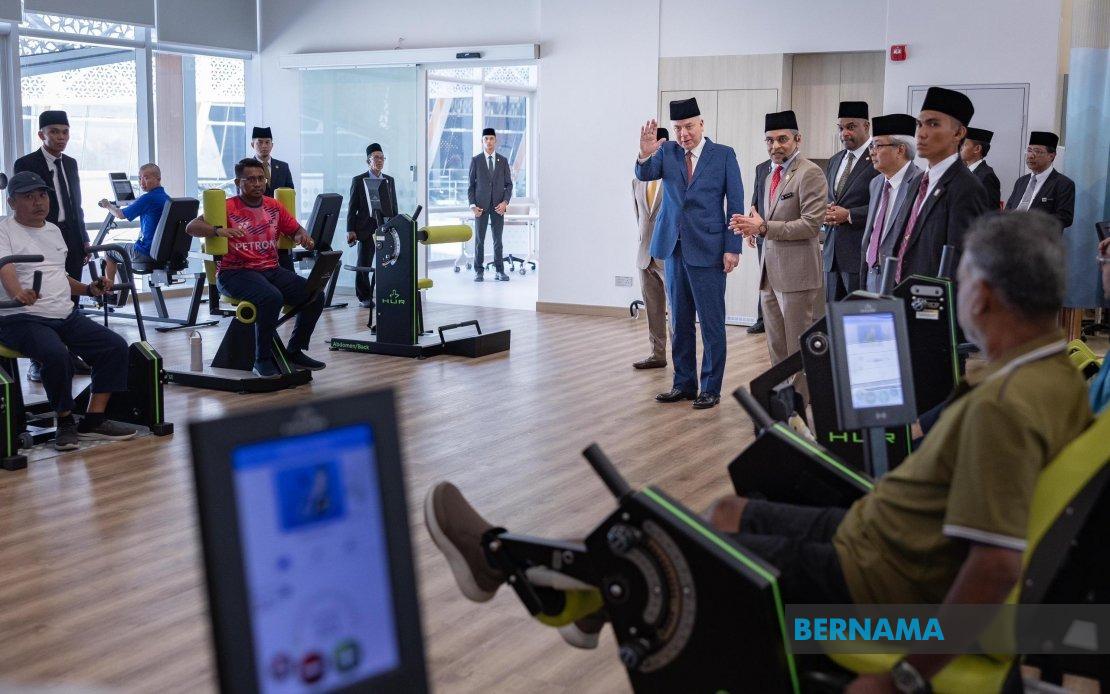
To manage this anticipated explosion in claims, PERKESO has undertaken a substantial infrastructure overhaul. The centrepiece of this modernisation effort is the Sultan Nazrin Shah PERKESO Rehabilitation Centre, which was officially opened in Meru Raya, Perak, by Sultan Nazrin Shah himself. The facility represents an investment of approximately RM1 billion and marks a significant departure from traditional rehabilitation approaches in Southeast Asia. This centre, previously branded as the PERKESO Neuro-Robotic Rehabilitation and Cybernics Centre, has been reimagined as a comprehensive facility capable of treating up to 700 patients simultaneously, with the potential to serve 3,000 patients annually.
The centre's claim to distinction extends beyond its sheer size and capacity. It is recognised as Southeast Asia's largest rehabilitation facility and holds the distinction of housing the world's largest collection of Cyberdyne Hybrid Assistive Limb (HAL) units. Through a strategic partnership with Cyberdyne Inc of Japan, the centre has deployed 65 HAL devices in various configurations including lower limb units, single joint units, and lumbar supports. These robotic exoskeletons represent cutting-edge technology in rehabilitation medicine, allowing patients to regain mobility and function through assisted movement training that would be impossible through conventional physiotherapy alone.
Since commencing operations in July 2025, the centre has already demonstrated its value to Malaysia's injured and disabled workers. To date, 1,095 patients have received treatment for a spectrum of conditions reflecting the diversity of workplace hazards and health challenges affecting Malaysia's workforce. These cases include traumatic injuries from accidents, occupational diseases specific to certain industries, serious spinal cord injuries, and non-communicable diseases such as stroke that affect workers' capacity to remain employed. Each of these patient groups requires distinctly different rehabilitation approaches, something the centre is architecturally and technologically designed to provide.
Beyond the robotic rehabilitation equipment, the centre offers an integrated suite of advanced diagnostic and treatment modalities that position it as a potential global leader in rehabilitation medicine. The Advanced Biomechanics Rehabilitation Platform merges robotics, virtual reality, and movement simulation technologies to create immersive rehabilitation environments. The Advanced Movement Analysis Laboratory, a pioneering facility within Malaysia, employs sophisticated motion capture systems, force plates, and electromyography (EMG) technology to precisely measure and monitor patients' movement patterns and muscular activation during recovery. These analytical capabilities enable clinicians to track subtle improvements in function and adjust treatment protocols with unprecedented precision.
For workers in high-risk occupations, the centre has developed the Motorcycle Safety Training Track (MSTT) under its Centre for Applied Prevention in Social Security (CAPSS). This specialised facility provides comprehensive riding training for workers in dangerous sectors, complete with motorcycle simulators and inspection workshops. The development of this preventative infrastructure reflects a strategic shift within PERKESO toward injury prevention rather than simply managing claims after injuries occur. By improving safety practices among high-risk worker populations before incidents happen, PERKESO aims to reduce the overall claims burden while protecting vulnerable workers.
The rehabilitation approach extends deliberately beyond medical intervention into the crucial realm of vocational retraining and employment. The centre offers structured vocational rehabilitation programmes spanning technical skills, culinary training, creative fields, administrative roles, and beauty-related services. These training modules are deliberately designed to enhance both functional capacity and employability, recognising that genuine rehabilitation means returning workers to productive economic participation rather than merely managing disability. Critically, PERKESO has established partnerships with local industry players who provide on-the-job training opportunities in practical fields including culinary arts, barista skills, and entrepreneurship development.
The employment dimension is further strengthened through PERKESO's MYFutureJobs platform, which provides direct job matching and placement services for rehabilitated workers. This integrated approach transforms PERKESO from a passive benefit-paying organisation into an active facilitator of workers' return to economic productivity. For Malaysia's economy, this shift holds significant implications. Rather than supporting workers indefinitely through disability payments, the centre creates pathways for injured workers to resume contributing to the economy through productive employment in roles suited to their post-injury capabilities.
Ramanan articulated PERKESO's strategic vision as fundamentally transforming Malaysia's rehabilitation landscape in synchronisation with technological advancement and evolving workforce needs. The organisation recognises that comprehensive financial protection is necessary but insufficient without equally robust rehabilitation infrastructure. The substantial investment in the Sultan Nazrin Shah centre reflects confidence that by combining advanced technology, expert clinical services, and employment-focused vocational training, PERKESO can ensure contributors not only receive financial security but actively participate in rebuilding their working lives.
For Malaysia and the broader Southeast Asian region, the implications are substantial. The centre is positioned to become a global referral hub for neuro-robotic rehabilitation services, potentially attracting patients from across the region and beyond. The facility's designation as a Centre of Excellence for Rehabilitation, supported by 151 comprehensive services, positions Malaysia as a leader in rehabilitation innovation. This development could establish new standards for social security systems throughout Southeast Asia and contribute to Malaysia's positioning as a hub for advanced healthcare and medical tourism.
The convergence of expanded social protection schemes, sophisticated rehabilitation infrastructure, and employment-focused services represents a strategic recalibration of Malaysia's approach to worker protection. As claims surge in coming years following implementation of LINDUNG 24 Jam and the Gig Workers Act 2025, PERKESO's infrastructure investments will prove crucial to managing increased demand while delivering the quality of care Malaysia's workers deserve. The Sultan Nazrin Shah PERKESO Rehabilitation Centre embodies this commitment, signalling that expansion of social protection is matched by genuine capacity to deliver meaningful, technology-enabled rehabilitation services that restore workers to productive participation in the economy.