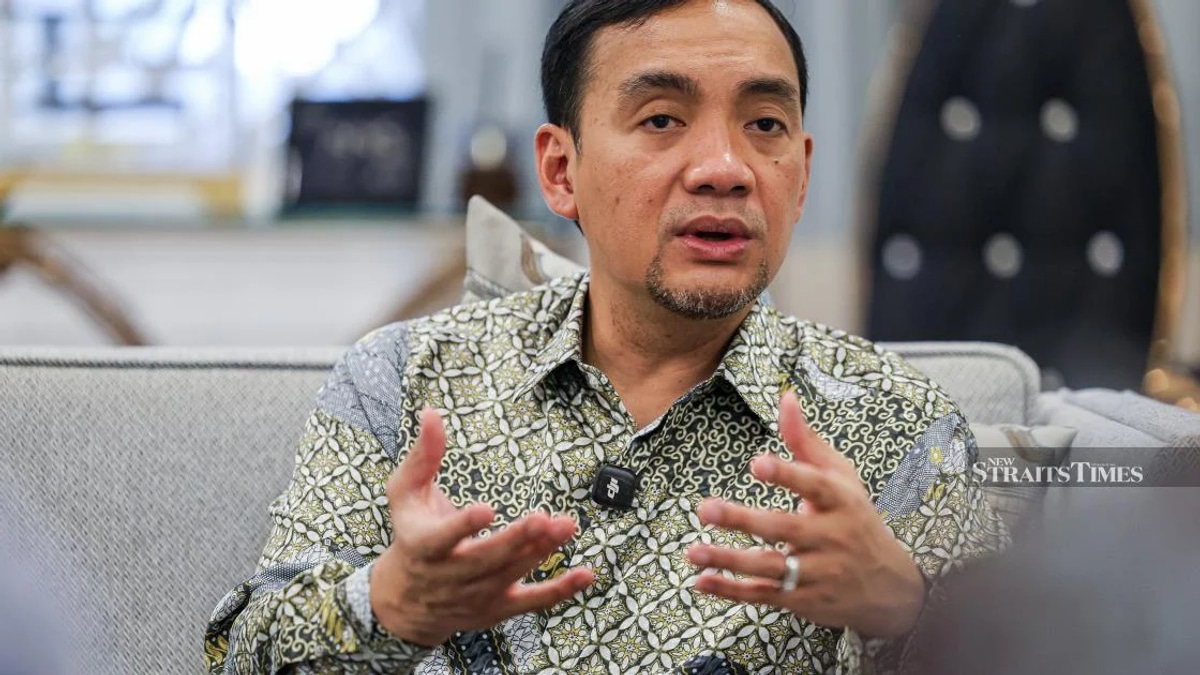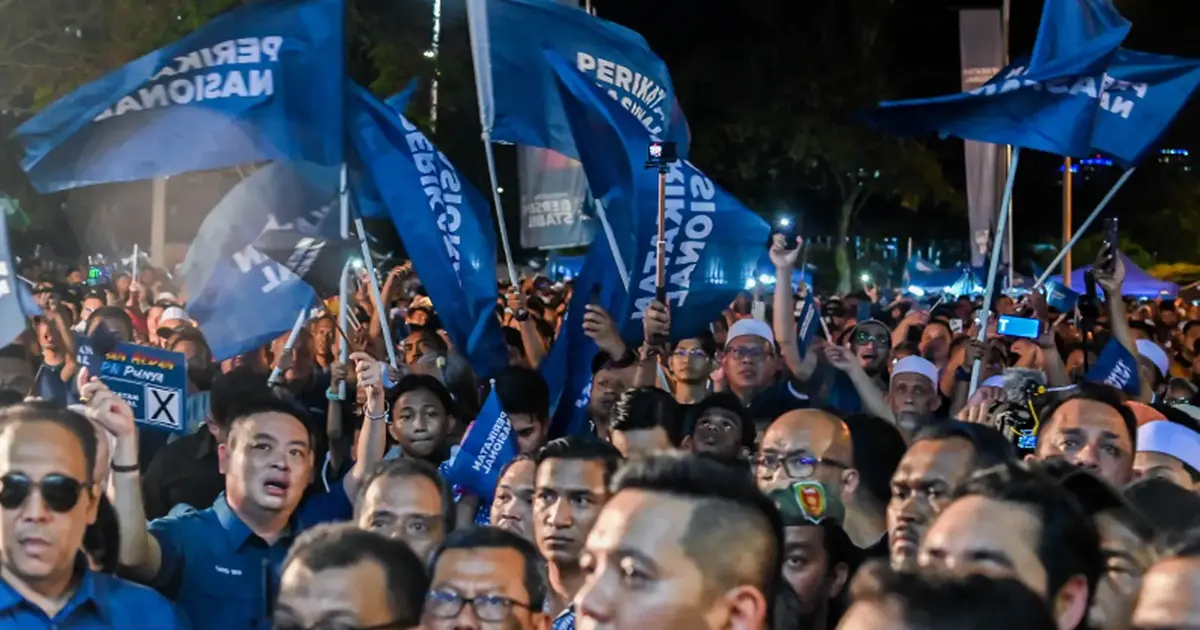
The Perikatan Nasional coalition faces a genuine threat of internal disintegration as the relationship between its two major components—PAS and Bersatu—has deteriorated beyond conventional political disagreement into what observers characterise as open, asymmetric conflict. According to Yusri Ibrahim, chief researcher at the Ilham Centre, the coalition has now entered what he terms a 'guerrilla war' phase, suggesting the disputes have moved beyond high-level negotiations and public statements into more insidious, destabilising tactics that could ultimately fracture the entire political alliance.
The tensions within Perikatan Nasional reflect deeper structural incompatibilities that have simmered beneath the surface since the coalition's formation. PAS, anchored in an Islamist ideological framework and commanding significant grassroots support particularly in the northern states and among religious constituencies, operates with long-term institutional goals that often diverge markedly from Bersatu's more pragmatic, multiethnic political orientation. These fundamental differences in worldview and voter appeal have created recurring flashpoints that periodic agreements and reconciliation efforts have failed to resolve.
The shift to what analysts describe as a guerrilla phase carries significant implications for Malaysian politics. Rather than openly contesting power within established coalition forums, the two parties are increasingly employing covert strategies—selective media campaigns, strategic leaks, factional mobilisation, and calculated political manoeuvring—that erode institutional trust without triggering formal ruptures. This approach sustains surface cohesion while systematically weakening the coalition's operational effectiveness and public credibility.
For Malaysian voters and the broader political landscape, a collapsing Perikatan Nasional creates unpredictable consequences. The coalition currently represents a substantial bloc of parliamentary seats and controls several state governments. Its disintegration would trigger a scramble for political realignment, potentially benefiting Pakatan Harapan by default or creating openings for alternative configurations that remain difficult to predict. The destabilisation extends beyond national politics to state-level governance, where Perikatan Nasional administrations in Terengganu, Kelantan, and Kedah could face internal governance challenges.
Bersatu's position within the alliance appears particularly vulnerable. The party lacks the deep organisational roots and demographic constituencies that PAS has cultivated over decades. Its political leverage depends significantly on being perceived as a viable alternative Malay-Muslim political force, but that positioning becomes progressively difficult to maintain when the party operates in a coalition perceived as dysfunctional or dominated by PAS. Leaders within Bersatu recognise this structural disadvantage, which may motivate increasingly aggressive positioning to protect the party's independent identity and appeal.
PAS, conversely, operates from a position of relative organisational strength. The party commands significant administrative experience, a well-established grassroots apparatus, and deep cultural-religious alignment with significant voter blocs. Yet PAS leadership equally recognises that an alliance perceived as controlled by an Islamic party carries electoral costs in urban, secular, and non-Muslim constituencies. This creates a paradox: PAS requires coalition arrangements to project broader appeal, yet those same arrangements—particularly with Bersatu—generate internal friction that damages both parties' credibility.
The regional context matters considerably for understanding these dynamics. Southeast Asia faces shifting geopolitical pressures, economic uncertainties, and demographic transitions that demand coherent political responses. Malaysia's stability depends partly on functional coalition mechanisms that allow diverse constituencies to negotiate competing interests. A fractured Perikatan Nasional signals that Malaysia's political system struggles to accommodate both Islamist aspirations and multiethnic governance models within shared institutional frameworks—a challenge that extends across multiple Southeast Asian democracies.
The timeline for potential rupture remains uncertain, but several escalation points loom. State assembly operations, parliamentary votes on contentious legislation, and approaching local elections create opportunities for dramatic confrontation. Additionally, leadership succession questions within both parties—particularly generational transitions and the question of who exercises ultimate authority—could provide either reconciliation opportunities or trigger points for formal separation.
Observers also note that external actors maintain influence over coalition dynamics. Federal government policy decisions, bureaucratic resource allocation, and development project distribution all affect the relative positions of coalition members. A federal administration perceived as favouring one coalition partner over another intensifies internal resentments. Similarly, opposition parties actively exploit any visible coalition weakness, creating incentives for public displays of unity even as private relations deteriorate.
For policymakers and investors assessing Malaysia's political stability, the Perikatan Nasional situation warrants serious attention. Coalition instability translates into governmental unpredictability, inconsistent policy implementation, and delayed decision-making on infrastructure, economic, and social initiatives. Regional competitors and foreign investors monitor these developments closely when evaluating Malaysia's investment climate and political reliability.
The broader question facing Malaysian politics concerns whether diverse ideological and ethnic constituencies can construct durable, functional governing coalitions. Perikatan Nasional's travails suggest that procedural mechanisms and electoral mathematics alone prove insufficient—effective coalitions require genuine areas of philosophical overlap and mutual strategic interest. Whether PAS and Bersatu can identify and nurture such overlap, or whether they proceed toward eventual separation, will substantially reshape Malaysia's political landscape in coming years.