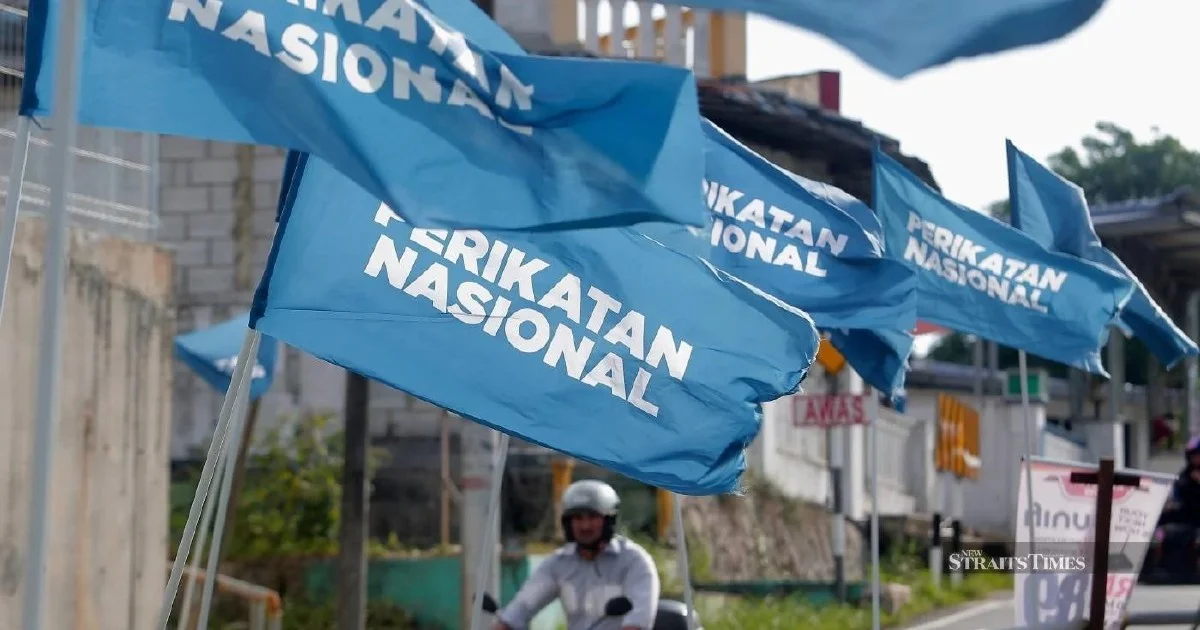
Perikatan Nasional (PN) has moved swiftly to counter misleading claims circulating online that the coalition intends to remain neutral during the upcoming Johor state election. Deputy chairman P. Punithan issued a firm denial on Monday, characterising the viral statement as spurious and without foundation. The clarification underscores growing concerns about disinformation in Malaysian politics, particularly as electoral contests approach and political alliances prepare their strategies across key states.
The emergence of false claims regarding PN's electoral intentions reflects a broader pattern of rumour-mongering that has become common during Malaysia's political cycle. Such fabrications, whether deliberately engineered or organically spreading through social media networks, can potentially destabilise voter confidence and distort the political landscape. By publicly rejecting the assertion, PN seeks to prevent the narrative from taking root among voters and the party's own grassroots supporters, who might otherwise harbour doubts about leadership commitment to contested elections.
Johor represents strategically significant territory within Malaysia's political map. The state has historically served as a stronghold for various political forces, and control of its state assembly carries implications beyond its immediate borders. Any indication that a major coalition might abstain from competition would ripple through the electoral calculations of rival camps and influence how supporters mobilise resources and campaign efforts. PN's swift denial suggests the leadership recognises the damage such perceptions could inflict on party credibility and grassroots morale.
P. Punithan's statement functions as damage control at a moment when political messaging requires precision. The timing of such false claims—typically intensifying as electoral dates approach—appears designed to sow discord within coalitions or among their supporters. By explicitly labelling the viral claim as completely fabricated, PN's deputy chairman attempts to inoculate the party's base against accepting unverified political narratives. This preventive approach has become routine for Malaysian political organisations operating in an environment saturated with competing information sources.
The incident illustrates how digital platforms have become primary battlegrounds for political discourse in Malaysia, where rumours travel faster than official rebuttals and verification lags behind viral spread. Voters increasingly encounter competing narratives about party strategies, coalition decisions, and electoral intentions through social media rather than traditional news channels. Political organisations must now maintain constant vigilance against fabricated statements attributed to their leadership, responding rapidly to preserve their reputational standing.
Penikatan Nasional comprises multiple component parties with distinct histories and regional strongholds, and internal coordination around electoral participation remains central to coalition cohesion. Claims suggesting any major element might opt out from competition would undermine confidence in PN's unified front and invite questions about fissures within the alliance. By firmly rejecting the allegation, party leadership reassures both internal stakeholders and external observers that PN remains committed to contesting available electoral opportunities, particularly in substantial states like Johor.
The false statement also serves as a reminder of how misinformation can distort democratic processes if left unchallenged. Voters relying on unverified claims for their decision-making may reach conclusions incompatible with actual party positions or intentions. Electoral integrity depends partly on citizens accessing accurate information about which parties contest which seats and what political forces are genuinely competing for their support. PN's public dismissal of the claim attempts to ensure voters base their choices on fact rather than fabrication.
Electoral competition in Johor would naturally engage PN alongside other coalitions and independent candidates vying for voter support. The state's assembly seats distribute across urban and rural constituencies with diverse demographic compositions, requiring sophisticated campaign strategies tailored to local conditions. Any coalition genuinely planning to abstain would signal fundamental strategic recalculation—a decision of such magnitude would require transparent internal deliberation and formal announcement, not clandestine planning vulnerable to leakage through unverified viral claims.
Moving forward, PN faces the persistent challenge of managing its public image amid constant information warfare. Political competitors, opportunistic actors, and simple rumour-spreaders generate false narratives designed to destabilise rivals or entertain audiences. Coalition leaders must balance rapid response—to prevent misinformation entrenching itself—with measured communication strategies that avoid appearing defensive or reactive. The Johor situation exemplifies this ongoing tension between defending against fabrications and maintaining focus on substantive policy messaging.
The broader context sees Malaysian politics becoming increasingly contested through digital channels, where verification mechanisms remain weak and incentives for spreading sensational claims remain strong. Official party communications increasingly include explicit denials of false reports, reflecting how disinformation has become endemic to the political environment. Voters and observers must develop greater scepticism toward unverified claims while trusting official statements from recognised party spokespersons. PN's intervention underscores how even major political actors must now routinely engage in reputation management against manufactured allegations, consuming resources and attention that might otherwise focus on substantive political engagement.